

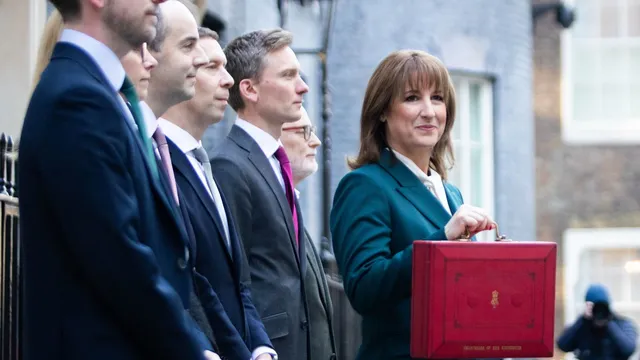
UK freeze on income tax thresholds raises fiscal concerns
UK freeze on income tax thresholds raises fiscal concerns
- Chancellor Rachel Reeves announced a freeze on income tax thresholds, expected to generate significant revenue.
- The OBR revised GDP growth forecasts, signaling cautious optimism in the economic outlook.
- Market reactions suggest that while the budget raises fiscal concerns, investor confidence remains relatively steady.
Story
In the United Kingdom, financial markets reacted positively to Chancellor Rachel Reeves' second budget, delivered on November 26, 2025. The budget included a notable plan to freeze income tax thresholds for an additional three years, expected to generate £12.7 billion by the fiscal year 2030-31. Analysts have noted that while this decision raises substantial revenue, it could spark debates regarding its implications for taxpayers' financial burden. The Office for Budget Responsibility (OBR) forecasted a GDP growth of 1.5% for this year, adjusted from a previous estimate of 1%, indicating some optimism amidst the challenges. However, growth forecasts for subsequent years were downgraded, suggesting a more cautious outlook ahead. The FTSE 100 index saw a rise of 0.9% at 9,691.58 points, and the FTSE 250 increased by 1.2%. The context provided by these budgetary measures reflects a government attempting to balance fiscal responsibility with economic growth. Analysts, including Andrew Wishart from Berenberg, emphasized that these favorable fiscal forecasts shielded the Chancellor from having to make tougher decisions, remarking on the encouraging fiscal headroom created by the updated projections. Market reactions included a strengthened pound, now quoted at 1.3232 USD, which was interpreted as a decrease in political risk rather than direct changes from official forecasts. Despite the slight optimism due to the GDP growth forecast, investors remain cautious about the potential impacts of the budget's measures. Chris Beauchamp, an IG analyst, noted that UK assets are performing well in the aftermath of the budget, although concerns linger about the long-term economic implications of the back-loaded measures proposed by the government. The yield on UK 10-year gilt fell from 4.49% to 4.43%, pointing towards a market response that is increasingly sensitive to the current economic climate and potential rate changes by the Bank of England. As the government looks to solidify its economic strategy, the next steps will be crucial in ensuring that growth projections are met and that the economy does not significantly undershoot the forecasts laid out by the OBR. Investors will be closely monitoring how well the government follows through on its budget commitments and whether these measures will effectively spur economic recovery while managing the tax burden on households in the UK.


