

China has always been America's biggest threat since 1949
China has always been America's biggest threat since 1949
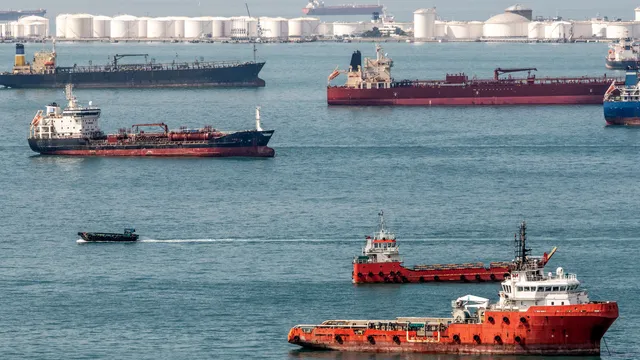
- The Strait of Malacca is a crucial maritime route for global trade and oil transportation.
- U.S. Navy's presence in the region has led to significant tensions with China's modernization of its naval forces.
- The ongoing geopolitical dynamics may lead to future confrontations similar to those in the Strait of Hormuz.
Story
In recent years, the geopolitical landscape has seen rising tensions, particularly between the United States and China. The crisis in the Strait of Hormuz has prompted worries among guardians of other key waterways, such as the Strait of Malacca, which is crucial for global trade as it carries over a quarter of the world's trade and oil shipments from the Persian Gulf to Asia. Countries like Singapore, Indonesia, and Malaysia, which border the Strait of Malacca, have historically maintained relationships with both superpowers but are now wary of the implications of a potential conflict in their region. This situation becomes more precarious, considering China's naval expansion and modernization, prompting criticisms toward the U.S. naval presence in the area. The risk of an incident similar to the Hormuz crisis occurring in Malacca has ignited discussions among experts and retired military officials about the fragility of maritime security in Southeast Asia.
Context
The Strait of Malacca has historically served as a critical maritime route that significantly influenced trade and cultural exchanges across Asia and beyond. Spanning approximately 550 miles, this narrow waterway connects the Andaman Sea to the South China Sea, acting as a conduit for maritime commerce between the Indian and Pacific Oceans. Emerging as a hub of commercial activity since the 7th century, particularly with the rise of the Srivijaya Empire, the Strait provided a vital link for traders, facilitating the movement of goods such as spices, silk, and precious metals. Its strategic importance has continuously evolved, with empires and nations vying for control over this crucial passageway throughout history. As a result, it has influenced geopolitical dynamics in Southeast Asia for centuries, allowing for the establishment of trade routes that would shape regional economies and interactions among diverse cultures. The significance of the Strait of Malacca extends beyond mere geography; it is an embodiment of the historical interplay between trade, culture, and power in the region. During the age of exploration, European powers sought routes to access the lucrative spice markets of Asia, leading to colonial interests in the strait. The Portuguese were the first to capture control of this passage in the early 16th century, followed by the Dutch and eventually the British, who recognized the necessity of this shipping lane for their imperial interests. The establishment of the British Straits Settlements further consolidated their influence in the region, making Malacca a focal point of colonial trade and administration. This transformation established a framework of maritime trade networks that connected Europe with Asia, profoundly impacting global commerce and fostering cultural exchanges. In contemporary times, the Strait of Malacca remains one of the busiest shipping lanes in the world, accommodating around 80,000 vessels annually. Its significance in global trade is underscored by the fact that approximately one-third of the world's trade passes through this narrow corridor, making it crucial to the economic stability of various nations. The strait is not only a lifeline for shipping but also a hotbed for geopolitical tensions, as issues of piracy, territorial disputes, and maritime security linger. The ongoing importance of the Strait of Malacca in supporting global trade, however, has led to increased cooperation among regional nations, including initiatives aimed at enhancing navigational safety and combating maritime threats, as stakeholders seek to secure this vital artery for future generations. Overall, the historical significance of the Strait of Malacca reflects its transformative role in shaping trade patterns, cultural interactions, and geopolitical relations throughout history. From its early days as a crucial trade route to its modern status as a pivotal maritime passage, the strait has served as a mirror to global historical trends and remains an essential lifeline in today's interconnected world. Understanding its continued relevance underscores the imperative of collaborative efforts among nations to ensure its security and sustainability, thus allowing it to perpetuate its legacy as a bridge between continents and cultures.


