

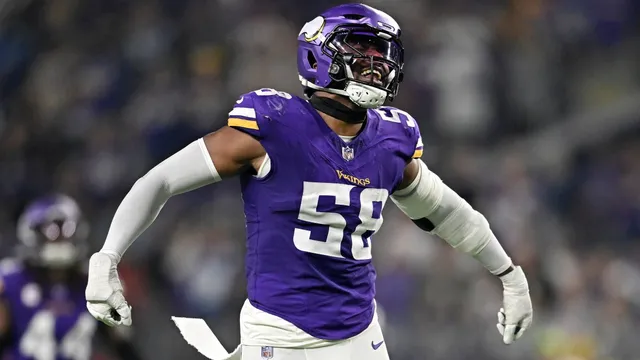
Vikings trade Jonathan Greenard to Eagles for two third-round picks
Vikings trade Jonathan Greenard to Eagles for two third-round picks
- The Minnesota Vikings traded defensive end Jonathan Greenard to the Philadelphia Eagles, receiving two third-round picks in the deal.
- Greenard agreed to a new four-year, $100 million contract with the Eagles following the trade.
- This move allows the Vikings to manage their salary cap more effectively while rebuilding their roster.
Story
The Minnesota Vikings, an NFL team, recently made a significant roster change by trading defensive end Jonathan Greenard to the Philadelphia Eagles. This trade was executed shortly after the Vikings made their second-round pick during the 2026 draft. In exchange for Greenard, the Vikings received a 2026 third-round pick and a 2027 third-round pick, which indicates a strategic shift towards acquiring younger, more affordable players. The Eagles also gained an additional pick, No. 244 in the 2026 draft, which enhances their draft positioning. Greenard’s new contract with the Eagles is reported to be worth $100 million over four years, averaging $25 million annually, a substantial pay increase over his previous salary with the Vikings. However, his performance in 2025 was less impressive, with only three sacks compared to 12 sacks in 2024, and injuries limited his playtime. Therefore, the decision to trade him likely stemmed from the Vikings' challenging salary cap situation, which has been under pressure after several seasons of high spending. Viking’s Executive Vice President of Football Operations, Rob Brzezinski, described the mood surrounding the trade as “somber,” underscoring the difficult nature of the decision aimed at ensuring the organization’s financial stability moving forward. The front office is now tasked with the essential duty of leveraging their newly acquired draft picks to rebuild and sustain competitive team dynamics.
Context
The impact of salary cap on NFL trades is a significant aspect of team management and strategy in the league. The salary cap, implemented to promote parity among teams, limits the total amount that a team can spend on player salaries in a given year. This system forces teams to make careful strategic decisions regarding player acquisitions and retention. When executing trades, teams must navigate their salary cap space, which can complicate negotiations and ultimately influence the roster composition. The need to remain compliant under the salary cap can hinder a team's ability to engage in high-profile trades, particularly if they are already close to the cap limit. Teams with lower salary cap commitments may find themselves in a more advantageous position to pursue top players, impacting the dynamics of trade negotiations across the league. Moreover, the salary cap creates an environment where player values fluctuate based on their performance and the overall availability of cap space across the league. General managers must assess not only the talent of a player but also the financial implications of bringing that player onto the roster. This situation leads to a careful evaluation of trade offers, where teams consider how the addition of a new player will affect their salary cap both in the short and long term. High-profile players with large contracts can become challenging to trade, as teams must balance the desire to improve their roster with the need to maintain financial flexibility. In addition to affecting trade opportunities, the salary cap system also fosters a more competitive market among franchises. Teams seeking to strengthen their rosters may be forced to find cost-effective options in the trade market. This could involve trading multiple lower-salaried players for a single higher-salaried player, creating a more dynamic negotiation landscape where teams must weigh depth against star power. Strategic planning is essential, as failing to manage salary cap implications properly can lead to long-term consequences for franchises, including potential roster limitations in future seasons. Ultimately, the salary cap significantly influences NFL trades by imposing financial constraints on teams. These constraints lead to a complex interplay between player performance, financial commitments, and team strategy. As franchises aim to achieve success while staying under the salary cap, the resultant effects rippling through the trade market showcase the intricate relationship between finance and personnel moves in the NFL. The changing nature of contracts and cap considerations continuously shapes how trades occur, making it a crucial area of focus for anyone involved in NFL team management.


