
military conflicts
controversial
impactful

North Korean troops aid Russia in repelling Ukrainian forces in Kursk

Feb 14, 2026, 1:14 PM10
(Update: Feb 14, 2026, 1:14 PM)
General Secretary of the Workers' Party of Korea and 3rd Supreme leader of North Korea
official currency of the Democratic People's Republic of Korea
East Slavic language
village in Solntsevsky District, Russia
sovereign state in Eastern Europe and Northern Asia

North Korean troops aid Russia in repelling Ukrainian forces in Kursk

  • North Korean troops aided Russian forces in repelling a Ukrainian incursion in the Kursk region in spring 2025.
  • The military cooperation is rooted in the June 2024 Comprehensive Strategic Partnership Treaty.
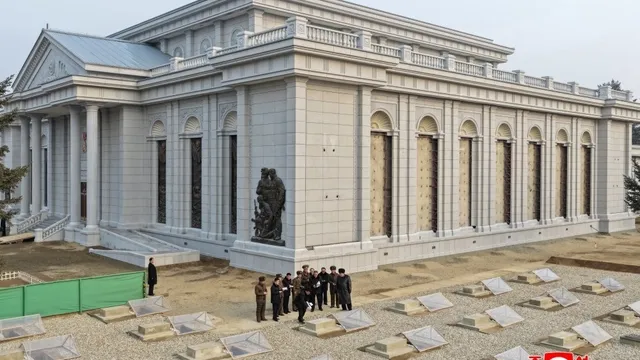
  • The collaboration has led to plans for a museum in Pyongyang to honor the soldiers involved in the operation.
Share your opinion
1

Story

In a significant military operation, North Korean troops supported Russian forces in repelling a large-scale Ukrainian incursion in the Kursk region, a move that has drawn attention to the deepening ties between North Korea and Russia. This collaboration followed the ratification of the June 2024 Comprehensive Strategic Partnership Treaty, which emphasized military cooperation between the two nations. The operation took place in the spring of 2025, culminating in the successful expulsion of Ukrainian forces, as confirmed by the Russian military. Notably, this acknowledgment marked the first time the role of North Korean troops was officially recognized by Russia. In August 2025, North Korean leader Kim Jong-un announced plans to construct a museum in Pyongyang dedicated to the soldiers who lost their lives during the operation. Images released by the Korean Central News Agency (KCNA) depicted Kim inspecting the memorial complex dedicated to those who fought in the Kursk liberation. This complex features a Memorial Wall and high-relief bronze sculptures commemorating the soldiers. Kim urged the builders to honor the fallen soldiers' sacrifices and expressed the importance of their bravery being forever remembered as a symbol of invincibility. As the relationship between North Korea and Russia strengthened, Kim communicated with Russian President Vladimir Putin, emphasizing the bond forged through shared military efforts in Ukraine. Putin expressed gratitude for North Korean military assistance, declaring that the bravery of North Korean troops reflected the solid friendship between the two nations. The Russian government praised North Korea's involvement, indicating plans to erect a monument in Moscow to honor those who lost their lives in the Kursk operation, as well as further monuments in Kursk Region. These developments reflect an increasingly close alliance between North Korea and Russia, centered around military cooperation. The acknowledgment of North Korean military support in such significant operations could change the geopolitical landscape, as the two countries move towards greater collaboration in various fields, including military, economic, and diplomatic endeavors. As the political situation evolves, the long-term consequences of this partnership remain to be seen, especially in relation to tensions with Ukraine and the broader international community.

Context

The history of Russia-North Korea relations is marked by a complex interplay of geopolitical interests, historical ties, and ideological affinities. Initially established during the post-World War II era, the relationship was shaped by the Soviet Union's role in the Korean War. During the conflict, the USSR supported North Korea both politically and militarily, which laid the groundwork for a lasting alliance between the two nations. This cooperation was rooted in a shared communist ideology and mutual interests in regional stability, as both countries faced threats from the United States and its allies. As the Cold War progressed, the relationship deepened, with Soviet leaders providing economic and military aid to North Korea, reinforcing its position in the region against capitalist influences. This assistance continued until the dissolution of the Soviet Union in 1991, which strained the relations due to North Korea's subsequent economic troubles and the loss of its primary ally. Following the collapse of the Soviet Union, Russia's interest in North Korea fluctuated. Throughout the 1990s and early 2000s, Russia sought to distance itself from its Soviet past and reorient its foreign policy toward a more pragmatic approach. However, both nations shared concerns regarding U.S. military presence in the region and the potential threat of South Korea's expanding economic power. As such, North Korea remained a valuable partner for Russia in balancing international relations within East Asia. In this period, Russia made efforts to engage with North Korea diplomatically, advocating for dialogue and negotiation over military confrontation, particularly concerning North Korea’s nuclear program. In the 2010s, the dynamics of Russia-North Korea relations shifted again with North Korea's increasing isolation due to its nuclear ambitions and a series of UN sanctions. Russia reasserted itself as a critical player on the Korean Peninsula, seeking to mediate between North Korea and other global powers, particularly the United States and South Korea. Under President Vladimir Putin's administration, Russia emphasized the need for a multipolar world where no single nation dominated international decision-making. The 2018 summit between Kim Jong-un and Putin highlighted a renewed commitment to strengthening bilateral ties based on mutual interests in security and economic development. As of 2026, Russia remains engaged with North Korea amidst ongoing tensions on the Korean Peninsula. Despite the challenges posed by international sanctions and North Korea's provocative actions, the two countries continue to seek collaborative frameworks, such as the potential for trade and economic cooperation. The weakening of relations between North Korea and the United States presents an opportunity for Russia to further influence the region. As geopolitical dynamics evolve, the future of Russia-North Korea relations will largely depend on their ability to navigate external pressures while maintaining their historical ties and shared interests.

2026 All rights reserved
