
politics
controversial
impactful

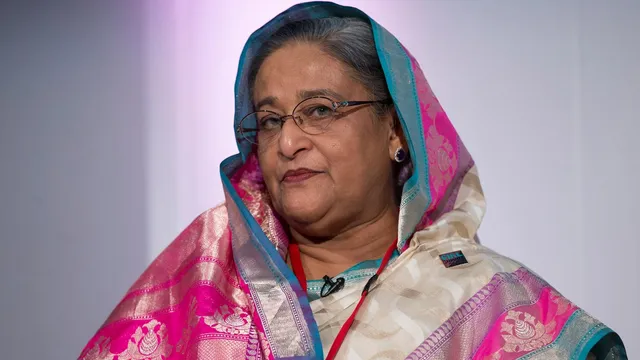
Sheikh Hasina warns Bangladesh faces instability without fair elections

Jan 29, 2026, 5:09 AM20
(Update: Jan 30, 2026, 9:26 AM)
Prime Minister of Bangladesh (1996–2001, 2009–present)
country in South Asia

Sheikh Hasina warns Bangladesh faces instability without fair elections

  • Sheikh Hasina criticized the February 12, 2026 election from exile in India after her party was excluded.
  • Yunus's interim administration is promising a free and fair election, but critics doubt its fairness.
  • Hasina warns that without inclusive voting, Bangladesh could face prolonged instability.
Share your opinion
2

Story

In Bangladesh, significant political upheaval has arisen as the ousted leader Sheikh Hasina criticized the upcoming elections. From her exile in India, she denounced the electoral process scheduled for February 12, 2026, after her party, the Awami League, was barred from participating. This election is pivotal, as over 127 million citizens are eligible to vote, and it is regarded as the most consequential election in decades since she was removed from power after a 2024 crackdown on dissent that resulted in her sentencing to death for crimes against humanity. These upcoming elections come under the oversight of Yunus's interim administration, which promises a free and fair democratic process, but many critics question the legitimacy of this claim given the exclusion of major opposing parties. The election will not only decide parliamentary representation but will also consider a constitutional referendum proposing sweeping political reforms. As the political landscape evolves, the Bangladesh Nationalist Party, led by Tarique Rahman, has emerged as a leading contender against a coalition of 11 groups led by the Islamist party Jamaat-e-Islami. The latter is attempting to regain influence after being previously barred during Hasina's tenure. Sheikh Hasina's remarks raise alarms over the potential for civil unrest and instability, particularly since she emphasized the historical cycle of flawed electoral processes in Bangladesh. Concerns about civil and political rights have been voiced by various human rights organizations, highlighting objections to the interim government, their treatment of dissenting voices, and media freedoms. The potential implications of the election and the proposed reforms could reshape the political landscape, but the historical context paints a complicated picture of governance in Bangladesh. Observers, including 500 foreign entities, have been invited to monitor the upcoming election, shedding light on the international community's interest and concern regarding the electoral integrity and potential violence. Bangladesh currently stands at a crossroads, where leadership is crucial to the future of its democracy. Sheikh Hasina underlined the necessity for a legitimate government supported by the genuine consent of the people and cautioned against the consequences of a continued lack of inclusivity in future elections. In her view, such an approach is essential for the nation to heal from past grievances and to ensure stability moving forward, challenging the interim government's promises and legitimacy.

2026 All rights reserved
