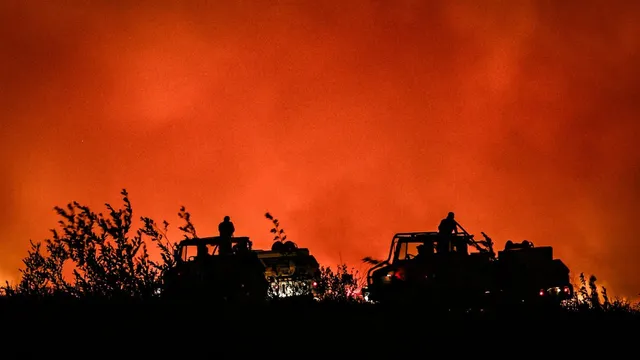
In July 2026, catastrophic wildfires erupted across France and Spain, leading to unprecedented evacuations and emergency measures. The wildfires, which began in mid-July amid severe heatwaves, have forced over 300,000 people to flee their homes, with the majority of evacuations occurring in the southwestern Gironde region of France. Here, approximately 220,000 individuals were displaced due to fast-moving flames that broke out on July 22. Local authorities have taken significant steps to manage the crisis, including partially closing major highways and halting train services to ensure public safety.
The scale of the disaster prompted French Prime Minister Sébastien Lecornu to declare that the wildfires have reached a level never seen before. In response to the crisis, France has mobilized its military resources, deploying an A400M cargo aircraft capable of dropping 20 tons of fire retardant to combat the flames. Additionally, 1.5 million protective masks have been distributed in Gironde to help residents cope with heavy smoke. The Interior Minister, Laurent Nuñez, reported that nearly 378 square miles have burned across France this year, marking a historic record, with over 120 square miles consumed in Gironde alone.
In Spain, where wildfires also erupted in mid-July, officials declared the country's first-ever national emergency due to the severity of the situation. Approximately 70,000 people have been evacuated, and around 500 square miles have burned this year, surpassing the historical average. The Spanish government has deployed around 2,600 firefighters and emergency personnel to combat the blazes. Tragically, one death has been reported in Manises, marking the first fatality linked to the wildfires. Health officials in Spain have issued air quality warnings, advising residents in affected areas to stay indoors and wear protective masks.
The wildfires have also impacted cultural events, such as the Tour de France, which had to adapt its final stage due to the exceptional circumstances caused by the fires. Organizers announced a shortened route for the final stage, originally planned to cover about 83 miles, now reduced to approximately 55 miles. The situation remains critical as authorities and firefighting crews across Europe monitor weather conditions, hoping for lighter winds and rainfall to aid in containment efforts.