

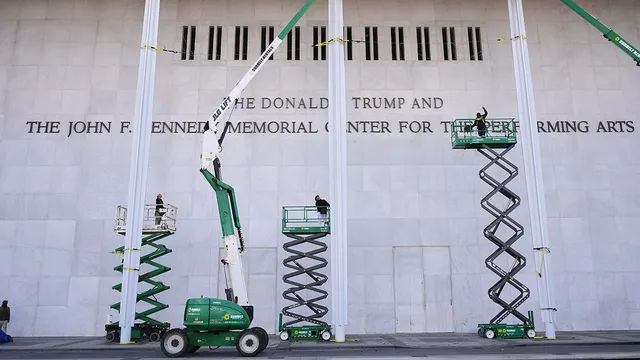
Joyce Beatty sues Trump to reverse Kennedy Center name change
Joyce Beatty sues Trump to reverse Kennedy Center name change
- The Kennedy Center board voted to rename the building, prompting significant backlash.
- Joyce Beatty filed a lawsuit against Trump to challenge the name change, citing legal violations.
- The controversy highlights tensions over political influence in cultural institutions and the maintained integrity of memorials.
Story
In late December 2025, a significant controversy erupted in the United States regarding the John F. Kennedy Center for the Performing Arts. The Kennedy Center's board, largely appointed by President Donald Trump, voted to rename the facility as "The Donald J. Trump and The John F. Kennedy Memorial Center for the Performing Arts." This decision sparked widespread outrage, particularly among Democrats, and prompted Democratic Representative Joyce Beatty to file a lawsuit against Trump, claiming that the name change was illegal and violated the law. Beatty argued that the center was intended as a memorial for President Kennedy, and any modifications require congressional approval, which had not been obtained. The announcement of Trump's name being added to the center's facade coincided with the cancellation of a long-standing Christmas Eve jazz concert that had taken place for over two decades at the venue. This cancellation was made by musician Chuck Redd, who cited the controversial name change as his reason for calling off the performance. The decision highlighted the impact of the renaming on cultural events and traditions associated with the Kennedy Center. Many artists, including Issa Rae and Lin-Manuel Miranda, chose to withdraw from planned performances in protest of Trump's involvement with the center. In addition to the artistic community's backlash, renowned political figures voiced their objections to the name change. Senator Chris Van Hollen pledged to introduce an amendment to reverse the decision when Congress reconvened. Critics of the rename noted that federal law designates the Kennedy Center as a living memorial to John F. Kennedy, making it unlawful to alter its name or incorporate any additional honors. Despite the growing opposition, Trump's administration maintained that the board's decision was valid and necessary for the preservation and revitalization of the Kennedy Center. Trump himself claimed that his administration had played a crucial role in restoring the center's integrity and financial health. As this dispute escalates, it appears likely to transition into both congressional discussions and potential court battles, indicating a challenging future for the renaming decision. The controversy surrounding the Kennedy Center serves as a focal point for broader discussions regarding political influence in cultural institutions in the United States, particularly under the Trump administration. Many observers note that the legal and political ramifications of this name change could set significant precedents for other federal cultural entities.
Context
The impact of political influence on arts institutions is a multifaceted issue that has garnered significant attention in recent years. Political forces can shape the cultural landscape by determining who receives funding, which projects are prioritized, and the overall direction of arts policy. Funding from government sources often comes with conditions that may align with political agendas, potentially compromising the autonomy of arts organizations. As a result, institutions may feel compelled to create work that aligns with governmental interests, which can lead to the suppression of creative expression and diversity in the arts. This relationship indicates a delicate balance between gaining financial support and preserving artistic integrity, raising questions about the true purpose of art in society. Moreover, the emergence of political movements and the shifting tides of governance can lead to changes in public perception of the arts. For instance, during times of political unrest or ideological shifts, arts institutions may serve as platforms for activism and community engagement. Alternatively, they may become targets for criticism or funding cuts, highlighting the precarious nature of their existences amid volatile political climates. This fragility can deter artists and institutions from pursuing certain subjects or themes, ultimately affecting the vibrancy and breadth of the cultural narrative within a society. In addition to funding and public perception, political influence can manifest in regulatory practices and policies that shape arts institutions' operations. Government policies regarding censorship can have profound implications on what is considered acceptable within the artistic realm. Certain works may face limitations or outright bans based on prevailing political ideologies, affecting the diversity of voices represented in the arts. This regulatory environment can create an atmosphere of self-censorship, where artists may avoid controversial topics or critical discourse for fear of backlash. In this way, political influence can stifle creativity and innovation, leading to an arts community that reflects only a narrow spectrum of viewpoints. Ultimately, while political influence can provide necessary resources for arts institutions, it carries inherent risks that can undermine the very essence of artistic expression. The interplay between politics and the arts is a complex relationship that necessitates careful consideration from both artists and policymakers. The challenge remains for arts organizations to navigate these waters effectively—securing funding and support while remaining true to their core mission of uninhibited creative exploration and expression. As the cultural landscape continues to evolve, understanding this dynamic will be crucial for ensuring that the arts can thrive without succumbing to the pressures of political influence.


