

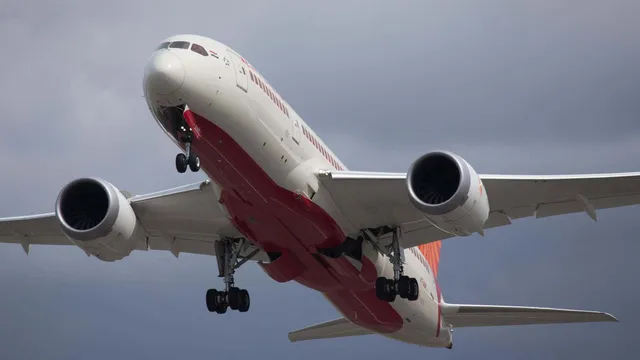
Air India flight diverted to Jeddah over technical issues during London journey
Air India flight diverted to Jeddah over technical issues during London journey
- An Air India flight from Bengaluru to London was diverted to Jeddah due to a suspected technical issue, landing safely with all on board unharmed.
- This incident is the second diversion for Air India in recent days, highlighting concerns over operational protocols and aviation safety.
- In the context of heightened disruptions in Gulf airspace, the airline continues to prioritize the safety and well-being of its passengers.
Story
On March 23, 2026, an Air India flight, AI133, traveling from Bengaluru, India to London, England, encountered a suspected technical fault mid-flight. The Boeing 787-8 Dreamliner, which had already been airborne for more than six hours, made a precautionary diversion to Jeddah, Saudi Arabia. The plane landed safely around 2 pm GMT with all passengers and crew unharmed. Air India assured that the diversion was in accordance with established safety protocols, placing a high emphasis on the safety and wellbeing of everyone on board. Although the exact number of passengers and crew was not disclosed, their safety was prioritized by the airline amid increasing global aviation safety concerns. This incident marks the second diversion for Air India in a short period, following an event on March 19 when a flight bound for Vancouver had to return to Delhi after nearly seven hours in the air due to an operational oversight that rendered the plane ineligible for the route. Such incidents have raised eyebrows about operational practices and aviation safety in an already challenging environment for airlines, particularly those operating in the Gulf airspace, which faces heightened disruptions due to ongoing geopolitical tensions, specifically the US-Israeli conflict involving Iran. Some airlines have been compelled to rethink flight paths, leading to increased pressure on established routes connecting South Asia, the Middle East, and Europe. Adding to the complexity of these circumstances, Air India's recent history has highlighted various safety incidents, including a tragic crash of a 787 Dreamliner in June 2025 shortly after takeoff, leading to the loss of 241 lives. In light of such occurrences, safety measures and protocols are under scrutiny, serving as a crucial reminder for airlines worldwide to maintain high standards in operational procedures and technical inspections. In response to this flight diversion, Air India emphasized its commitment to passenger safety and has instituted comprehensive checks on its aircraft to ensure that the highest safety standards are followed in the wake of possible technical issues. The aviation industry continues to navigate a challenging environment marked by operational disruptions, and incidents such as the recent Air India diversions underscore the importance of safety and the necessity for airlines to have robust operational guidelines in place. As the situation develops and airlines adapt their operational strategies to cope with evolving challenges, maintaining a keen focus on safety remains paramount in restoring passenger confidence and ensuring the well-being of those traveling.
Context
Airline safety regulations and operational standards are critical components in ensuring the safety and efficiency of air travel, a sector that serves millions of passengers daily. These regulations are established by national and international aviation authorities, such as the Federal Aviation Administration (FAA) in the United States and the International Civil Aviation Organization (ICAO) globally. The objective of these regulations is to set minimum safety standards for aircraft operations, maintenance, and aircrew training. By adhering to strict compliance requirements, airlines can mitigate risks and enhance the overall safety of their operations. Such regulations cover a wide array of aspects, including aircraft design, operational procedures, and emergency response protocols, which together create a robust safety framework for the aviation industry. Operational standards in the airline industry also play a crucial role in maintaining safety and efficiency. These standards encompass a variety of operational elements such as flight dispatch procedures, air traffic management, and navigation protocols, all of which are essential for the safe execution of flights. Airlines are required to follow standardized operating procedures (SOPs) which outline the necessary steps to be taken in various phases of flight, from takeoff to landing. Additionally, rigorous training and regular assessments are mandated for pilots and crew members to ensure they are equipped with the necessary skills and knowledge to handle any situation that may arise during flight operations. The establishment and continual improvement of these standards are vital for fostering a strong safety culture within the airline industry. The importance of airline safety regulations cannot be overstated, especially in light of the historical context of aviation accidents that have prompted regulatory changes. Investigations into past incidents often reveal underlying issues in operational practices or gaps in regulatory oversight, leading authorities to enact stricter guidelines. Examples include changes in maintenance schedules, modifications to cockpit procedures, and enhancements in air traffic control systems. The implementation of safety management systems (SMS) has further solidified the commitment to proactive safety measures by encouraging airlines to identify potential hazards and mitigate risks before they result in accidents. This evolution in regulatory practices demonstrates the industry’s commitment to learning from the past and striving for continual improvement in safety outcomes. In conclusion, the intersection of airline safety regulations and operational standards is fundamental to the aviation industry's integrity and reliability. The collaborative efforts of regulatory agencies, airlines, and industry stakeholders aim to create a comprehensive safety environment that protects passengers and crew alike. Ongoing assessment and adjustment of these regulations and standards ensure that they remain relevant and effective in addressing the challenges posed by emerging technologies and evolving operational dynamics. As the airline industry continues to grow, the commitment to safety will remain paramount, underpinning public confidence and the sustainability of air travel.


