

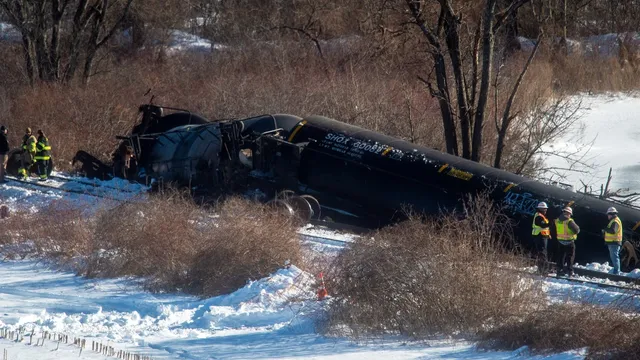
Freight train derails in Connecticut, causing hazardous concerns
Freight train derails in Connecticut, causing hazardous concerns
- A freight train derailed in Mansfield, Connecticut, with several railcars carrying hazardous materials.
- Emergency services issued a shelter-in-place order for residents within half a mile of the derailment due to the risk of gas leaks.
- Officials reported no serious injuries and emphasized that the situation is under control, though clean-up efforts will take time.
Story
In Connecticut, a freight train incident occurred on a Thursday morning in Mansfield, where approximately 14 railcars derailed. The train, operated by the New England Central Railroad, was transporting various materials, including liquid propane. Some of the affected railcars ended up in the nearby Eagleville Lake and the Willimantic River, which raised concerns about potential environmental hazards. Fortunately, no injuries were reported, and air monitoring indicated there were no hazardous leaks from the train. Local officials issued a shelter-in-place order for residents living within half a mile from the derailment site to ensure their safety.
Context
Train derailments in the United States have a long and varied history, reflecting changes in technology, track infrastructure, and safety regulations. The impact of these incidents can be severe, leading to injuries, fatalities, and substantial economic costs. While information on early derailments is sparse, the first documented instances date back to the 19th century, with wooden tracks and steam locomotives, which posed unique challenges. As railroads expanded across the country, the frequency of derailments increased, prompting the creation of safety standards and oversight bodies. The introduction of laws addressing the maintenance of tracks and equipment was essential in reducing the occurrence and consequences of these events over time. The rise of the 20th century saw significant advancements in train technology, including stronger steel construction and better braking systems, yet derailments continued. Factors contributing to these incidents have included human error, equipment failure, and track conditions. Notably, the 1970s and 1980s presented a peak in derailments, largely attributed to aging infrastructure and inadequate maintenance practices. Following a series of catastrophic accidents, such as the 1978 derailment in Gunpow, Maryland, public and governmental scrutiny intensified, leading to increased funding for rail infrastructure improvements and enhanced regulatory measures. In the 21st century, the National Transportation Safety Board (NTSB) and other federal agencies have worked to analyze and mitigate the causes of derailments, focusing on technology-enhanced solutions like Positive Train Control (PTC) systems, which monitor train speeds and operating conditions to prevent accidents. The results have shown promise, with a marked decrease in the number of derailments in urban areas, although rural regions continue to experience challenges due to less frequent inspections and slower response times. The training of crews in emergency response and the development of better communication protocols have also played key roles in improving the overall safety profile of the rail sector. Despite the progress made, derailments, unfortunately, still occur, often resulting in severe consequences for both passengers and freight. Ongoing efforts to address these incidents must encompass not just technology and infrastructure but consider broader safety culture and operational best practices. The rail industry's proactive response to the historical lessons learned from derailments will be crucial in shaping a safer and more reliable transportation future. As we look forward, collaborative approaches between government, rail companies, and communities will be necessary to continue reducing the risk of derailments and enhancing public confidence in rail travel.


