

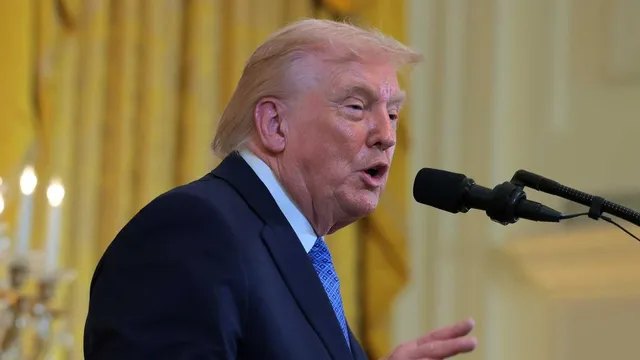
Trump dismisses backlash over insensitive comments on Rob Reiner's death
Trump dismisses backlash over insensitive comments on Rob Reiner's death
- President Trump made a controversial post about Rob Reiner, suggesting his death was caused by his 'Trump Derangement Syndrome.'
- Many Republicans, including notable conservative commentators, criticized Trump's remarks as inappropriate and lacking empathy.
- This incident symbolizes a potential shift within the Republican Party regarding tolerance for divisive rhetoric during times of personal tragedy.
Story
In a recent incident, President Donald Trump faced backlash after making an insensitive post on Truth Social regarding the death of filmmaker Rob Reiner. The post described Reiner as suffering from what Trump labeled 'TRUMP DERANGEMENT SYNDROME,' implying that his perceived hatred for Trump contributed to his demise. The tragic circumstances surrounding Reiner's death involved his son, Nick Reiner, who has been arrested and is responsible for the killings. Trump’s comments drew swift criticism from both political allies and opponents, reflecting a growing unease among his base about his rhetoric and attitudes towards serious events. This incident not only reveals Trump's controversial approach to political discourse but also highlights a potential shift in the Republican Party's response to such statements, wherein even loyal supporters expressed discomfort with the focus on political grievances instead of advocating for empathy in light of personal tragedy. The response has sparked discussions about the nature of political commentary and the limits of acceptable discourse in the face of personal loss, particularly when a family tragedy becomes intertwined with political narratives. Furthermore, it raises questions about how leaders should respond to tragedies, emphasizing the need for sensitivity and compassion rather than political framing of such events.
Context
Trump Derangement Syndrome (TDS) is a term that has emerged in the political discourse surrounding Donald Trump, particularly during and after his presidency. The phrase generally refers to a perceived irrational or exaggerated response by certain individuals or groups towards Trump and his policies. This syndrome is often used by Trump's supporters to criticize opponents who express intense dislike or opposition to him, suggesting that their reactions are influenced more by an emotional reaction than by logical or objective analysis. While the term implies a pathological condition, it has no clinical basis in psychological literature; rather, it is a politically charged label used in public debates. The phenomenon described as Trump Derangement Syndrome is indicative of the polarization within contemporary American politics. Supporters of Trump may utilize the term to dismiss critiques or concerns raised by his opponents regarding his administration's actions, policies, and rhetoric. Conversely, critics of Trump may argue that such a term trivializes legitimate political discourse and the serious implications of his decisions. The TDS narrative reflects a broader cultural divide, with each side interpreting the ramifications of Trump’s presidency through vastly different lenses, leading to significant disparities in public perception and political engagement. Academics and media commentators have noted that the rise of social media has played a crucial role in amplifying the effects associated with TDS. Platforms like Twitter and Facebook often serve as echo chambers where extreme views can flourish, allowing for rapid dissemination of emotionally charged reactions. This tendency can contribute to the entrenchment of beliefs, as individuals are exposed primarily to content that aligns with their pre-existing viewpoints. As people become increasingly isolated in their ideological bubbles, the potential for constructive dialogue diminishes, leading to heightened political tensions. In conclusion, while the term Trump Derangement Syndrome is often employed in a dismissive manner to critique opposition to Trump, it also highlights the deeply entrenched divisions within American society. Understanding TDS requires acknowledging the role of emotional responses in shaping political opinions and the barriers to meaningful discourse that arise from extreme partisanship. As the political landscape continues to evolve, reflections on TDS can serve as a barometer for broader societal trends, illustrating the complexities of identity, allegiance, and the nature of political engagement in the modern age.


