
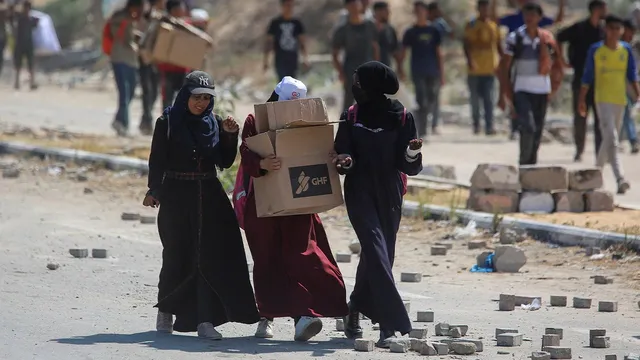
Gaza Humanitarian Foundation ends operations after chaos and deaths in aid distribution
- The Gaza Humanitarian Foundation delivered over 187 million meals to Palestinians during its operation.
- The organization's practices faced intense criticism for allegedly endangering lives, leading to reports of hundreds of deaths.
- Due to these challenges and a recent ceasefire, the GHF has announced its decision to cease operations in Gaza.
Story
In May 2023, a controversial American and Israeli-backed aid organization known as the Gaza Humanitarian Foundation commenced operations in the Gaza Strip, intending to provide food aid amidst a severe humanitarian crisis escalated by a prolonged Israeli blockade. The group, which claimed to have distributed over three million food boxes amounting to 187 million meals by its closure, faced intense scrutiny and backlash from Palestinian civilians, humanitarian workers, and various NGOs who stated that the aid distribution model was perilous and unethical. Reports surfaced highlighting that many Palestinians lost their lives while attempting to obtain food from GHF's distribution sites, which allegedly were secured by Israeli military forces. Witnesses claimed that the Israeli troops opened fire on civilians gathering at the sites, leading to hundreds of casualties during the chaotic operations. While the GHF insisted that it had a successful mission and provided aid without the involvement of Hamas, the organization’s approach was met with severe criticism and accusations of endangering lives. This culminated in its decision to completely cease operations. Following a temporary ceasefire brokered by the United States in October 2023, the GHF closed its distribution points, ultimately asserting a transition of its model to the U.S.-led Civil-Military Coordination Center, indicating hopes for a more cooperative international aid effort moving forward. The organization claimed its goal was to mitigate hunger among civilians and set a new precedent for aid delivery that would not be siphoned off by terrorist entities. In contrast, Hamas spokespersons condemned GHF, alleging that its operational framework perpetuated suffering and starvation among the Palestinian populace. Notably, the United Nations and various humanitarian entities distanced themselves from GHF's methods, arguing they contravened humanitarian principles. Therefore, despite the group's assertions of success, widespread disagreement among stakeholders in the conflict illuminated the complexity of humanitarian assistance in wartime scenarios.
Context
The impact of the Gaza Humanitarian Foundation on the local population is a complex and multifaceted phenomenon, reflecting a synthesis of humanitarian aid efforts, socio-economic dynamics, and the overarching political context of the region. Established to address the urgent needs arising from ongoing conflicts and blockades, the foundation has aimed to provide essential services such as food assistance, healthcare, education, and shelter. By doing so, it has played a crucial role in alleviating some of the immediate hardships faced by the population in Gaza, particularly affecting vulnerable groups such as children and the elderly who are disproportionately impacted by these hardships. The foundation's interventions have also fostered a sense of community resilience and solidarity, bridging divides between various factions and offering a collective hope for a better future despite the harsh realities of life in Gaza. Through their programs, they not only meet the basic survival needs of individuals but also contribute to the psychological well-being of the local population by offering support and stability in an otherwise chaotic environment. Moreover, the humanitarian activities conducted by the Gaza Humanitarian Foundation have significant socio-economic implications as they often stimulate local economies by creating job opportunities and establishing marketplaces for local goods. In addition, the educational programs funded by the foundation aim to enhance the skills and knowledge of the younger population, empowering them through education and training initiatives. This focus on education is critical, as it equips the local population with the necessary skills to improve their economic situation and advocates for a sustainable future. However, while the foundation's efforts in providing immediate relief are commendable, there are inherent challenges posed by the political landscape that often complicate these humanitarian initiatives. The restrictions imposed by external and internal forces can limit the reach and effectiveness of aid, highlighting the need for a holistic approach that integrates advocacy for policy changes with humanitarian efforts to ensure long-term improvements to the society's conditions. Despite the challenges, the foundation continues to strive towards enhancing the quality of life for the local population, advocating for the rights and dignity of individuals, and building capabilities within communities. By fostering partnerships with international organizations and leveraging resources, the foundation seeks to expand its impact and address not only the humanitarian needs but also the systemic inequalities that exist in the region. Importantly, the foundation’s efforts underscore the importance of sustained engagement, collaboration, and a nuanced understanding of the local context. The active involvement of local stakeholders in decision-making processes is essential to ensure that aid is effectively tailored to the needs of the population. On the ground, the involvement of the local community in implementing and managing projects helps to enhance ownership and accountability while fostering a sense of empowerment among individuals participating in the development process. In conclusion, the Gaza Humanitarian Foundation has made considerable strides in supporting the local population by addressing immediate humanitarian needs and promoting socio-economic development. However, success in these endeavors requires continued efforts to navigate the complex political environment, engage with diverse community voices, and innovate approaches that align humanitarian assistance with sustainable development. The foundation serves as a vital link in the broader network of support for the local population, elevating their voices and needs at both local and international forums. As the situation evolves, ongoing assessment and adaptation will be essential in ensuring that the foundation's contributions lead to meaningful and lasting improvements in the lives of those it serves.
