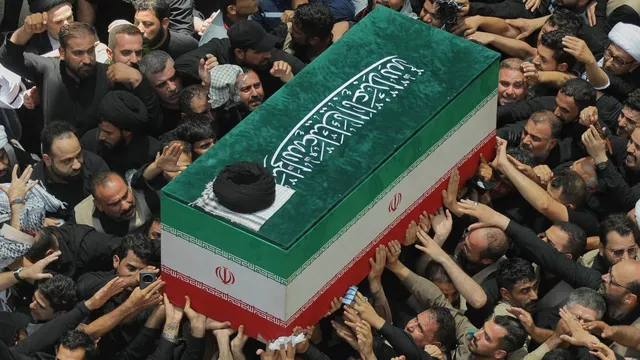
The history of U.S.-Iran relations is complex and marked by significant events that have shaped the geopolitical landscape of the Middle East. The relationship began in the early 20th century, primarily during the era of the Anglo-Persian Oil Company, which established a foothold in Iran's oil industry. The U.S. became more involved in Iranian affairs after World War II, particularly during the Cold War, when the U.S. sought to counter Soviet influence in the region. This culminated in the 1953 CIA-backed coup that overthrew Iran's democratically elected Prime Minister Mohammad Mossadegh, reinstating the Shah, Mohammad Reza Pahlavi, who ruled with an authoritarian regime. This intervention sowed the seeds of resentment among many Iranians, leading to a deep-seated mistrust of U.S. intentions in the region.
The relationship deteriorated significantly after the 1979 Iranian Revolution, which resulted in the overthrow of the Shah and the establishment of the Islamic Republic under Ayatollah Khomeini. The U.S. Embassy in Tehran was seized, and 52 American diplomats and citizens were held hostage for 444 days, marking a turning point in U.S.-Iran relations. In response, the U.S. imposed economic sanctions on Iran, which have been a recurring theme in the relationship. The U.S. also supported Iraq during the Iran-Iraq War in the 1980s, further straining relations. Throughout the 1990s and early 2000s, the U.S. labeled Iran as part of the "Axis of Evil," particularly in the context of its nuclear ambitions and support for groups like Hezbollah.
The nuclear issue became a focal point in U.S.-Iran relations in the 2000s, leading to a series of negotiations and sanctions aimed at curbing Iran's nuclear program. The culmination of these efforts was the Joint Comprehensive Plan of Action (JCPOA) in 2015, an agreement between Iran and six world powers, including the U.S., which aimed to limit Iran's nuclear capabilities in exchange for the lifting of sanctions. However, the relationship took another downturn in 2018 when President Donald Trump unilaterally withdrew the U.S. from the JCPOA, reinstating harsh sanctions on Iran. This decision led to increased tensions, including military confrontations and Iran's subsequent steps to breach the terms of the agreement.
As of 2026, U.S.-Iran relations remain fraught with tension, characterized by mutual distrust and ongoing disputes over Iran's nuclear program, regional influence, and human rights issues. The Biden administration has expressed a desire to return to negotiations regarding the nuclear deal, but progress has been slow, and the geopolitical landscape continues to evolve. The historical context of U.S.-Iran relations is essential to understanding the current dynamics, as past interventions and conflicts have left a lasting impact on both nations' perceptions of each other. The future of these relations will depend on diplomatic efforts, regional stability, and the broader international community's involvement in addressing the challenges posed by Iran's actions and policies.