

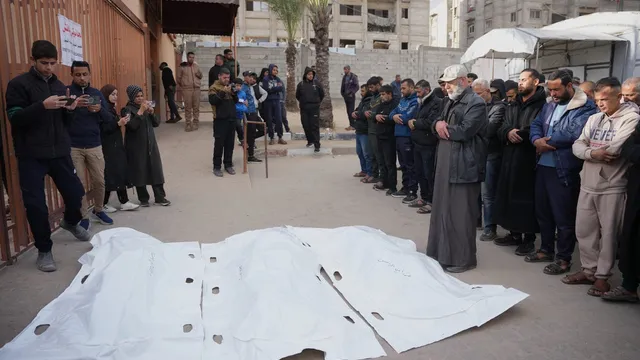
Israeli fire kills over 500 Palestinians since ceasefire began
Israeli fire kills over 500 Palestinians since ceasefire began
- Israeli military conducted airstrikes in Gaza, resulting in multiple Palestinian casualties.
- Health officials confirm that the majority of those killed are civilians, including children.
- The violence undermines ceasefire agreements and raises international concerns about humanitarian conditions.
Story
The ongoing conflict in Gaza has led to severe casualties and humanitarian crises following a renewed wave of violence in early February 2026. Hospitals report that Israeli airstrikes and tank shelling resulted in the deaths of at least 21 Palestinians, among them four children, while the escalation further undermines any ceasefire agreements in place. These attacks were reportedly in response to militant fire directed at Israeli soldiers stationed near the ceasefire line. On the same date, international observers express concerns regarding the increasing number of civilian deaths and the continuing instability in the region. The situation unfolded as Israeli military forces cited militant attacks as a justifiable reason for carrying out targeted strikes, insisting that they are aimed at Hamas forces responsible for the violence. However, reports indicate that many of the casualties are civilians, including families seeking safety in makeshift tents. Local humanitarian organizations and health officials have continually stressed the plight of the people in Gaza, who are already facing dire conditions due to the ongoing conflict. As conflicts escalate, hospital officials from Gaza report that the number of civilian casualties has surged, with more than 530 Palestinian deaths attributed to Israeli fire since the ceasefire took effect. International reactions have included condemnations of both sides, as well as calls for an urgent ceasefire from humanitarian agencies and world leaders who emphasize the need to protect civilians caught in the turmoil. However, with both parties accusing each other of ceasefire violations, the cycle of violence appears to show no signs of abating. The backdrop of the situation is a historical context of conflict and geopolitical tensions between Israel and Hamas, wherein specific ceasefire agreements have been established but frequently violated. The current violence has the potential to destabilize the fragile peace and complicate human rights discussions. As nations and organizations call for restraint, the tragic events in Gaza highlight the urgent need for renewed dialogue that prioritizes civilian protection and addresses the longstanding issues between the two entities.
Context
The ceasefire agreement between Israel and Hamas represents a critical moment in the ongoing conflict that has long affected the lives of countless individuals in the region. This agreement was designed to halt hostilities and to allow for humanitarian assistance to flow into areas severely impacted by the conflict. The discussions leading to the ceasefire were shaped by various international actors and aimed at addressing the immediate needs of inhabitants in both Israel and Gaza, with an emphasis on reducing civilian casualties and fostering a path toward more sustainable peace discussions. The ceasefire is not merely a cessation of hostilities; it embodies a broader attempt to create a dialogue framework that could potentially lead to lasting resolutions to the conflict that has been a source of anguish and instability for decades. To comprehend the depth of the agreement, it is essential to identify the key components that form the basis of this ceasefire. The arrangement included commitments from both parties to stop military actions and to refrain from provocations that could lead to renewed violence. Additionally, the ceasefire focuses on facilitating humanitarian aid deliveries and alleviating the dire situation in Gaza, where access to basic necessities has been severely restricted due to ongoing conflicts. Diplomatic efforts by various stakeholders, including international organizations and regional powers, played an instrumental role in brokering the ceasefire, with an emphasis on ensuring that both sides adhere to the terms outlined in the agreement. While the ceasefire has temporarily halted the violence, analysts and observers are cautiously optimistic about its potential for a more significant peace process. The complexity of the underlying issues, including territorial disputes, security concerns, and mutual recognition, continues to challenge the sustainability of any agreement. Numerous factors, including political shifts within both Israel and Hamas, public sentiment, and external influences, will inevitably impact the durability of the ceasefire. Thus, while a step forward, the ceasefire agreement should be viewed as a starting point on a long and complex journey towards lasting peace, rather than an end in itself. Moving forward, the success of this ceasefire agreement will depend heavily on continued dialogue and the commitment of both parties to engage in good faith negotiations. External support and monitoring may also play a crucial role in ensuring compliance with the terms of the ceasefire. Moreover, it is essential to address the broader humanitarian needs of those affected by the conflict, fostering an environment conducive to dialogue and cooperation. Ultimately, while the ceasefire provides a momentary respite, it is the long-term commitment to peacebuilding and resolving fundamental grievances that will determine the future stability of the region.


