
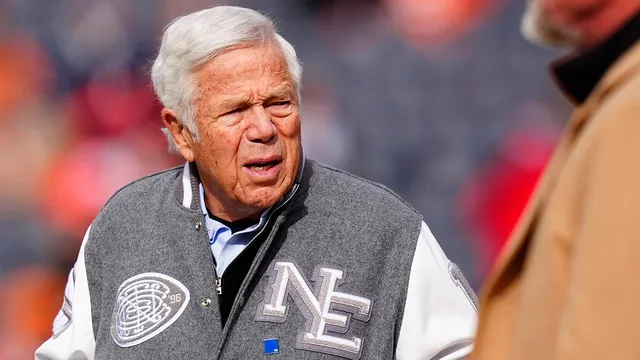
Robert Kraft launches $15M Super Bowl campaign against antisemitism
- Robert Kraft's Blue Square Alliance Against Hate launched a new campaign targeting antisemitism ahead of the Super Bowl.
- The new advertisement, 'Sticky Note,' presents a powerful narrative about bullying faced by Jewish youth in schools.
- The campaign aims to inspire solidarity and action against hate, encouraging Americans to become 'upstanders' in their communities.
Story
In an effort to combat antisemitism in the United States, Robert Kraft, the owner of the New England Patriots, has launched a new advertisement as part of his Blue Square Alliance Against Hate initiative. The ad campaign, which debuted on February 5, 2026, coincides with the Super Bowl event occurring in Santa Clara, California. For the third consecutive year, Kraft is utilizing the high-profile platform of the Super Bowl to address societal issues, specifically focusing on the painful realities of antisemitism faced by Jewish youth. The advertisement, titled 'Sticky Note,' depicts the struggles and bullying that a Jewish student faces in a school environment, highlighting the importance of standing up against hate and supporting one another. The ad illustrates a poignant moment in which a Jewish boy discovers a derogatory note affixed to his backpack, which reads 'DIRTY JEW.' In a heartfelt act of solidarity, a fellow student places a blue sticky note over the slur, demonstrating support and shared humanity. This powerful message encourages individuals to act courageously against bullying and discrimination. The Blue Square serves as a symbol of unity, aiming to inspire Americans to confront hate in their communities and online, promoting a collective mission to eradicate hatred. As part of this campaign, Kraft has made a significant investment by allocating $15 million towards the advertisement's promotion across television, social media platforms, YouTube, and billboards. The initiative also responds to a concerning statistic indicating that 58% of American adults perceive antisemitism as a non-issue, while only 32% of respondents claimed they would intervene in the face of such hate. . Kraft's efforts through this campaign seek to change these perceptions and encourage more individuals to become 'upstanders.' This year's ad marks a shift from earlier approaches, which included celebrity appearances in more light-hearted portrayals of anti-hate messages. By focusing on a direct and emotional narrative, this campaign aims to engage viewers on a deeper level, urging them to enter a dialogue about combating hatred and fostering inclusivity. Robert Kraft and the Blue Square Alliance Against Hate are striving to reach hundreds of millions of Americans with this heartfelt message, emphasizing the power of collective action in creating a more equitable society.
Context
Antisemitism in the United States has a long and complex history, marked by periods of both tolerance and hostility towards Jewish communities. The roots of antisemitism can be traced back to the colonial era, where early settlers often held prejudiced views against Jews. The first significant Jewish settlement occurred in the mid-17th century, yet even then, Jews faced restrictions in various aspects of life, including professional and residential limitations. As the nation grew and underwent expansion in the 19th century, Jews began to migrate in larger numbers, particularly from Europe, leading to an increase in both their societal influence and instances of antisemitic sentiment. This period saw the introduction of negative stereotypes, often casting Jews as avaricious and deceitful, further entrenching social barriers. The rise of organized antisemitism in the United States can largely be traced to the late 19th and early 20th centuries, coinciding with significant waves of Jewish immigration from Eastern Europe. This influx led to a backlash among segments of the population who viewed Jews as threats to the established social order and economic stability. The publication of the fabricated document "The Protocols of the Elders of Zion" in the early 20th century played a crucial role in promoting antisemitic conspiracy theories. Educational and professional organizations often excluded Jews, and acts of violence, such as the lynching of Leo Frank in 1915, illustrated the extreme lengths of antisemitic hostility. This climate contributed significantly to the establishment of organizations like the Ku Klux Klan, which actively propagated hate against Jewish people, alongside other minority groups. The Holocaust during World War II marked a chilling period that starkly emphasized the perils of hatred and prejudice. The aftermath led to a reevaluation of antisemitism and a recognition of the need for tolerance and inclusion in society. Nevertheless, antisemitism did not vanish entirely; rather, it took on new forms in the post-war era. Anti-Jewish beliefs persisted within certain circles, often cloaked in criticism of Israel or international financial influence. The 1960s and 1970s saw a resurgence of antisemitic incidents, particularly among certain political movements and extremist groups. Overall, while societal progress has been made in terms of civil rights for Jewish individuals, the underlying currents of antisemitism have remained a challenge in confronting systemic hate. In contemporary America, antisemitism is again on the rise, as indicated by increased incidents of violence, vandalism, and hate speech targeting Jews. Surveys indicate a troubling perception among some demographics that aligns with age-old stereotypes, reflecting a broader culture of intolerance. The complexities of antisemitism today are further exacerbated by social media, where misinformation and hate can spread rapidly. In response to these challenges, various advocacy groups work tirelessly to combat antisemitic narratives and promote educational initiatives aimed at fostering understanding and acceptance. National organizations such as the Anti-Defamation League and the Simon Wiesenthal Center play crucial roles in addressing antisemitic acts and promoting a more inclusive society.
