

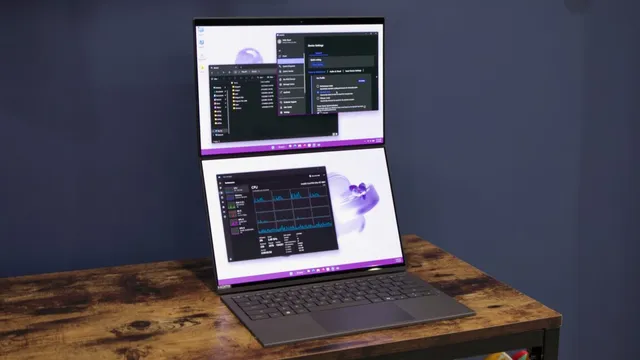
Intel surpasses previous generations with Panther Lake Core Ultra performance
Intel surpasses previous generations with Panther Lake Core Ultra performance
- Intel has launched the Panther Lake Core Ultra series, significantly improving CPU and GPU performance compared to past generations.
- This new series offers competitive advantages over AMD's Ryzen AI processors while maintaining efficient power consumption.
- Overall, Panther Lake is regarded as Intel's most impressive laptop chip series in several years, combining performance and battery life.
Story
In a bid to enhance performance while maintaining power efficiency, Intel has introduced the Panther Lake Core Ultra series, which significantly boosts CPU and GPU speeds in comparison to previous generations. The Core Ultra 200V series, known as Lunar Lake, provided good battery life with solid graphics but fell short on CPU performance. Innovations in design and technology led to the development of the Panther Lake processors, which not only improve CPU capabilities but also enhance graphics performance considerably. Compared to the Core Ultra 200V series, Panther Lake shows a substantial increase in speed, reportedly being around twice as fast as its predecessor in key tests. This advancement is particularly notable against AMD's Ryzen AI 300 and 400 processors, showing that Intel has regained ground in the competitive CPU market. Users can expect a 10% higher single-core performance and around 90% enhanced speed in benchmarks that showcase multi-core capabilities. Tests have shown that, under certain conditions, Panther Lake exhibits almost twice the performance of older 12th and 13th generation Intel processors and is significantly more efficient in terms of power use, achieving around half the power consumption under heavy loads. While performance varies based on settings, the Panther Lake chipset maintains impressive capabilities, showcasing approximately 95% of single-core performance and 75-85% in multi-core scenarios, even when operating within tighter power constraints. Testing across popular games and synthetic benchmarks demonstrates Panther Lake’s GPU performance outclasses older Intel and AMD graphics solutions. Combined with more efficient power utilization, Intel has made strides not only in performance but also in battery consumption under various operating conditions. The reported estimated battery life for systems using the Panther Lake processors is roughly 13 hours when considering theoretical conditions, which is a slight dip compared to earlier Core Ultra 200V series but still stands robust against competitors. With the Core Ultra Series 3 family being heralded as Intel’s best chips in more than five years, the future seems bright for those looking for high-performance laptop CPUs that do not compromise on battery life.
Context
The advancements in laptop CPU technology as of 2026 demonstrate significant progress in performance, efficiency, and integration, responding to the ever-increasing demands of users for speed and battery life. Manufacturers have focused on optimizing architectures to enable higher core counts and improved multithreading capabilities, which are essential for modern applications, particularly in gaming, content creation, and data-intensive tasks. The integration of AI and machine learning capabilities directly into CPU designs has also contributed to increased processing power and efficiency, allowing laptops to handle complex workloads with ease. The implementation of heterogeneous computing, where CPUs work in tandem with GPUs, is becoming more common, enhancing overall system performance and providing users with a seamless experience across various tasks. Power efficiency remains a critical focus in the development of laptop CPUs. Recent technologies, such as dynamic frequency scaling and advanced power management features, help extend battery life while maintaining performance benchmarks. The introduction of 7nm and 5nm manufacturing processes has allowed for greater transistor density, resulting in faster clock speeds and improved thermal performance. Additionally, innovations in materials, such as the incorporation of silicon carbide and gallium nitride, have led to better electrical characteristics, contributing to lower power consumption without sacrificing performance. Security features are evolving alongside the rapid advancements in processing power. As cyber threats become more sophisticated, CPU manufacturers are embedding hardware-level security functions to protect sensitive data during processing. Features such as secure enclaves, firmware protection, and advanced encryption capabilities help safeguard against various attack vectors. These enhancements are particularly crucial for business users and individuals who prioritize data security in their laptops. Looking ahead, the future of laptop CPU technology appears promising, with ongoing research into developing even more efficient and powerful processors. The demand for portable computing devices continues to grow, pushing innovators to explore novel architectures such as ARM-based systems, which have gained traction for their energy efficiency combined with robust performance. As the industry evolves, collaboration among hardware manufacturers, software developers, and researchers will be essential to leverage the full potential of emerging technologies, ensuring laptops remain capable of meeting the ever-changing needs of consumers in a digital landscape.


