

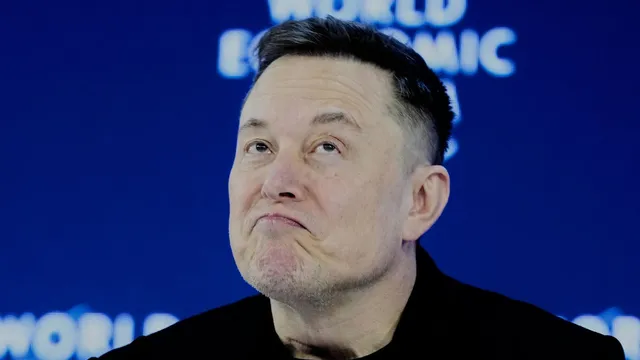
Elon Musk surprises critics with appearance at Davos
Elon Musk surprises critics with appearance at Davos
- Elon Musk unexpectedly attended the World Economic Forum in Davos, marking his first visit as the world's richest person.
- During the event, he addressed self-driving technology and commented on U.S. tariffs affecting solar energy.
- Musk's participation has sparked discussions on big tech's influence in global policy debates.
Story
On January 18, 2026, Elon Musk made an unexpected appearance at the World Economic Forum in Davos, Switzerland, despite his long-standing critique of the event. This marked his first participation in the annual gathering of global political and business leaders since he began publicly criticizing Davos as elitist and disconnected from common people. During his appearance, Musk discussed his ambitions regarding Tesla's self-driving technology, expressing hope for approval in Europe soon. He participated in a panel alongside BlackRock CEO Larry Fink, where his remarks included critiques of tariffs on solar panels in the U.S. which he claimed hindered solar deployment due to high barriers. Musk, who has also faced criticism for various aspects of his businesses and social media platform, used his time on stage to make humorous comments about political topics, including a joke about former President Donald Trump's dealings with Greenland and Venezuela. Notably, Trump's discussion at the same event focused on a potential deal regarding Greenland, alongside NATO allies' expanded roles in the Arctic. Musk's involvement comes at a time of intensified scrutiny surrounding big tech's influence in international conversations, raising questions about the potential impacts of such figures at high-profile summits like Davos.
Context
The World Economic Forum (WEF) in 2026 has brought together global leaders, policymakers, and industry experts to engage in meaningful discussions around pressing economic, environmental, and technological challenges facing the world today. As societies continue to recover from the effects of the COVID-19 pandemic, the focus has shifted toward fostering resilience and sustainable growth. Key themes of this year's forum center around climate change and the urgent need for green technologies, digital innovation, and equitable economic recovery. Participants underscore that addressing climate goals alongside economic strategies is paramount to ensuring global stability and prosperity. Through various panel discussions and workshops, the forum aims to delve deep into how investments in renewable energy can mitigate the adverse effects of climate change. Experts argue that transitioning to renewable sources not only combats environmental degradation but also creates significant job opportunities. The discussions highlight the importance of public-private partnerships in fostering innovation while ensuring that sustainability remains at the forefront of economic development. Moreover, the need for comprehensive frameworks to assess the implications of new technologies on labor markets and income distribution has gained considerable attention, as stakeholders seek to avoid exacerbating inequalities. Digital transformation is another significant area of focus at the WEF 2026, with technology leaders exploring the implications of artificial intelligence, blockchain, and data privacy regulations on modern economies. The advent of AI has prompted conversations about enhancing productivity while also addressing the ethical dimensions surrounding job displacement and algorithmic bias. Participants include tech giants advocating for responsible AI development while emphasizing collaboration with governments to create regulatory standards that protect consumers and businesses alike. There is a consensus that without careful planning and equitable implementation, technological advancements could deepen social divides and create further economic disparities. In addition to environmental and technological themes, the forum also emphasizes the necessity of enhancing global cooperation to tackle issues such as health security and economic inequalities. The discussions highlight the critical role of multilateral institutions in orchestrating a coordinated response to transnational challenges, such as pandemics and climate issues, which can no longer be addressed in isolation. Leaders call for renewed commitments to international agreements and collaborative frameworks that prioritize vulnerable populations. The closing remarks of the forum underline the urgency of building a more inclusive global economy, where growth benefits all nations and communities, thereby laying the groundwork for a more equitable and sustainable future.


