

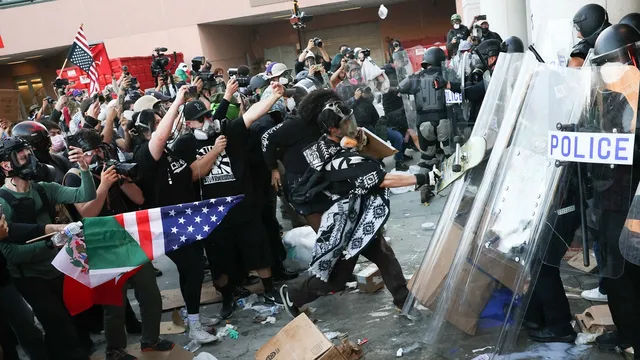
Trump orders no federal intervention in democratic cities without request
Trump orders no federal intervention in democratic cities without request
- Donald Trump announced a directive prohibiting federal involvement in protests in cities led by Democrats unless requested by local officials.
- This announcement followed nationwide protests against immigration enforcement, particularly in Minnesota where two citizens were killed by federal agents.
- The order highlights ongoing tensions between federal and local authorities regarding the management of civil unrest and law enforcement jurisdiction.
Story
In late January 2026, President Donald Trump announced a new directive regarding federal involvement in protests occurring in cities led by Democratic officials. He emphasized that the Department of Homeland Security was to avoid participating in civil unrest in these areas unless there was a direct request for help. The announcement follows extensive protests against federal immigration enforcement actions, particularly in Minnesota, where tensions escalated after federal officers fatally shot two citizens during enforcement operations. Local officials have voiced their concerns about this increased presence and its implications for community safety and rights. Trump's assertion pointed to increasing frustrations from his administration regarding the handling of protests by local government officials, suggesting they were poorly managed in Democrat-run cities. During this period, a nationwide strike was organized to protest against immigration raids, urging citizens to refrain from work, school, and shopping. In his remarks, Trump maintained that while federal agents would aggressively protect federal properties, it was the responsibility of local governments to secure their own areas. This stance reiterates his administration's approach to law and order and the perceived need for federal oversight in handling significant civil unrest. The backdrop of these developments is a climate of heightened civil disobedience and resistance to federal immigration policies, particularly in regions like Minnesota, where multiple protests have seen large crowds demanding the withdrawal of federal agents. Calls for a national shutdown catalyzed these demonstrations, forcing federal agents into potentially confrontational situations with protesters. Trump's directive points to a specific incident in Eugene, Oregon, where protesters breached a federal building, showcasing the volatile environment that has arisen from federal immigration enforcement actions. As tensions remain high between federal authorities and local governments, this development may have lingering effects on federal-state relations and the dynamics of policing protests. The directive raises questions about the balance of power between local authority and federal law enforcement, especially as local officials have contested the legitimacy of massive federal deployments in urban settings. This ongoing tension serves as a critical juncture in understanding how federal immigration policies impact civil rights and community relations across the United States.
Context
data economic global trends insight insight insight shift strategic policy analysis policy analysis geopolitical insight data impact impact policy shift insight data market insight impact geopolitical data trends impact impact strategic geopolitical impact economic insight impact insight impact analysis economic geopolitical shift market analysis insight shift economic market shift policy analysis analysis market shift impact trends shift economic policy trends shift trends impact policy market economic impact economic insight policy insight impact insight strategic data strategic impact trends geopolitical data...


