

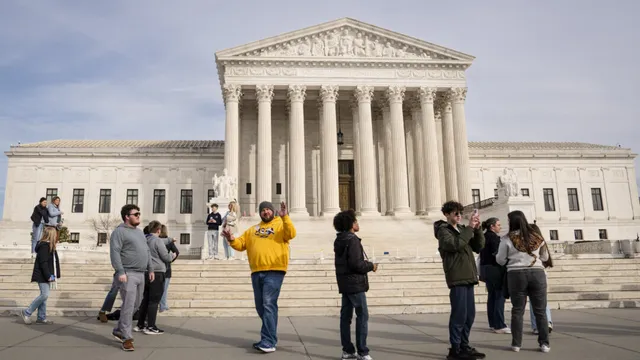
Supreme Court hears cases on seized American assets in Cuba
Supreme Court hears cases on seized American assets in Cuba
- The Supreme Court heard two key cases on February 23 regarding U.S. business assets seized by Cuba.
- The cases center around the 1996 Helms-Burton Act, which allows American businesses to sue over their confiscated properties.
- The outcomes of these hearings could significantly impact U.S.-Cuba relations and future claims by American corporations.
Story
In February 2026, the Supreme Court of the United States examined two significant lawsuits concerning the seizure of American business assets by the Cuban government, which took place decades prior to the hearings. These legal cases revolve around the 1996 Cuban Liberty and Democratic Solidarity Act, commonly referred to as the Helms-Burton Act, which permits U.S. companies to sue for property that the Cuban regime confiscated from American interests. The lawsuits, Havana Docks Corp. v. Royal Caribbean Cruises and Exxon Mobil v. Corporacion Cimex, were heard on February 23, with over three hours dedicated to oral arguments, indicating the legal complexity and potential implications of the decisions to be made by the justices. The Helms-Burton Act was established as part of a strategy to exert pressure on Cuba by penalizing foreign businesses involved in the trafficking of properties taken from U.S. companies since the Cuban revolution of 1959. As the Supreme Court reviews these cases, it is considering the limitations on U.S. corporate claims against foreign entities profiting from seized assets. Previous federal appellate courts had ruled that lawsuits under this act could not proceed, setting a precedent that could significantly influence the outcome of ongoing and future claims by American companies seeking restitution. The implications of these hearings involve not only the potential recovery of assets for American corporations but also broader consequences for U.S.-Cuba relations. Many experts believe that a ruling in favor of the plaintiffs could reignite tensions between the two nations, as Cuba may resist compliance with any U.S. court judgments. Conversely, a ruling against the plaintiffs could validate the previous appellate decisions, potentially stifling American companies' legal recourse regarding their assets in Cuba and reinforcing the Cuban government's hold on those properties. As the Supreme Court deliberates on the cases, the business community stands on edge, weighing the potential financial impacts that could arise from the decision. Additionally, legal experts and analysts are closely monitoring these proceedings, as they may pave the way for future litigation regarding international property claims, impacting not only Cuba but also other countries that have engaged in similar confiscation practices against foreign investors over the years.


