

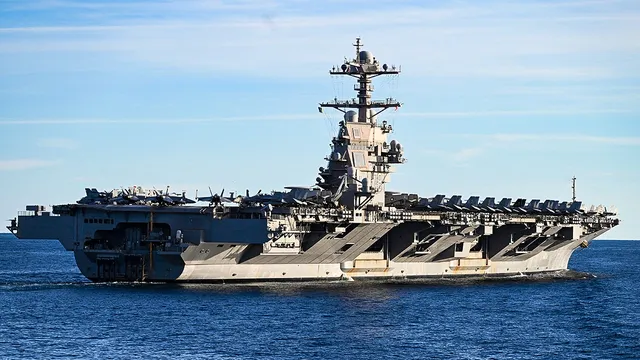
Navy secretary demands urgent shipbuilding reforms to compete with China
Navy secretary demands urgent shipbuilding reforms to compete with China
- John Phelan outlined concerns regarding the U.S. Navy's shipbuilding processes and readiness.
- The Navy has adopted a new Rapid Capabilities Office to speed up production and development.
- Phelan emphasizes the need for a shift toward a wartime mindset in light of challenges from China's growing naval capabilities.
Story
In recent months, John Phelan, the Navy Secretary, has raised concerns regarding the United States Navy's ability to keep pace with advancements in shipbuilding and military capabilities, particularly in light of China's rapid progress. Phelan emphasizes the urgent need for the Navy to adopt a wartime mindset in its shipbuilding approach, in response to ongoing delays, outdated practices, and a system that appears stuck in the past. He initiated the establishment of a new Rapid Capabilities Office, aimed at addressing production and procurement inefficiencies that have hindered timely development and deployment of modern naval assets. The urgency for modernization comes as the Navy faces challenges such as backlogged submarine construction and a reliance on older vessel designs, increasing fears about national security and technological superiority. Phelan's calls for immediate reform are intensified by competitive pressures from China's highly advanced and automated shipyards, which have successfully integrated artificial intelligence and machine learning to enhance their production capabilities, posing a direct challenge to the U.S. naval fleet's prowess. Furthermore, discussions about integrating commercial technologies into naval operations are gaining traction, which may help accelerate development timelines. However, skepticism remains regarding the Navy's ability to adapt quickly enough and whether it can overcome existing bottlenecks within its industrial base and labor force shortages to meet its ambitious goals. Phelan's message aims to shake up the traditional approach to shipbuilding, stressing that maintaining a comfortable status quo is unacceptable and that the Navy must innovate rapidly to avoid falling behind in the face of evolving global threats.


