

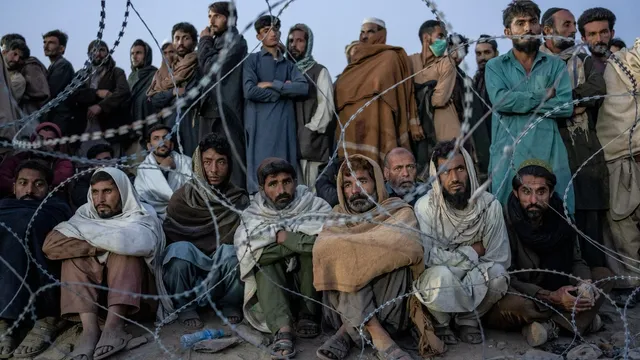
Massive return of Afghans from Pakistan and Iran strains Afghanistan's resources
Massive return of Afghans from Pakistan and Iran strains Afghanistan's resources
- Over 5.4 million Afghans have returned from Pakistan and Iran since October 2023, largely driven by immigration crackdowns.
- This influx represents about 12% of Afghanistan's population, worsening an already dire humanitarian crisis.
- The U.N. agency expresses deep concern for the sustainability of these returns amidst existing resource strains.
Story
Since October 2023, Afghanistan has witnessed an unprecedented return of 5.4 million Afghans from neighboring countries, particularly Pakistan and Iran. This exodus has been triggered by a crackdown in Pakistan, aiming to expel undocumented migrants and coercing them to leave voluntarily, as well as Iran's similar measures around the same period. Many of these returnees had established lives in their host countries, making their sudden return all the more challenging. The U.N. Refugee Agency's representative, Arafat Jamal, highlighted the dire circumstances in Afghanistan and the profound impact this mass return has on a nation already grappling with a humanitarian crisis and poor economic conditions. The scale of this return is significant, accounting for about 12% of Afghanistan's population and exacerbating an already strained resource situation. The country has been facing adverse conditions, including a struggling economy, severe droughts, and the aftermath of two devastating earthquakes. The influx of returnees has intensified the existing humanitarian issues, with many families resorting to negative coping mechanisms to survive. The U.N. development program reported that nine out of ten families in high return areas are experiencing food insecurity and other hardships as they struggle to adapt to the situation. Amid these challenges, Afghan authorities have been providing some support to returnees, including care packages with essentials like food aid and cash assistance. However, the scale of returns is overwhelming, and the resources needed to help integrate these individuals back into society are lacking. Moreover, many who returned express a desire for dignity and the opportunity to build their lives, but the current conditions force some to contemplate leaving Afghanistan again. Jamal noted that while 5% of returnees have mentioned an intention to leave the country again, more than 10% are aware of someone who has already opted to leave. In summary, the return of millions of Afghans from Pakistan and Iran presents multiple challenges. The stark reality is that many want to stay and rebuild their lives, but the economic and social infrastructures in Afghanistan are insufficient to accommodate this sudden population surge. As the country faces a precarious situation, the emphasis on sustainable solutions becomes critical to prevent further displacement and ensure a stable future for those who have returned.


