

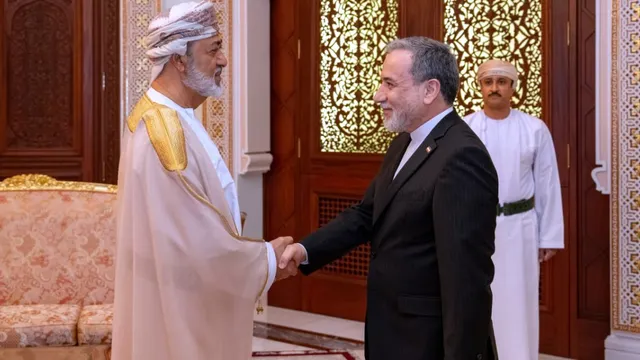
Iran denies talks while foreign minister visits Pakistan for coordination
Iran denies talks while foreign minister visits Pakistan for coordination
- Iran's Foreign Minister Abbas Araghchi visited Islamabad to coordinate with local officials on bilateral issues.
- The U.S. is sending envoys for talks, but Iran denies plans for any direct discussions with American representatives.
- Iran's refusal to engage directly reflects ongoing tensions with the United States and their conditions for negotiations.
Story
On April 25, 2026, Iranian Foreign Minister Abbas Araghchi arrived in Islamabad, Pakistan, as part of a diplomatic tour aimed at coordinating efforts with regional partners, including Oman and Russia. This visit comes amid mixed messages regarding potential negotiations with the United States. While the U.S. plans to send envoys Steve Witkoff and Jared Kushner for discussions, Iran's government has categorically denied any direct meetings with American officials, asserting that its positions will only be conveyed to Pakistani officials. The Iranian Foreign Ministry emphasized that the focus was on strengthening bilateral relations with Pakistan rather than negotiating with the U.S., amidst a backdrop of heightened tensions over military engagements in the region, particularly relating to the Strait of Hormuz. The Iranian government has conditioned any participation in U.S.-Iran talks on the lifting of a naval blockade currently imposed by the U.S., which Tehran deems a violation of ceasefire terms. During the ongoing standoff, oil prices have surged due to uncertainties in the region, fueled by recent military actions, which have only intensified fears of escalating conflict.
Context
Negotiations between Iran and the United States have reached a critical juncture as of April 2026, with both nations engaged in discussions to find common ground on various issues, including Iran's nuclear program and economic sanctions. These talks are a result of ongoing diplomatic efforts following years of tension between the two countries. The current negotiations represent a renewed commitment from both sides to explore pathways toward better relations, with an understanding that resolution is vital for regional stability and international security. American and Iranian officials have expressed cautious optimism, signaling a willingness to compromise and engage in intensive dialogues aimed at addressing the concerns that have long plagued their diplomatic relations. At the forefront of these negotiations is the contentious issue of Iran's nuclear program, which has been a point of contention since the collapse of the 2015 nuclear deal, formally known as the Joint Comprehensive Plan of Action (JCPOA). In recent weeks, there have been indications that both parties are open to discussing the possible reestablishment of some terms included in the original agreement while exploring new measures that may enhance compliance and transparency. Inspections, uranium enrichment levels, and the sunset clauses that limit specific aspects of Iran's nuclear activities are under scrutiny. US negotiators are especially keen on ensuring that any new agreement includes stringent monitoring to prevent potential proliferation activities. In addition to nuclear issues, the discussions encompass the economic sanctions that have profoundly affected the Iranian economy. These sanctions, implemented to pressure Iran into compliance regarding its nuclear program, have led to significant economic hardship for many Iranians. In response, there are proposals on the table suggesting a phased approach to lifting these sanctions, contingent upon Iran's adherence to specific benchmarks regarding its nuclear program and activities in the region. The acceptance of gradual sanction relief aims to create a conducive environment for both countries as they rebuild trust and work towards a more stable economic partnership. The stakes of these negotiations extend beyond the bilateral relationship, affecting broader geopolitical dynamics in the Middle East. Observers are closely monitoring the talks as they could lead to a shift in regional alliances and have implications for the actions of other countries involved in Middle Eastern geopolitics. Success in the negotiations could pave the way for Iran's reintegration into the international community and a more stable regional environment. Conversely, failure could lead to renewed tensions, potentially destabilizing an already volatile region. As April 2026 progresses, the world watches closely to see whether diplomatic efforts can indeed yield a transformative outcome.


