

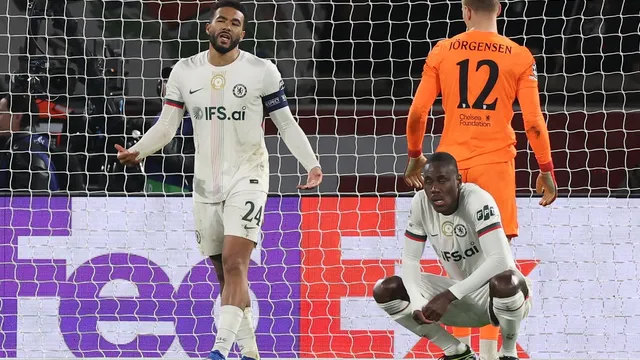
Chelsea crumbles as Liam Rosenior accepts blame for defeat
Chelsea crumbles as Liam Rosenior accepts blame for defeat
- Chelsea managed to equalize twice during the match but ultimately faced a devastating collapse in the last 15 minutes.
- A crucial mistake by goalkeeper Filip Jorgensen paved the way for a decisive PSG goal, triggering a chain of late goals against Chelsea.
- Liam Rosenior acknowledged the team's need to learn from this defeat while stressing the importance of calmness during crucial moments.
Story
In the Champions League last-16 first leg held in Paris, Chelsea suffered a damaging 5-2 defeat against Paris Saint-Germain. The match saw Chelsea initially recover from two goals down, with Enzo Fernandez and Malo Gusto scoring equalisers to bring the score to 2-2. However, the turning point occurred in the 74th minute when Chelsea goalkeeper Filip Jorgensen made a costly error, attempting to pass from his own area, which was intercepted by Bradley Barcola, leading to a goal from Vitinha. This mistake resulted in a series of late goals from PSG, specifically two from Khvicha Kvaratskhelia, ultimately sealing Chelsea's fate in the tie. Liam Rosenior, the Chelsea manager, took full responsibility for the defeat, stating that his team needed to remain calm in crucial moments. He acknowledged that while the team had shown promise for most of the game, psychological factors led to their late collapse. Following this result, Chelsea's chances of progressing in the tournament appear significantly diminished, with a three-goal deficit to overcome in the second leg at Stamford Bridge. Rosenior emphasized the need for his squad to learn from the experience and respond positively in their upcoming fixtures.
Context
The UEFA Champions League is one of the most prestigious tournaments in club football, and its knockout stage is a crucial part of this competition. The knockout stage begins after the completion of the group stage, where the top two teams from each group advance to the Round of 16. The format of the knockout stage is structured to heighten the intensity and excitement of the matches, showcasing the best talents in European football. Teams play home and away matches, and the aggregate score determines which team progresses to the next round. In the event of a tie on aggregate score, the away goals rule was previously in effect, meaning that the team scoring more away goals would advance; however, this rule has been abolished in recent editions, leading to a period of extra time and, if necessary, a penalty shootout to decide the winner. The draw for the knockout stage is conducted in single-elimination format, where teams that finished first in their group are paired with teams that finished second. The draw is open, meaning that teams from the same country can face each other, which adds an additional layer of intrigue and excitement. This randomized pairing creates matchups that can lead to unexpected outcomes and memorable clashes between football powerhouses. The schedule is meticulously planned, with matches typically taking place in February, March, and April, culminating in the final match held in late spring. Team composition and strategy play a pivotal role in the knockout stage, where individual matches can pivot on tactical decisions, player fitness, and sometimes even luck. Coaches must manage their squad's resources efficiently across both legs of the knockout ties, as the stakes are considerably higher than in the group stage; the margin for error is minimal. Additionally, the pressure on players increases as they contend with the knowledge that their performance in these matches is critical for their club's success and their long-term careers. The psychological aspect of knockout football cannot be understated, as experienced players will often call upon their ability to handle high-pressure situations. Overall, the knockout stage of the Champions League epitomizes the competitive spirit and drama of football at the highest level. Intriguing matchups, strategic battles, and the intense atmosphere of the stadiums create a unique blend of sport and spectacle. As clubs aim for European glory, the knockout stage remains a defining portion of the tournament, where fans engage fervently with each moment, living and dying with the fate of their teams. The evolution of the competition's rules and structure continues to enhance the quality and excitement, ensuring that the Champions League remains a significant event in the global sporting calendar.


