

Vanguard launches new ETF to bypass China investments
Vanguard launches new ETF to bypass China investments
- Vanguard launched the Vanguard Emerging Markets ex-China ETF, called VEXC, in September 2025.
- The ETF aims to help investors access markets like Brazil, India, and Taiwan without China-related risks.
- VEXC reflects growing investor demand for safer investment options amidst uncertainties associated with China.
Story
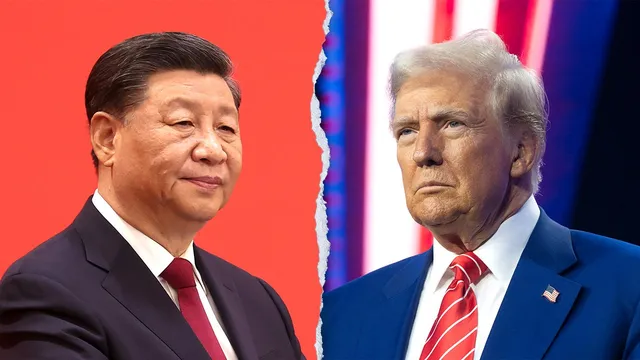
The Vanguard Group introduced its Vanguard Emerging Markets ex-China exchange-traded fund, known as VEXC, in September 2025. This fund aims to provide investors exposure to emerging markets while excluding Chinese companies, addressing concerns about the inherent risks associated with investing in China, such as human rights issues, capital market transparency, and fluctuating bilateral relations with the United States. As the dynamics between the U.S. and China become increasingly contentious, particularly under the administration of former President Donald Trump, many investors seek safer avenues for growth in emerging economies. VEXC reflects a calculated effort by Vanguard to meet investor demand for low-cost index funds that allow for targeted investment in major markets such as Brazil, India, and Taiwan. This ETF is designed to mirror the performance of over 1,000 companies, including major corporations like Taiwan Semiconductor and Infosys, while strategically avoiding exposure to China. Since its launch, the fund has garnered interest, reportedly nearing $50 million in assets, and has shown a modest return of around 4%, closely trailing behind its benchmark’s 4.9% rise. The decision to avoid Chinese investments isn't unfounded, as several factors have contributed to ongoing investor wariness about the Chinese market. The association with human rights violations, government transparency issues, and international trade disputes has heightened anxiety among investors who prefer to mitigate risk when pursuing higher growth opportunities in emerging markets. The ETF positioned itself as a favorable option for long-term investors desiring healthier investment landscapes in Asia and beyond, without the China-related volatility. Investors historically have looked to China as a vital component of their emerging market strategies; however, the increasing geopolitical tensions have shifted the focus for some towards alternative markets that promise growth with reduced risks. As global economic conditions evolve and investor perceptions shift, ETFs like VEXC illustrate a trend towards more strategic investment choices focused on stability over potential volatility related to policies and practices in China.
Context
The impact of US-China relations on investments has garnered significant attention in recent years, particularly as both countries play pivotal roles in the global economy. With the United States and China being the world's largest economies, their relationship is foundational not just for bilateral trade, but for global markets as well. Fluctuations in this relationship, stemming from trade policies, geopolitical tensions, and economic strategies, create ripples across investment landscapes. Investors must navigate these complexities, as changes in tariffs, sanctions, and diplomatic relations can directly affect the prospects of investment return and risk. The evolving dynamics between the US and China often reflect broader trends in global commerce. For example, recent trade disputes have led to increased tariffs on goods, impacting cross-border investments and altering supply chains. This has prompted businesses to reconsider their market strategies, often resulting in diversified investments that mitigate risks associated with reliance on a single market. Furthermore, investment flows between the two nations can be heavily influenced by government policies aiming to protect domestic industries, leading to an increase in 'decoupling' strategies. Companies are increasingly hesitant to commit significant capital to initiatives that may be jeopardized by political shifts, requiring a thorough analysis of long-term viability in light of current relations. In addition to tariffs and trade barriers, technological competition plays a crucial role in shaping investment behaviors. The US's efforts to limit China's access to advanced technologies and the subsequent development of indigenous capabilities within China highlight a significant shift in the investment landscape. As both nations vie for supremacy in sectors such as high technology, clean energy, and AI, foreign direct investment (FDI) trends are shifting accordingly. Investors must stay attuned to these developments, as they may mean the reallocation of resources toward industries deemed 'safe' from potential fallout due to escalating tensions. The competition for technological leadership fosters an environment where strategic investments are essential to maintaining competitive advantage. Ultimately, successful navigation of the investment climate amid US-China relations hinges on adaptability and informed decision-making. Investors are encouraged to conduct rigorous market assessments to gauge not only immediate opportunities but also long-term implications of geopolitical shifts. By leveraging insights into government policies, economic indicators, and the technological landscape, investors can better predict and respond to changes in bilateral relations. As 2025 progresses, the interdependence of the US and China continues to shape investment strategies, making it imperative for stakeholders to remain vigilant and proactive amid ongoing developments.


