politics
controversial
update

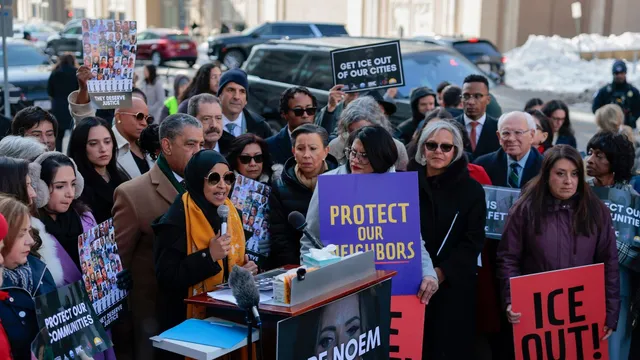
Kristi Noem faces Congress over immigration reactions in Minnesota

Jan 31, 2026, 1:00 PM40
(Update: Feb 3, 2026, 9:49 PM)
American politician
American government official
City in and county seat of Hennepin County, Minnesota, United States

Kristi Noem faces Congress over immigration reactions in Minnesota

  • Following the shooting of Alex Pretti, Second Amendment advocates criticized statements from Trump officials labeling him as a domestic terrorist.
  • Kristi Noem will testify before Congress regarding the department's actions and the incidents involving immigration enforcement in Minnesota.
  • The responses from government officials have sparked significant debate over gun rights and the government's enforcement of laws during protests.
Share your opinion
4

Story

On January 24, 2026, in Minneapolis, Minnesota, a shooting incident involving Alex Pretti raised significant controversy surrounding gun rights and government responses. Following the shooting, various Second Amendment advocates opposed the narratives presented by Trump officials regarding Pretti being an armed protester during an operation of federal agents. These comments led to backlash against Homeland Security Secretary Kristi Noem, who characterized Pretti’s actions as domestic terrorism. This sparked debates on the appropriateness of carrying firearms during protests and the rights guaranteed by the Second and First Amendments. Numerous Second Amendment organizations publicly defended pre-existing rights to carry guns, presenting the argument that such actions should not be interpreted as violent or threatening without additional context. Adding to the scrutiny, Secretary Noem is set to testify before the House Judiciary Committee in March 2026 amid criticisms concerning her department's aggressive immigration and deportation strategies, particularly after the deaths of two U.S. citizens, including Pretti, during immigration operations in Minnesota. This hearing, which is part of routine oversight of Cabinet members, comes in response to a demand by Democrats in Congress, who assert that Noem's earlier comments on the incidents reflect a potential cover-up of the Department of Homeland Security's actions. Chairman Jim Jordan has indicated that sanctuary cities will be a focal point of discussion during the testimony, as there is growing concern over the protection and treatment of undocumented individuals within such jurisdictions. The backlash against Noem and Trump's administration highlights a broader cultural conflict over gun rights, freedom of speech, and law enforcement policies regarding undocumented immigrants. Various stakeholders, including advocacy groups and political leaders, expressed strong views on the necessity of distinguishing lawful carrying of firearms from any malicious intent. The FBI emphasized that they will protect Americans' constitutional rights, yet they, along with federal agents, are faced with critical evaluations regarding the use of lethal force and policing methods that occur during such volatile demonstrations. The ongoing investigations seek not only to address these tragic incidents but also to assess the responses from high-ranking officials and their alignment with constitutional liberties. The political landscape remains tense as both sides of the debate grapple with the implications of law enforcement actions and the safeguarding of American civil rights. Ultimately, the forthcoming testimony by Kristi Noem at Congress stands as a pivotal moment amid heightened tensions surrounding the treatment of immigrants, the exercise of gun rights in protests, and the overarching theme of accountability for federal actions within local jurisdictions. As inquiries proceed, the nation watches to see how these complex issues of public safety, civil liberties, and lawful governance will be navigated.

Context

The Second Amendment of the United States Constitution, which states that "the right of the people to keep and bear Arms, shall not be infringed," has been the subject of extensive legal and societal debate, particularly around its implications for public demonstrations. The original intent behind the Second Amendment was to ensure that citizens could form militias and defend themselves, a principle that has evolved and been interpreted in various ways over the years. Legal interpretations vary, contributing to a complex landscape where gun rights and public safety considerations often collide, especially during protests and demonstrations. In recent years, there has been a noticeable increase in public demonstrations that involve the display or use of firearms. These events often aim to advocate for Second Amendment rights, counter protests, or address broader societal issues such as racial justice and governmental authority. As such, the presence of firearms at protests raises critical questions about the boundaries of free speech and the right to bear arms. Law enforcement agencies face challenges in maintaining order and ensuring public safety in these volatile situations, where the potential for violence can be heightened by the presence of weapons. States have adopted varying regulations regarding open carry laws, concealed carry permits, and restrictions on firearms at public gatherings, leading to a patchwork of legal standards across the country. This variation complicates the legal landscape further, as individuals participating in demonstrations often navigate different rules depending on their location. The tension between exercising First Amendment rights and the Second Amendment rights creates a complex dynamic for lawmakers and citizens alike, highlighting the need for clear regulations that balance individual rights with community safety. Moving forward, engaging all stakeholders—legislators, law enforcement, citizens, and advocacy groups—is essential to addressing the implications of firearm presence at public demonstrations. This dialogue can help to create policies that respect the constitutional rights of individuals while considering the potential consequences for public safety. It is vital for such discussions to be informed by data and research on the impact of firearms in public spaces, focusing not only on legal implications but also on social contexts and the experiences of communities affected by gun violence. Ultimately, finding common ground in this deeply divisive issue is crucial to fostering a safer and more informed society.

2026 All rights reserved