
Israel launches airstrikes against Hezbollah in Lebanon
- The IDF conducted airstrikes on alleged Hezbollah sites in southern Lebanon, claiming these sites violated ceasefire terms.
- Israeli forces reportedly carried out ground incursions, demolishing houses in border towns.
- The ongoing frequency of such attacks raises concerns about the stability of the fragile ceasefire.
Story
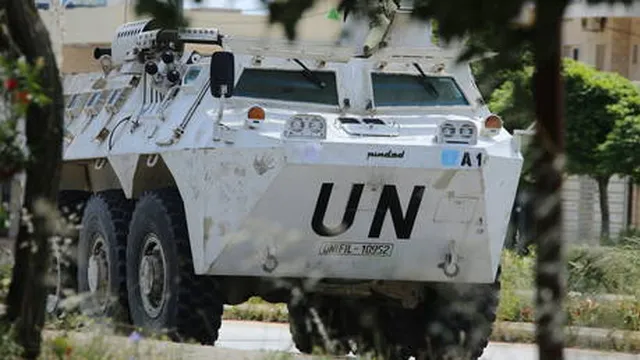
The Israel Defense Forces (IDF) conducted airstrikes on alleged Hezbollah locations in southern Lebanon on February 19, 2026. These attacks came despite an ongoing ceasefire agreement brokered by the United States aimed at halting hostilities that had begun in late 2024. Reports indicate that the IDF struck sites believed to contain weapons storage facilities and missile launchers, as well as military infrastructure deemed a violation of the understandings between Israel and Lebanon. In addition to airstrikes, Israeli troops executed ground incursions into border towns, further escalating the tension in the area. The IDF's operations were reported to involve the demolition of two houses in these border villages, underscoring the serious nature of their actions. The Lebanese media reported these developments, highlighting an increase in tension along the Israel-Lebanon border and the fragile nature of the ceasefire. Previously, earlier this month, Israeli forces had been accused of spraying an herbicide, specifically glyphosate, across the Lebanese border, which triggered backlash from the Lebanese government. Lebanese President Joseph Aoun condemned this as an environmental crime. Reports also detail that the United Nations Interim Force in Lebanon (UNIFIL) was notified about the actions and confirmed that Israel described the substance used as non-toxic. The backdrop of this situation involves a US-backed ceasefire implemented to end nearly a year of fighting initiated by Hezbollah in late 2024, following their attacks on Israel in response to the conflict in Gaza involving Hamas. Despite this ceasefire, Israeli forces have continued to conduct operations against perceived threats from Hezbollah, and tensions remain high as concerns over a new clash persist.
Context
The Israel-Hezbollah conflict has deep historical roots that are tied to a series of geopolitical, social, and sectarian factors in the Middle East. The origins of the conflict can be traced back to the establishment of the state of Israel in 1948, which led to significant displacement of Palestinian Arabs. The tensions heightened further following the Lebanese Civil War, which erupted in 1975 and provided fertile ground for the emergence of Hezbollah in the early 1980s, as a militant and political group responding to the Israeli invasion of Lebanon in 1982. Hezbollah, supported by Iran and Syria, positioned itself as a defender of Lebanon against Israeli aggression, garnering substantial support among the Shiite population and contributing to the sectarian dynamics in the region. The conflicts over territorial integrity, national identity, and the civil rights of various groups have fueled animosities and led to cycles of violence largely characterized by asymmetric warfare and guerrilla tactics, which Hezbollah has effectively employed against Israeli forces over the decades. The most significant flare-up in hostilities occurred in July 2006, when Hezbollah engaged in a military conflict with Israel that lasted 34 days. This war was precipitated by Hezbollah's capture of two Israeli soldiers and resulted in heavy casualties on both sides, significant destruction in Lebanon, and a marked shift in regional dynamics. The war ended with a United Nations-brokered ceasefire, but it left unresolved issues, such as the return of hostages and the broader territorial disputes. The conflict had wider implications, reinforcing Hezbollah’s status as a key player both domestically in Lebanon and within the broader anti-Israel resistance movement. The aftermath of the war saw an escalation in rhetoric and continued military posturing from both sides, with Hezbollah rearming and Israel adopting a policy of preemptive strikes aimed at curtailing Hezbollah’s military capabilities. In subsequent years, dynamics in the region continued to evolve, with the Syrian Civil War providing a new battleground for regional proxy conflicts. Hezbollah, deeply invested in the conflict by supporting the Assad regime, has engaged in combat against various factions, which has further strained its resources and altered its public perception in Lebanon and beyond. Israeli operations against Hezbollah have also escalated, including airstrikes against weapon shipments in Syria intended for Hezbollah. This period has seen increasing concern regarding Hezbollah's arsenal, including precision-guided missiles that pose a significant threat to Israel’s national security. The relationship between Israel and Hezbollah has become more complex with the involvement of global powers, including the United States, Iran, and Russia, which adds layers of geopolitical intrigue to an already fragile equilibrium in the region. The conflict remains unresolved, with both sides exhibiting mutual hostility despite occasional dialogue and temporary ceasefires. The coexistence of a strong Hezbollah, perceived by Israel as an existential threat, creates a challenging security landscape in which military confrontations appear inevitable. The two sides continue to prepare for potential escalations, with the specter of broader conflict looming over the region. Efforts toward long-term solutions remain hindered by deep-rooted animosities and the fragmentation of regional politics, which complicate the prospects for peace. As the situation evolves, the Israel-Hezbollah conflict exemplifies enduring complexities in Middle Eastern geopolitics, reflecting broader challenges of identity, sovereignty, and regional stability.
