

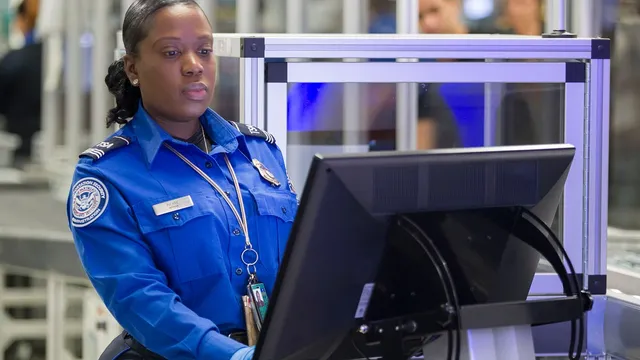
TSA staffing crisis escalates as hundreds quit amid shutdown
TSA staffing crisis escalates as hundreds quit amid shutdown
- Travelers face long security lines due to TSA staffing shortages attributed to the ongoing government shutdown.
- Over 300 TSA personnel have resigned or called out since mid-February, exacerbating delays at major airports.
- Officials urge travelers to arrive hours early at airports to navigate increased screening times amid the chaos.
Story
Since the partial government shutdown commenced on February 14, 2026, travelers across the United States have been experiencing significant disruptions in air travel due to long security lines at airports. This turmoil has resulted from staffing shortages within the Transportation Security Administration (TSA), which has forced many TSA officers to either leave their positions or call out sick due to financial hardships arising from the shutdown. Reports indicate that over 300 TSA officers have quit since the shutdown's start, compounding the issue and leading to delays of multiple hours at major airports such as Houston's William P. Hobby Airport and Louis Armstrong New Orleans International Airport. The ongoing partial shutdown stems from a political deadlock between the Trump administration and Democrats concerning funding for the Department of Homeland Security (DHS). As TSA officers are classified as essential personnel, they are required to work without receiving their full wages during the shutdown. The situation has become increasingly dire, with employees reporting a decline in morale and financial distress, as some have not only missed their full paychecks but are also experiencing increased absences amid rising travel demands due to the Spring Break season. The Pew Research Center has indicated that this period typically sees a surge in air travel, adding stress to an already burdened system. Travelers are being advised to arrive at airports three to four hours early to accommodate for the extended wait times at security checkpoints. This measure aims to mitigate the chaos caused by the sudden increase in the rate of absences among TSA officers, which has reportedly more than doubled during the shutdown. Airlines have attempted to adapt to this ongoing situation by adjusting flight schedules but face the challenge of unpredictable and fluctuating wait times that might worsen if the shutdown persists. The chief executive officer of Airlines for America, Chris Sununu, has highlighted the critical role of the TSA workforce in ensuring transportation security and has expressed urgency for congressional action to resolve the shutdown. Furthermore, experts suggest that the financial impact of this crisis could extend beyond immediate inconveniences for travelers, potentially affecting airline operations and costs due to increasing jet fuel prices and other associated operational difficulties. As the travel season progresses, stakeholders within the industry are calling for a swift resolution to restore logistical order and minimize disruption to airline passengers.
Context
TSA delays at airports across the United States have become an increasingly prominent issue, especially in the year 2026. The causes of these delays can be attributed to a confluence of factors, including staffing shortages, increased passenger volume, and the impact of evolving security measures. As airports have experienced a swift recovery in air travel demand following the COVID-19 pandemic, the Transportation Security Administration (TSA) has struggled to keep pace with the growing influx of travelers. This has placed considerable strain on the agency's operations, leading to lengthy wait times at security checkpoints, often resulting in frustrated passengers and missed flights. One contributing factor to staffing shortages at TSA checkpoints is the challenge of recruitment and retention of qualified personnel. The TSA has faced difficulties in attracting new employees, compounded by heightened competition from both the airline industry and the broader job market. The impact of budget constraints on the TSA has further limited its ability to hire and retain personnel. Many existing employees have also opted for early retirement, exacerbating the personnel crisis. As a consequence, even while traveler numbers are on the rise, the TSA has not been able to proportionally increase its workforce to ensure efficient security screening. In addition to staffing challenges, passenger volume has surged as air travel has regained popularity. The pent-up demand for travel has led to unprecedented numbers of passengers at airports, especially during peak travel times such as holidays and weekends. Consequently, the existing TSA screening protocols have been severely tested, as the increased volume has resulted in longer lines and extended wait times for security checks. The organization has also faced challenges in managing expectations and delivering timely services in the face of increasing traveler numbers, leading to a perception of inefficiency. Furthermore, evolving security measures and procedures can contribute to delays. As technology and threats evolve, the TSA continually adapts its screening processes to ensure passenger safety. Changes in regulations, the introduction of advanced screening technology, and heightened security protocols necessitate additional training for staff and adjustments in operations. These factors can lead to temporary inefficiencies as both employees and travelers acclimatize to new procedures. In summary, the delays experienced at TSA checkpoints across the United States in 2026 stem from staffing shortages, increased passenger volumes, and the need to implement updated security measures. The cumulative effect of these issues poses ongoing challenges for the TSA as it strives to enhance its efficiency and improve the travel experience for passengers.


