

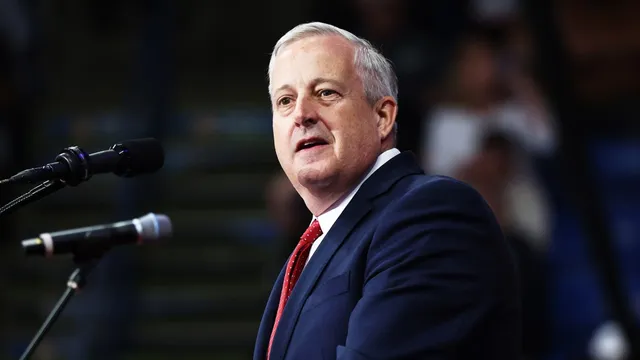
Trump backs Whatley to secure GOP Senate seat in North Carolina
Trump backs Whatley to secure GOP Senate seat in North Carolina
- President Trump visited North Carolina to support Michael Whatley in his Senate campaign, aiming to maintain Republican control in the midterms.
- Whatley highlighted his commitment to economic issues, asserting they will help align the GOP's agenda with voter concerns.
- The race represents a critical moment for the GOP, as losses could lead to Democratic control and a focus on retaliatory politics against Trump.
Story
In North Carolina, President Donald Trump campaigned for Michael Whatley as he seeks to hold a Republican seat in the upcoming midterm elections. This event occurred shortly after Whatley's strong rally with Trump in Rocky Mount. Whatley, a former chairman of the Republican National Committee, is the frontrunner for the GOP Senate nomination to succeed retiring Senator Thom Tillis, who opted not to run for re-election. Whatley emphasized the significance of Trump's presence, given that Trump won North Carolina in previous elections, and expressed hope for repeated visits from the former president leading up to the elections. Whatley acknowledged the challenges faced by Republicans in past elections, particularly the problem of low voter turnout among Trump supporters when he is not on the ballot. Recognizing Trump's immense popularity in North Carolina, Whatley asserted that the upcoming elections are crucial as they will reflect on Trump's legacy and the overall direction of the Republican Party. Whatley's comments reflect a focus on economic issues, including efforts to reduce gas prices and make housing more affordable, showing alignment with Trump's policies that he believes have begun to positively impact the economy. As the race intensifies, Whatley is actively campaigning across all ten regions of North Carolina, utilizing a strategy focused on Trump's economic message. He is optimistic about the conservative movement within the state, drawing contrasts with the Democrats and pointing out the importance of maintaining a Republican majority in the Senate. Whatley’s view is that if Republicans lose control, it could lead to a resurgence in Democratic investigations and impeachments against Trump. He stated that the GOP agenda centers around job creation, wage growth, and community safety, while also marking immigration as a key issue—arguing for tougher policies to ensure community safety from illegal immigration. The Democratic National Committee chair, Ken Martin, criticized Trump and Republicans, stating that they are losing touch with economic realities. Whatley countered this perspective by highlighting the GOP's plan under Trump's leadership to focus on pressing issues that resonate with North Carolinians. He also emphasized the significance of addressing elemental issues affecting the population, like job opportunities and community safety, asserting that the GOP is poised to win elections based on these priorities moving forward.
Context
The impact of Donald Trump's support on Republican candidates has been a topic of considerable analysis and discussion since his rise to prominence in the political arena. His endorsement has been shown to significantly influence primary elections, often bolstering the electoral prospects of candidates aligned with his political ideology or those who have established a clear connection to his agenda. Trump's appeal to a specific demographic - particularly working-class voters and those disenchanted with traditional politician dynamics - has drawn attention to how conventional strategies in Republican campaigning may need to be adapted in response to his popularity. As evidenced in various electoral outcomes, candidates who successfully incorporate Trump’s messaging tend to resonate more with a base increasingly characterized by loyalty to his persona rather than the Republican Party as a whole. Furthermore, Trump’s influence extends beyond just endorsements. His ability to mobilize a dedicated following has led to a unique campaign strategy where social media and direct communication play crucial roles. The candidates leveraging this new mode of interaction can create a potent mix of grassroots support and national visibility, factors that traditional candidates often struggle to achieve. This trend emphasizes the need for Republican candidates to harness digital communication effectively, enabling them to connect intimately with voters and galvanizing their campaigns around issues that matter most to them, often aligned with Trump’s platform. However, Trump's influence is not universally positive for all Republican candidates. Candidates perceived as insufficiently loyal to Trump or opposing his views may face backlash, diminishing their chances in both primary and general elections. This dichotomy presents a challenge, forcing candidates to walk a fine line between embracing Trump’s endorsement while maintaining broader appeal to the electorate. Indeed, recent elections have illustrated this tension, where candidates who have openly critiqued Trump or distanced themselves from his administration often struggled to gain traction, underscoring the challenges of navigating an increasingly polarized political landscape. As the Republican Party continues to evolve post-Trump, the implications of his support on future candidates remain to be seen. The landscape suggests that while some candidates may benefit from aligning closely with Trump, others may find success by presenting a more moderate or independent front. Looking forward, the Republican Party must reconcile the diverse desires within its voter base while determining the strategic role of Trump's influence on candidates. Overall, the impact of Trump's support will likely remain a critical factor in shaping the future of Republican electoral strategies and candidate selection.


