

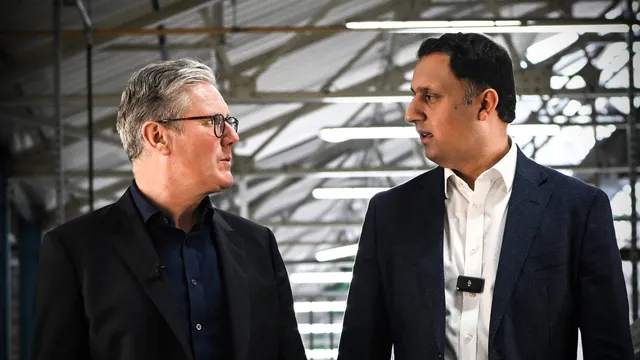
Anas Sarwar demands keir starmer's resignation amid leadership crisis
Anas Sarwar demands keir starmer's resignation amid leadership crisis
- Two of Keir Starmer's top aides resigned within 24 hours, intensifying a leadership crisis within the Labour Party.
- Anas Sarwar, leader of Scottish Labour, publicly called for Starmer's resignation due to multiple mistakes during his leadership.
- The Labour cabinet supports Starmer for now, but internal dissent suggests calls for change may gain momentum.
Story
In the United Kingdom, a significant political crisis unfolded as Sir Keir Starmer faced mounting pressure to resign from his position as Prime Minister. This turmoil arose following the resignation of two key aides within 24 hours, with Morgan McSweeney stepping down as Chief of Staff over his controversial advice to appoint Lord Peter Mandelson as the US ambassador. This incident drew scrutiny due to Mandelson's previous associations with convicted financier Jeffrey Epstein, raising questions about Starmer's judgment and leadership. The situation escalated when Anas Sarwar, leader of the Scottish Labour Party, publicly called for Starmer to step down, citing numerous mistakes made during his leadership. Sarwar's remarks marked him as the highest-ranking Labour official to recommend Starmer's resignation, emphasizing that leadership change in Downing Street was imperative to prevent further failures in Scotland, especially ahead of crucial elections in May 2026. Although the Labour cabinet expressed support for Starmer, the call for his resignation represented a significant rift within the party. As Starmer's leadership came under scrutiny, members from different factions within Labour indicated that they viewed his position as increasingly untenable. In a meeting with his MPs, Starmer aimed to reassure them of his commitment to fighting against challenges posed by opposing parties, insisting that he would not resign and remained confident in his mandate from the public. However, a growing sentiment within the Labour Party suggested that a leadership change may soon be required as the party grapples with its image and viability ahead of upcoming elections.
Context
The UK Labour Party has been facing a significant leadership crisis in early 2026, marked by internal party divisions and external pressures as the general election approaches. This turmoil is primarily attributed to ongoing dissatisfaction with the party's direction since its last electoral setback, which has prompted calls for new leadership and a reevaluation of policies that resonate with the electorate. Many party members and influential figures have voiced concerns regarding the effectiveness of the current leadership, asserting that a fresh perspective is necessary to revitalize the party and regain trust among voters. These sentiments have fueled a growing movement advocating for an open challenge to the incumbent leadership and a potential leadership contest. Compounding the situation, the Labour Party has faced significant electoral challenges from rival parties, specifically the Conservatives and emerging political movements that have captured the attention of disenchanted voters. Issues such as the economy, healthcare, and climate change have dominated the public discourse, highlighting a perceived lack of clear and actionable policies from Labour. The party's inability to address these pressing concerns has further alienated its base, leading to increased calls for leadership change from grassroots activists and major support groups within the party. Despite the unrest, there are factions within the Labour Party that firmly support the current leadership, arguing that stability is crucial as the party prepares for the upcoming elections. Proponents of the existing leadership emphasize the need to build on previous policy successes and highlight the importance of unity. They contend that a leadership change at this juncture might lead to greater fragmentation and risk a repeat of past electoral failures. However, with pressure mounting from various wings within the party, the challenge of sustaining this unity amidst differing opinions is becoming increasingly complicated. Looking ahead, the resolution of the Labour leadership crisis will likely play a pivotal role in shaping the upcoming electoral landscape. As factions within the party continue to grapple with their identities and the vision for the future, it remains to be seen whether a significant leadership change will occur, or if the current leadership can rally support and transform the party's image ahead of the general election. The coming months will be critical, as the Labour Party must address its internal divisions and articulate a compelling vision that resonates with both its core supporters and the broader electorate to regain parliamentary strength.


