

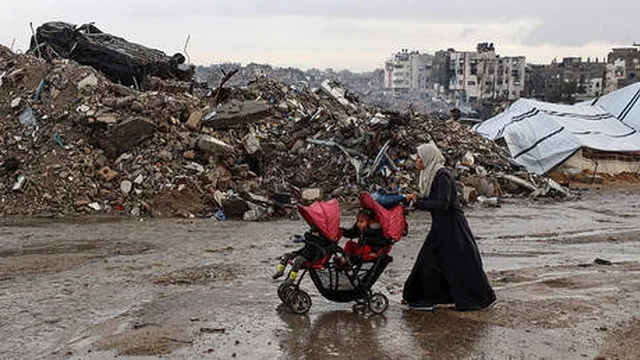
Hamas denies involvement in Rafah explosion despite Israeli claims
Hamas denies involvement in Rafah explosion despite Israeli claims
- A bomb explosion targeting an Israeli armored vehicle occurred in Rafah, southern Gaza, an area under Israeli military control.
- Hamas denied any connection to the blast, attributing it to dangerous remnants of war left in the area.
- The ongoing humanitarian crisis in Gaza is compounded by continued Israeli airstrikes, raising concerns over the adherence to ceasefire agreements.
Story
In southern Gaza, a bomb blast struck an Israeli armored vehicle in Rafah, an incident Hamas has denied responsibility for, stating that the explosion occurred in an area fully controlled by Israeli forces. This incident coincided with an ongoing US-brokered ceasefire which was effective starting October 10, requiring Israeli forces to retreat and Hamas to release hostages. Following the explosion, the Israeli Defense Forces reported an officer’s injury, leading Israeli Prime Minister Benjamin Netanyahu to attribute the explosion to Hamas, a claim which Hamas refuted, emphasizing the absence of Palestinians in the area due to the Israeli military's control. Hamas, through various official channels including messages on Telegram and statements from senior official Mahmoud Mardawi, pointed to the danger posed by unexploded ordnance left in the region as a potential cause of the blast. They further stated that remnants of war posed risks to the area, arguing that they should not be held accountable for incidents that they insist are due to explosives placed by Israeli forces. The militant group has called for international pressure on Israel to uphold the ceasefire agreement and avoid creating pretexts for further escalations. In response, Netanyahu warned that Hamas's actions indicate they have no intention of disarming, a central requirement of the ceasefire. The Israeli government has moved to reinforce its stance, asserting that it will respond accordingly to any violence attributed to Hamas. Moreover, despite the declared ceasefire, reports indicate that airstrikes by Israel have continued. Humanitarian conditions in Gaza have deteriorated, exacerbated by the delays in aid delivery, as reported by United Nations agencies and regional mediators. Palestinian officials have accused Israel of violating the ceasefire terms, with claims that over 70,000 Palestinians have died due to ongoing Israeli military operations. Hamas's persistent calls for adherence to the ceasefire signify their concern over potential violations, while also highlighting the complexities surrounding the conflict. The dichotomy between Hamas’s denial of culpability and Israel’s assertions could escalate tensions further if the ceasefire is not respected on both sides. The situation remains precarious as humanitarian needs in Gaza increase, amidst accusations of breaches from both parties and the looming threat of renewed violence lasting beyond the current ceasefire period.
Context
shift economic shift data policy analysis global strategic geopolitical insight impact trends geopolitical trends analysis geopolitical trends economic trends trends data impact market trends shift global strategic shift impact shift geopolitical geopolitical data market impact market impact policy insight impact data global policy global global geopolitical insight insight insight trends global impact analysis market impact impact impact trends market trends economic impact market trends policy global analysis market shift policy geopolitical economic strategic global trends market insight analysis impact data...


