

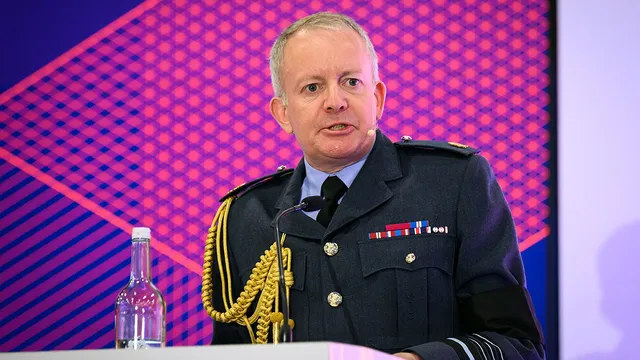
UK and Germany assert military buildup is crucial to counter Russian threats
UK and Germany assert military buildup is crucial to counter Russian threats
- The defense chiefs of the UK and Germany declare the necessity of military buildup to counter Russian threats, particularly due to ongoing tensions from the Russia-Ukraine war.
- They emphasize the importance of a strong defense industrial base to sustain military efforts and deter further aggression.
- The leaders assert that rearmament is a moral duty aimed at protecting citizens and ensuring peace, highlighting the risks of weakness.
Story
In response to ongoing tensions stemming from the Russia-Ukraine war, the defense leaders of the United Kingdom and Germany have issued a statement emphasizing the importance of a robust military buildup to safeguard Europe against potential Russian aggression. In a joint opinion piece, Air Chief Marshal Sir Richard Knighton and German chief of defense Carsten Breuer pointed to Moscow's military actions and its willingness to wage war on European soil as key reasons for their stance. They argued that the conflict in Ukraine demonstrates the necessity of a strong industrial base capable of sustaining prolonged military efforts. The defense chiefs highlighted historical lessons where perceived weakness has prompted adversarial actions, urging European nations to present a united front. They warned that if Russia observes disunity and weakness within Europe, it may feel emboldened to extend its aggression beyond Ukraine. Therefore, they stressed the importance of solid defense capabilities and increased defense spending as a means of deterrence and stability. Knighton and Breuer asserted that rearmament should not be misconstrued as warmongering but instead viewed as a responsible measure taken by nations dedicated to protecting their citizens and upholding peace. They underscored a moral obligation to remain prepared for defense while emphasizing that a strong military presence is crucial to preventing further conflicts. Their statements reflect a growing consensus among European allies regarding the need to enhance their military resources in light of current geopolitical challenges. As European nations bolster their defense industries and allocate additional funding towards military capabilities, the defense leaders advocate for a strategic focus on manufacturing essential military resources, including ammunition, systems, and platforms, needed for modern warfare. Such measures are considered vital for ensuring readiness and effectiveness in any potential confrontations. Ultimately, the collective efforts of nations to enhance their military strength serve as both a deterrent to aggressors and a necessary step for protecting peace in Europe.
Context
The history of military buildup in Europe in response to Russia can be traced back through several key events and periods, particularly in the last decade. Following the annexation of Crimea by Russia in 2014, a significant shift occurred in the European security landscape. NATO member states and their allies recognized that Russia's aggressive posture under President Vladimir Putin posed a direct threat to regional stability and security. In response, NATO initiated a series of measures designed to enhance collective defense capabilities, including increased military presence in Eastern Europe, augmenting defense budgets, and conducting large-scale military exercises. Countries such as the Baltic states, Poland, and Romania have been at the forefront of these initiatives, seeking both deterrence and reassurance from NATO allies in light of perceived Russian expansionism. As tensions escalated with an emboldened Russia, particularly evidenced by its military operations in Ukraine and its involvement in conflicts in Syria and Georgia, European nations began to reassess their own military capabilities and readiness. Countries like Germany, France, and the United Kingdom increased their defense spending, initiated new military programs, and engaged in collaborative defense projects, such as the European Intervention Initiative and the NATO Enhanced Forward Presence. These steps marked a notable shift from previous post-Cold War disarmament trends, as Europe sought to modernize and adapt its armed forces to counter new hybrid warfare tactics employed by Russia, including cyberattacks, disinformation campaigns, and the use of irregular forces. The military buildup has not only been a question of borders and troop deployments but has also involved strategic partnerships and alliances. The United States has played a pivotal role in bolstering European defense through increased military exercises and presence, while also urging European nations to meet NATO's defense spending guidelines of 2% of GDP. In addition, efforts have been made to improve interoperability among NATO forces, as well as to enhance the capabilities of European nations through joint exercises, intelligence sharing, and technology development. Furthermore, the European Union has strengthened its own security and defense policies, seeking to establish a more unified approach to address external threats, thereby complementing NATO's efforts. In recent years, the geopolitical landscape has continued to evolve, as Russia's actions in Ukraine and military maneuvers near NATO borders have prompted an even more urgent reconsideration of deterrent strategies. The ongoing conflict in Ukraine, marked by sustained Russian aggression, has catalyzed discussions around long-term defense planning and military readiness within Europe. The implications of these developments are profound, as they not only reshape military strategies but also the political dynamics within the continent, fostering a renewed commitment to collective security in the face of a perceived existential threat from Russia. As of 2026, the narrative surrounding military buildup in Europe remains one of vigilance and adaptation, striving to maintain peace and security in a region that stands at a crossroads amidst ongoing tensions.


