

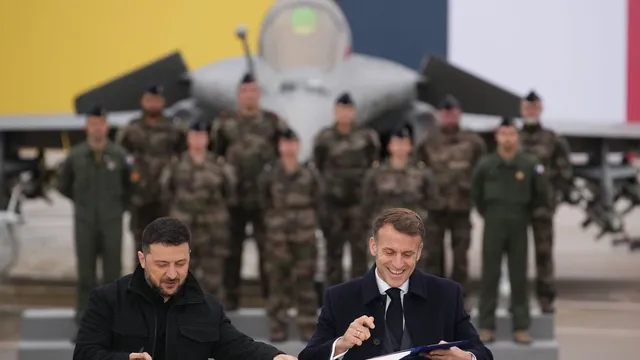
Zelensky secures historic deal for 100 French Rafale fighter jets
Zelensky secures historic deal for 100 French Rafale fighter jets
- Ukrainian President Volodymyr Zelensky announced a significant deal with France for the procurement of advanced fighter jets.
- The agreement also includes air defense systems to enhance Ukraine's military capabilities amidst ongoing conflict.
- This acquisition marks a crucial step in bolstering Ukraine's long-term security and deterrence against Russian aggression.
Story
Ukraine is enhancing its military capabilities as tensions with Russia continue, having recently secured a historic agreement for the purchase of 100 French Rafale fighter jets. On November 17, 2025, Ukrainian President Volodymyr Zelensky met with French President Emmanuel Macron in Paris where they signed a letter of intent. This deal aims to bolster Ukraine's air defense systems and overall military strength, responding to ongoing aggressions from Russian forces. The acquisition of these advanced aircraft is crucial for Ukraine's efforts to strengthen its air force significantly, as it faces an ongoing conflict with Russia that has lasted nearly four years. In addition to the Rafale jets, the agreement includes provisions for SAMP/T air defense systems, which could provide Ukraine with enhanced capabilities to protect against aerial attacks. This is seen as a pivotal moment in Ukraine's military strategy, as it moves towards greater self-reliance and increased deterrence against potential Russian aggression. Experts analyze that these Rafale jets will play a significant role in ensuring long-term security for Ukraine, allowing the nation to establish a more formidable defense posture in light of the persistent threats posed by its neighbor. The decision to procure these jets falls in line with Ukraine's broader military modernization efforts, which have included previous acquisitions of F-16 fighter jets and Swedish Saab Gripen jets. Such investments are critical as Ukraine attempts to ensure that its armed forces are well-equipped to handle the evolving challenges on the battlefield and maintain territorial integrity. This strengthening of military capabilities is further underlined by a recent attack in Odesa where Russian forces caused significant damage, prompting Ukraine to push for more robust defense measures. Moreover, the commitment from France reflects a turning point in international military cooperation, highlighting the growing support for Ukraine from Western allies amidst the ongoing conflict. As the war continues to unfold, such partnerships are expected to evolve, potentially paving the way for additional military support in the future while raising awareness about the urgency of Ukraine's situation within the broader international community. The implications of this agreement go beyond just military hardware; they signal a united front against aggressors and a shared commitment to upholding sovereignty and peace in the region.
Context
The European Union (EU) has been an integral supporter of Ukraine, particularly in light of the ongoing challenges faced by the country since the escalation of conflict in 2014 and the intensified situation in 2022. The EU's assistance is vital for Ukraine's economic stabilization and development, especially considering the significant impact of the war on its economy and infrastructure. In response to the crisis, the EU has been exploring a range of financing options to support Ukraine, which could include grants, loans, and innovative financial instruments designed to foster recovery and reform. This multifaceted approach aims not only to address immediate needs but also to promote long-term stability and growth in Ukraine, reinforcing its resilience against external pressures. One of the primary avenues for EU support has been direct financial assistance, which encompasses both humanitarian aid and economic support measures. The EU has mobilized substantial funds through various mechanisms, including the European Neighborhood Instrument and the Macro-Financial Assistance program. These funding streams are critical for sustaining government functions and providing essential services to the population amid the ongoing conflict. Furthermore, the EU has been committed to facilitating access to international financial markets for Ukraine, helping to rebuild investor confidence and attract foreign investment as part of the recovery process. In addition, the EU has actively supported the implementation of structural reforms in Ukraine to enhance governance, the rule of law, and economic efficiency. This commitment is manifest in the various conditionalities attached to financial aid, which aim to ensure that disbursed funds contribute to tangible improvements in public administration and economic management. These reforms are crucial for creating a conducive environment for both domestic and foreign investments, ultimately supporting Ukraine's integration into European structures and fostering economic resilience. Moreover, in light of the ongoing geopolitical realities, the EU has indicated its willingness to increase support further, exploring alternative financing sources, such as EU bonds or innovative financing mechanisms that could provide quicker access to funds. The focus on long-term recovery planning includes significant investments in key sectors: infrastructure, energy independence, and digital transformation. By harnessing collective EU resources and expertise, Ukraine's financing options can be optimized, ensuring strategic support for its path towards European integration and sustainable development.


