

Public outrage escalates after fatal ICE shootings in Minneapolis
Public outrage escalates after fatal ICE shootings in Minneapolis
- The recent shootings in Minneapolis have led to rising public dissatisfaction with immigration enforcement tactics.
- A public poll indicated that a significant majority of voters are critical of ICE and support calls for its abolition.
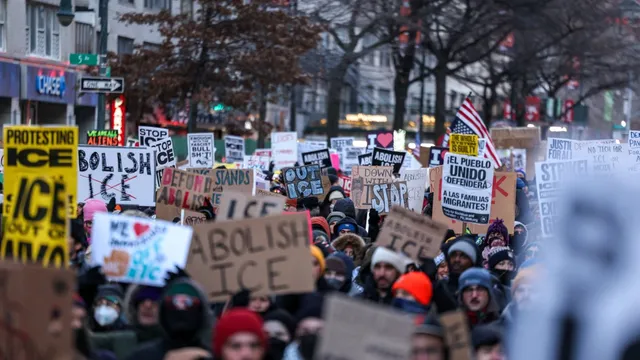
- The incidents have fueled protests and intensified discussions surrounding immigration policies and law enforcement practices.
Story
In the United States, particularly in Minneapolis, recent fatalities involving Immigration and Customs Enforcement (ICE) agents have ignited significant public outrage. On January 7, 2026, Renee Nicole Good, a 37-year-old mother of three, was shot and killed by an ICE agent during a federal immigration operation. Subsequently, Alex Jeffrey Pretti, a 37-year-old ICU nurse and U.S. citizen, was also killed by immigration officers on January 27, 2026, while recording the agents during their activities. This sequence of events has raised numerous concerns regarding ICE's enforcement tactics and the use of lethal force, leading many to call for the dismantling and defunding of the agency. The context surrounding these incidents includes a broader national debate over immigration policies and law enforcement practices. The Department of Homeland Security, which oversees ICE, has faced increasing criticism for its handling of immigration enforcement, often accused of excessive use of force and disproportionate targeting of communities of color. Recent polling indicates that a majority of Americans believe that ICE's tactics have gone too far, with many advocating for a complete reevaluation of the agency's role in immigration enforcement. In this volatile atmosphere, recent actions by ICE have only heated the discourse, culminating in protests and calls for reform. Public figures have taken a stand against the agency's actions, with notable figures such as Ben Cohen, co-founder of Ben & Jerry's, publicly advocating for ICE to be defunded and disbanded. Cohen's statements highlight a growing sentiment among both political leaders and everyday citizens that ICE's operational methods pose threats to civil liberties and public safety. As protests against ICE escalate, local and national political figures are faced with the challenge of balancing immigration law enforcement with the pressing need for accountability and justice. Moving forward, the implications of the recent shootings are significant, as they may influence public opinion regarding immigration policy, heighten calls for police reform, and potentially reshape the political landscape as the country heads toward midterm elections. The narrative surrounding these events continues to unfold as more details emerge and the public grapples with the consequences of such violent confrontations between federal agents and communities.
Context
The history of the U.S. Immigration and Customs Enforcement (ICE) is marked by a series of controversial actions that have sparked significant public debate and criticism. Established in 2003 as part of the Department of Homeland Security, ICE was created to enforce immigration laws and combat customs violations. Over the years, the agency has taken a variety of steps that have been seen as aggressive and often inhumane, contributing to a complex narrative surrounding immigration enforcement in the United States. Key episodes in this history include widespread raids in workplaces, the separation of families at the border, and the detention of undocumented immigrants under questionable conditions. One of the most notorious actions led by ICE involved the implementation of Operation Worksite Enforcement, which began in the late 2000s and ramped up in subsequent years. This initiative targeted employers who were accused of hiring undocumented labor, resulting in mass arrests of workers in various sectors. Critics argued that these raids not only disrupted communities but also led to a climate of fear among immigrant populations. Moreover, accusations about racial profiling and discrimination during these operations further exacerbated public outcry against ICE's tactics. Reports of immigrants being detained without adequate legal representation or access to basic services illustrated a troubling trend in the agency's approach to immigration enforcement. Family separation policies came to the forefront during the Trump administration, drawing widespread condemnation from human rights advocates and the public alike. Under the zero-tolerance policy introduced in 2018, families crossing the border illegally were systematically separated, leading to thousands of children being placed in detention facilities while their parents faced prosecution. This policy not only raised ethical concerns but also drew attention to the psychological impact on young children and the long-lasting effects on families. The public outcry was so severe that it prompted the administration to reverse the policy, revealing a significant backlash against ICE's handling of immigration enforcement during this period. In addition to these high-profile controversies, ICE has faced criticism related to its detention practices and the conditions within detention centers. Reports of overcrowding, lack of medical care, and inadequate living conditions have led to legal challenges and protests against the agency. The deaths of several detainees while in custody due to medical negligence have also intensified scrutiny of ICE's operational practices. As public sentiment continues to evolve, the agency remains at the intersection of immigration policy, human rights, and national security, making its controversial actions a focal point for ongoing debates about immigration reform and the future of enforcement in the United States.


