

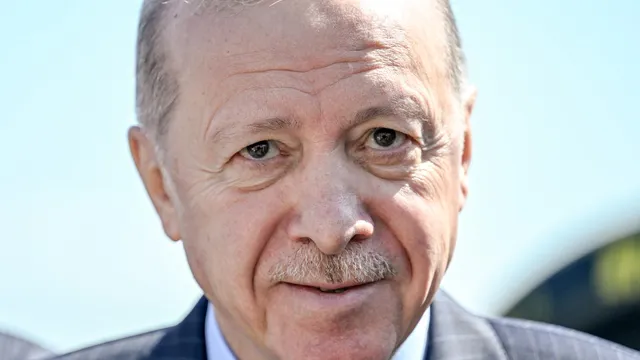
Erdogan reshapes Turkey’s opposition landscape amid rising authoritarianism
Erdogan reshapes Turkey’s opposition landscape amid rising authoritarianism
- The court annulled the 2023 congress of the Republican People's Party, signaling an unprecedented degree of interference.
- Erdogan's strategy includes targeting opposition candidates, exemplifying his intent to suppress credible rivals to maintain authority.
- These developments reflect a broader trend of authoritarianism in Turkey and a deliberate reshaping of the political opposition.
Story
In Turkey, a significant shift is underway regarding the political landscape, specifically regarding the Republican People's Party (CHP), the main opposition. The court recently annulled the 2023 congress of the CHP, which has raised concerns about the judiciary's independence and the ruling party's influence over it. This ruling marks a critical turning point in Erdogan's efforts to eliminate credible political opposition by targeting key figures, undermining the legal authority of the judiciary, and consequently, diminishing electoral legitimacy. Erdogan's decisive actions reflect his intention to maintain tight control over political dynamics, further entrenching the authoritarian framework established during his tenure. Furthermore, the leadership contest within the CHP highlights internal divisions and the evolving political strategies as expressions of opposition to Erdogan's regime. Kemal Kilicdaroglu's defeat by Ozel showcases the loyalty of CHP voters and potential challenges within the opposition's unity. Kilicdaroglu's leadership has been attributed to ineffective opposition, confirming Erdogan's belief that unfavorable candidates are necessary for maintaining dominance. This dynamic points towards a carefully crafted political environment favorable to Erdogan, enabling him to present a façade of pluralism while stifling genuine dissent. Parallelly, the cultural narrative of Istanbul illustrates the deep-seated divisions within Turkish society—a theme captured in recent literature highlighting the contrast between urban dwellers and rural migrants. These conflicts manifest in everyday life, reflecting broader political tensions that the ruling party adeptly utilizes to its advantage. The portrayal of Istanbul in works like Suzy Hansen's and Alexander Christie-Miller's underscores the evolving reality of Turkey, conveying significant insights into the complex relationship between socio-political shifts and public sentiment. Consequently, the intertwining of political strategies and narrative representation signifies an important chapter in Turkey's democratic journey as Erdogan reassesses his approach to opposition. The centralization of power raises critical questions about the future of democracy in Turkey, with many observers already recognizing the country's authoritative drift. The prestigious publications dissecting these themes aim to engage both local and international audiences, making the unfolding narrative compelling and vital for understanding Turkey's socio-political reality.
Context
insight analysis policy shift data trends analysis market strategic market market strategic insight geopolitical impact economic economic strategic insight data geopolitical data strategic impact geopolitical global trends shift strategic insight analysis strategic geopolitical impact insight market insight strategic impact market economic global trends impact shift geopolitical global data analysis trends impact impact geopolitical strategic global analysis trends geopolitical impact strategic impact data insight global geopolitical policy trends insight strategic analysis trends insight data trends insight analysis impact analysis analysis global...


