

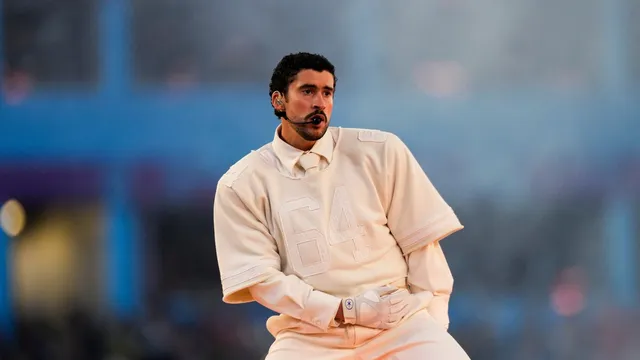
Bad Bunny sparks debate by wearing Zara at the Super Bowl
Bad Bunny sparks debate by wearing Zara at the Super Bowl
- Bad Bunny headlined the Super Bowl Halftime Show entirely in Spanish and wore a high-street Zara ensemble.
- His choice of a minimal wardrobe raised discussions about fast fashion ethics amid broader criticism on the brand.
- The performance illustrated the evolving intersection of pop culture and fashion, stirring praise and controversy alike.
Story
In a historic Super Bowl performance, Bad Bunny, the renowned Puerto Rican musician, captivated audiences with his half-time show at Levi's Stadium in Santa Clara, California, showcasing his explicit inclination to blend music with fashion. He emerged on stage wearing a simple yet striking all-cream ensemble designed by the popular fast-fashion retailer, Zara, which included a collared shirt, tie, chinos, and a sport-inspired jersey with his family name 'Ocasio' and the number 64 prominently displayed. This performance marked a significant moment in both his career and the event itself, as he became the first artist to headline the show entirely in Spanish. His wardrobe choice, a stark contrast to the extravagant couture often seen at similar events, has ignited discussions among fashion enthusiasts and critics alike regarding the implications of endorsing fast fashion brands on such a massive platform. The significance of number 64 remains ambiguous, though fans speculate it could reference his mother’s year of birth. Styled by Storm Pablo and Marvin Douglas Linares, the outfit showcased minimal branding. Despite Zara's connection to fast fashion controversies, they framed this collaboration as memorable, emphasizing the trend of celebrities using high-street fashion to make personal statements rather than rely on traditional luxury labels. Bad Bunny’s choice is especially poignant given the ongoing criticism of fast fashion related to its labor practices and sustainability issues, raising uncomfortable questions about the ethics of promoting such brands during the Super Bowl, arguably one of America’s biggest entertainment showcases. The backlash surrounding this choice reveals a growing awareness and apprehension within the fashion community regarding the responsibility wielded by influential figures such as Bad Bunny. This debate was intensified by social media reactions, where some advocates argued that he could have used his platform to spotlight Latina designers instead of opting for a mainstream brand often criticized for its labor practices. This juxtaposition of Bad Bunny’s restrained fashion with his vibrant stage presence epitomizes the evolving relationship between pop culture and the rapidly shifting fashion industry.


