

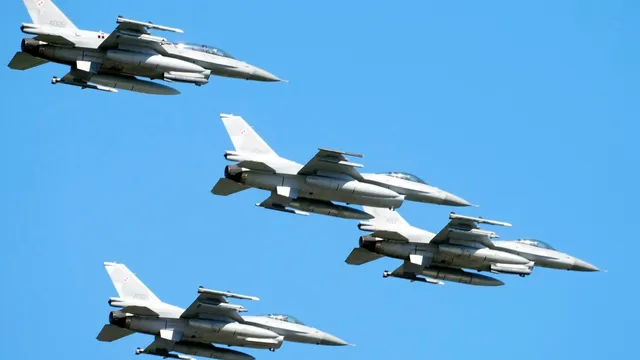
Poland scrambles jets to intercept Russian spy plane over Baltic Sea
Poland scrambles jets to intercept Russian spy plane over Baltic Sea
- Poland scrambled fighter jets on Wednesday and Thursday to intercept a Russian Il-20 spy plane over the Baltic Sea.
- The Russian aircraft was detected without a flight plan and its transponder turned off, prompting concerns over airspace security.
- These interceptions highlight ongoing tensions between NATO and Russia, emphasizing the importance of readiness in air defense.
Story
Poland recently took significant steps to safeguard its airspace against incursions by foreign military aircraft. On Wednesday, Polish fighter jets were deployed to intercept a Russian Il-20 reconnaissance aircraft detected flying in international airspace over the Baltic Sea. The Russian aircraft, which had its transponder turned off and did not submit a flight plan, raised concerns about ongoing military tensions in the region. The Polish Operational Command confirmed that the airspace was not breached during this incident, emphasizing the importance of maintaining strict surveillance and control over national airspace. The second interception occurred on Thursday, just a day after the first, showcasing the ongoing threats to Poland's airspace from Russian activity. Polish Deputy Prime Minister Władysław Kosiniak-Kamysz described these events as provocative actions by the Russian Federation that test Poland's air defense systems. He reassured the public that the Polish military is vigilant and prepared to respond to any airborne threats. The continuing series of interceptions highlights the complexities of military operations in Eastern Europe and the significant role Poland plays within NATO's collective defense strategy. Poland's military has been active in recent years, scrambling aircraft in response to drone and missile threats from Russia, especially amid the ongoing conflict involving Ukraine. The frequent reconnaissance missions conducted by Russian aircraft point towards enduring tensions in the region, revealing a pattern of behavior that has led to heightened vigilance among NATO members. Interceptions are viewed as crucial for ensuring airspace security and are part of a broader strategy to prevent potential conflicts and safeguard civilian aviation. This proactive approach reinforces the commitment of NATO allies to defend each other, as stipulated in the founding treaty of the alliance. Poland’s response mechanisms exemplify how member nations are prepared to collaborate in addressing military provocations from adversarial nations. As Russia increases its military activities near NATO borders, the alliance remains focused on protecting its eastern members, ensuring that they are adequately prepared to respond to any form of aggression.
Context
The NATO air policing missions in Eastern Europe have become a crucial element of the Alliance's collective defense strategy, particularly in light of heightened security concerns in the region. These missions are designed to ensure the integrity of the airspace of member states that are situated in proximity to potential threats, particularly from the east. With the geopolitical landscape shifting dramatically since the annexation of Crimea by Russia in 2014, NATO has reinforced its commitment to the security of its eastern flank, responding to calls from Eastern European allies for increased military presence and support. In turn, this has led to the establishment of various air policing missions aimed at deterring aggression and reassuring member states of NATO's commitment to their defense obligations under Article 5 of the North Atlantic Treaty. The missions primarily involve the deployment of fighter aircraft and support personnel from NATO member states to perform air policing duties. These operations include maintaining a continuous air presence, conducting intercept missions, and ensuring rapid response capabilities in case of any incursions into allied airspace. Countries such as Estonia, Latvia, Lithuania, and Poland have been significant beneficiaries of NATO air policing efforts, hosting Allied aircraft and collaborating closely with NATO forces to enhance their own air defense capabilities. By engaging in these missions, NATO not only provides immediate air defense but also conducts training exercises and fosters interoperability among allied forces, bolstering military readiness across the region. Furthermore, these air policing missions have been accompanied by significant political and strategic messaging. NATO's consistent presence in Eastern Europe serves as a clear signal of deterrence against potential aggressors, particularly in the context of Russian actions that have been viewed as destabilizing. The missions reflect a collective resolve to protect the sovereignty of member states while upholding the principle of collective defense. Additionally, they showcase NATO's adaptability in addressing emerging security challenges, ensuring that the Alliance remains relevant and responsive in a rapidly evolving security environment. The collaborative approach taken by NATO and its member states has united various military resources to produce a robust air defense posture, demonstrating the strength of collective security in action. Looking ahead, NATO air policing missions will likely evolve further in response to emerging threats and changing geopolitical dynamics. Increased defense spending by European allies, enhanced military exercises, and a focus on modernization of military capabilities will play pivotal roles in shaping the future of air policing missions. Moreover, the integration of advanced technologies such as unmanned aerial vehicles (UAVs) and cyber defense capabilities is expected to play a key role in the enhancement of air policing operations. By continuing to adapt and evolve in the face of new challenges, NATO reaffirms its dedication to ensuring peace and stability in Eastern Europe, affirming its role as a cornerstone of transatlantic security.


