

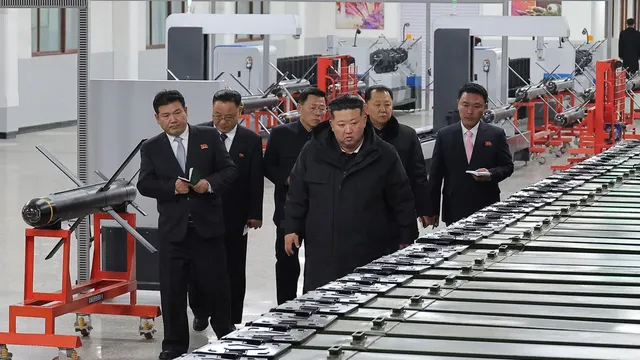
North Korea showcases missile capabilities ahead of key congress
North Korea showcases missile capabilities ahead of key congress
- North Korea launched multiple ballistic missiles toward its eastern waters on January 5, 2026.
- The missile launches occurred just hours before a scheduled summit between South Korea and China.
- These actions highlight North Korea's ongoing military advancements and intentions leading up to the critical Workers' Party congress.
Story
On January 5, 2026, North Korea conducted multiple ballistic missile launches, targeting its eastern waters, as confirmed by South Korea's Joint Chiefs of Staff. These launches occurred at approximately 7:50 a.m. from the capital region of North Korea. Japan's defense ministry also acknowledged the missile activity, but reported no damage resulting from the tests. The missile launches mark a continuation of North Korea's weapons testing amidst heightened international tensions, particularly before the forthcoming Workers' Party congress which is anticipated to announce new policies on military and diplomatic relations. South Korea had elevated its alert status, coordinating closely with the United States and Japan for further intelligence on the situation. The missile tests are viewed by analysts as a demonstration of North Korea's growing military capabilities and strategic intentions. Upcoming events, such as the Workers' Party congress, are likely to influence North Korea's potential policy shifts regarding its long-stalled negotiations with the United States. Following a series of escalating weapons programs, these missile launches signal Pyongyang's commitment to enhancing its defense capabilities, particularly amid sensitive diplomatic periods. The congress, expected to be held within January or February 2026, may reveal further developments in North Korea's defense strategies and its approach toward international relations. In the immediate aftermath of the missile tests, South Korea's government, through its military division, increased its surveillance activities and intelligence-sharing protocols with allied nations. It remains crucial for South Korea and its allies to monitor North Korea's advancements in weapons technology, reflecting a longstanding pattern observed in this region of East Asia. Recently, North Korea has made headlines by showcasing long-range cruise missile capabilities and advancing its nuclear submarine construction, raising alarms among neighboring countries and the international community regarding the implications for regional security. As the summit between South Korea's President Lee Jae-Myung and China's President Xi Jinping approaches, the international community is particularly attentive to North Korea's military activities and the potential implications on diplomatic relations in the region. This is coupled with the anticipation of announcements from the Workers' Party congress that may outline North Korea's objectives and ambitions both on the military front and its engagement with the United States. The ability of the North Korean regime to advance its missile program without facing significant military retaliation underscores a strategic tension that exists on the Korean Peninsula and highlights the complicated dynamics of regional security and diplomacy.


