

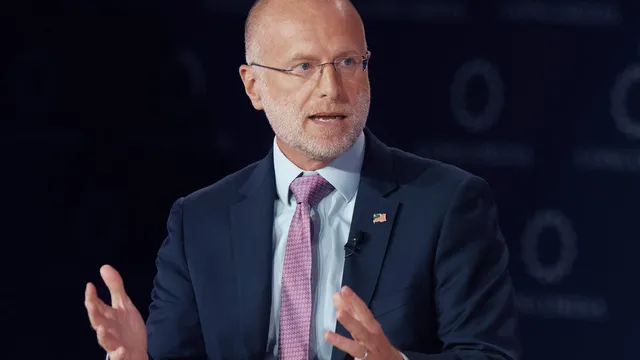
FCC chair supports massive Nexstar-Tegna merger
FCC chair supports massive Nexstar-Tegna merger
- Brendan Carr, the FCC chair, publicly endorsed Nexstar's acquisition of Tegna.
- The proposed acquisition aims to create the largest regional television station operator in the U.S.
- Nexstar seeks to consolidate resources to compete against larger tech companies and enhance local broadcasting capabilities.
Story
In the United States, significant momentum has been building around the proposed $3.54 billion acquisition of Tegna by Nexstar. The Federal Communications Commission (FCC) chair, Brendan Carr, publicly announced his endorsement of the merger, confirming his support in a statement to reporters. This public endorsement indicates a favorable shift towards facilitating large media consolidations during a time of intense competitive pressure on local broadcasters from both large tech firms and prominent media corporations. The merged entity would create the largest regional television station operator in the U.S. Nexstar currently oversees more than 200 owned and partner stations, operating across 116 markets nationwide, along with networks such as The CW and NewsNation. The acquisition of Tegna, which owns 64 news stations in 51 markets, would mean substantial consolidation within the regional broadcasting landscape. This consolidation is being pursued to pool resources effectively amid changing consumer habits in media consumption, as audiences increasingly cut cords and turn to digital platforms for news and entertainment. Brendan Carr's support comes at a time when the FCC has been actively discussing loosening restrictions on media mergers and acquisitions. His advocacy for industry deregulation is part of a broader trend where the agency appears to aim at repealing obsolete broadcasting rules that have hindered local broadcasters since their inception nearly five decades ago. Carr has characterized many existing broadcasting provisions as outdated and no longer serving the public interest, thereby aligning FCC policy with the merging companies' objective to expand and secure their market positions. The anticipated merger has also received favorable public backing from noted political figures, including President Donald Trump, signaling a politically favorable environment for consolidation within the broadcast sector. Nexstar CEO Perry Sook articulated the need for local broadcasters to expand their reach to compete effectively against larger tech and media companies that maintain vast financial resources and strong market presence. His remarks underscore the competitive landscape, where local broadcasters must adapt to survive and thrive amidst technological advancements and changing viewer preferences.
Context
The phenomenon of media consolidation has been increasingly scrutinized for its profound effect on local news outlets across the United States. Media consolidation refers to the trend where a small number of companies control a vast majority of mass media outlets, leading to a reduction in the diversity of perspectives and information available to the public. Ownership by a few conglomerates often results in a homogenous narrative, where local stories, particularly those that do not align with the interests of the owners, are frequently overlooked. This alarming trend compromises the fundamental role of journalism in a democratic society, where diverse viewpoints and local reporting are essential for informed citizenry. As local news organizations are sold to larger entities, the ability to cover local events diminishes significantly. Financial pressures resulting from consolidated ownership often lead to budget cuts, staff reductions, and increased reliance on automated journalism. Newsrooms that once employed dedicated reporters to attend local government meetings or community events now struggle to fill these roles, resulting in a substantial loss of comprehensive local coverage. Consequently, communities may become disenfranchised, as critical local issues go unreported or are inadequately covered, undermining civic engagement and the public’s ability to hold local authorities accountable. Moreover, the impact of media consolidation extends beyond just local news coverage—it affects the overall media landscape, altering the way news is consumed. Audiences increasingly rely on a handful of dominant national sources, which may prioritize sensationalism and ratings over the substantive reporting that encourages public discourse. The prioritization of corporate interests can lead to the sidelining of community concerns, with local news coverage increasingly dictated by the profit motives of conglomerates rather than the informational needs of the public. Furthermore, this trend has the potential to produce an echo chamber effect, where the public receives a narrowed viewpoint, reinforcing biases and diminishing the values of critical thought and discourse. The implications of media consolidation are significant, as the erosion of local news can lead to a disengaged public and weakened democratic processes. In response, there have been calls for policy changes to address the concentration of media ownership and ensure a more equitable media landscape. Solutions like promoting nonprofit news models, supporting local journalism through grants, and advocating for decentralized media ownership can help restore the vibrancy and diversity of local news. By re-investing in local journalism and supporting independent news outlets, communities can reclaim their narratives and foster a more informed, engaged citizenry that is capable of addressing the challenges of today.


