

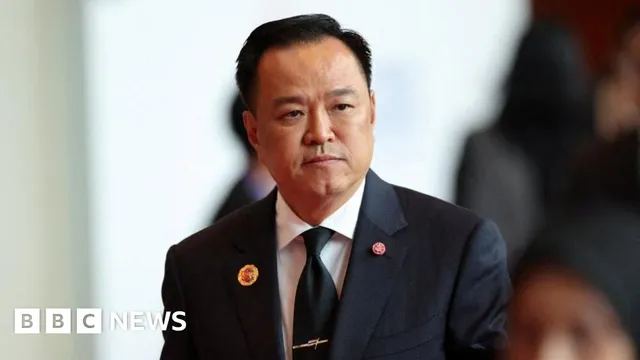
Thailand's PM dissolves parliament amid border conflict
Thailand's PM dissolves parliament amid border conflict
- Thailand has experienced clashes along its border with Cambodia, leading to casualties and displacement.
- The Prime Minister dissolved parliament in response to political instability and the threat of a vote of no confidence from the opposition.
- This decision aims to return power to the people amid the ongoing conflict and is expected to facilitate new elections within two months.
Story
Thailand is currently facing significant political upheaval and military conflict, which led Prime Minister Anutin Charnvirakul to dissolve Parliament recently. The decision to dissolve the House of Representatives was officially communicated in a decree published in the Royal Gazette, and it came after days of clashes along the border with Cambodia. Anutin, who took power three months ago, cited a range of challenges faced by his minority government, including the growing tensions and violence at the border that had resulted in numerous casualties and displacements. He aimed to address these challenges by returning political power to the populace. Following the dissolution, a general election is expected to be held within a 45 to 60-day timeframe. During this period, Anutin will lead a caretaker government with limited powers. The political landscape has been tumultuous, as Anutin’s Bhumjaithai Party recently faced significant opposition from the People’s Party. The People's Party was preparing to initiate a vote of no confidence before the dissolution, driven by dissatisfaction with Anutin’s governance, particularly concerning constitutional reform promises they had previously agreed upon. The root cause of Anutin's dissolution announcement seems to stem from not only the internal political maneuvers of various parties but also the violent border clashes with Cambodia. Under Anutin’s leadership, Thailand had adopted a more aggressive military stance, spurred by a nationalistic public sentiment amidst ongoing conflicts. The death toll and humanitarian crisis resulting from these skirmishes have escalated, calling into question the stability of both the government and the region. As Anutin’s three-month tenure drew criticism for its inability to effectively manage these dual crises, he had previously promised to consult with the electorate through a referendum on constitutional changes. As news of the dissolution broke, the main opposition party urged Anutin to uphold his commitments and consider their demands seriously. This situation demonstrates the precarious balance of power in Thailand, where political agreements can quickly dissolve under the pressures of conflict and public opinion, further complicating the path ahead for the nation.


