

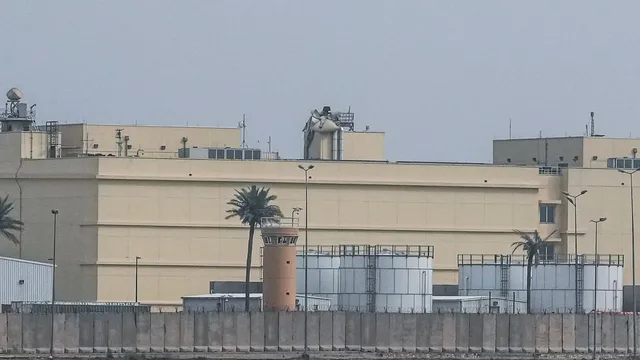
U.S. embassy in Baghdad struck by missile during escalating tensions
U.S. embassy in Baghdad struck by missile during escalating tensions
- A missile struck a helipad inside the U.S. embassy compound in Baghdad, causing smoke to rise from the building.
- The strike follows days of heightened military activity, including a drone attack in northern Iraq that killed a French soldier.
- The U.S. has increased its military presence in the Middle East, deploying 2,500 Marines amid ongoing pressures from Iranian-aligned militias.
Story
In Baghdad, Iraq, a missile strike targeted a helipad within the U.S. embassy compound early on a Saturday morning, resulting in smoke rising from the facility as reported by several media outlets like the Associated Press and Reuters. The attack occurred amidst ongoing military tensions in the region, particularly following a drone strike that killed a French soldier and injured others in northern Iraq just days prior. This incident is part of a broader campaign by Iran-aligned militias, which have consistently aimed at U.S. personnel and interests in the area. The strike is symptomatic of rising hostilities not only directed at U.S. assets but also affecting regional stability. An American official stated that 2,500 additional Marines and an amphibious assault ship are being dispatched to the Middle East, signaling a possible escalation of military involvement. Notably, the U.S. has recently struck Iranian military sites on Kharg Island, emphasizing a strategic focus on Iran’s oil infrastructure, although no damage was reported in these strikes and diplomatic efforts continue amid threats from Iranian military officials. The U.S. embassy complex in Baghdad, one of the largest diplomatic facilities globally, has faced recurrent attacks from Iranian-aligned groups, underscoring a persistent risk to American personnel and interests. In light of this, the embassy has heightened its security alert level, urging U.S. citizens in Iraq to remain vigilant against ongoing threats. The situation illustrates the intricate web of military and political actions surrounding U.S.-Iran relations and the potential for further conflicts in the region as both sides remain prepared for escalation. As of now, military responses from both the U.S. and its allies in the region appear imminent, with a significant troop presence already established. Observers warn that the likelihood of substantial military engagements could intensify if both factions continue to provoke one another, especially concerning critical maritime routes and energy infrastructure. This current episode in Baghdad is thus part of an ongoing conflict that illustrates the broader geopolitical tensions gripping the Middle East and how U.S. embassies remain targets within this contentious landscape.
Context
The recent tensions between the United States and Iraq have garnered significant attention and concern, given their implications for regional stability and global security. Over the past few years, the relationship has faced numerous challenges, primarily stemming from political, military, and economic factors. The U.S. invaded Iraq in 2003, leading to long-term consequences that have affected both nations' foreign relations. In recent times, these tensions have been exacerbated by disagreements over military presence, local governance, and Iran's influence in Iraq. The presence of U.S. troops in Iraq has been a contentious issue, with various Iraqi factions demanding withdrawal while others seek continued support against extremist threats. The political landscape in Iraq has also shifted, contributing to the strained relations with the U.S. The resurgence of powerful Shiite political factions, many of which are aligned with Iran, has led to increased resistance to American influence. Moreover, attacks on U.S. military bases by militia groups further signify the growing animosity. The assassination of Iranian commander Qasem Soleimani in early 2020, a significant event in U.S.-Iran relations, also had ripple effects, leading to heightened fears of retaliation and complicating the U.S. position in Iraq. Iraq's government has struggled to balance its foreign relations, attempting to maintain sovereignty while navigating the competing interests of the U.S. and Iran. Economically, Iraq is heavily reliant on oil exports, and fluctuations in oil prices have a direct impact on its economy and political stability. U.S. sanctions on Iran have added a layer of complexity, as they indirectly affect Iraq's economy and its ability to engage in trade with neighboring countries. Furthermore, there are concerns about economic reform and the need for investment, which requires a stable political environment and positive relations with international partners, including the U.S. Efforts to de-escalate tensions have been made through diplomatic channels, with both nations recognizing the potential for violence to spiral out of control. The U.S. has indicated a willingness to adjust its military footprint based on security assessments while encouraging Iraq’s government to assert its authority and reduce Iranian influence. As Iraq approaches elections, a key challenge remains how the government will navigate these international pressures and the expectations of its diverse citizenry. The outcome of these dynamics will significantly influence the future of U.S.-Iraq relations, as both countries aim to establish a more stable and mutually beneficial partnership.


