
business
controversial
update

Patrick Mahomes and Travis Kelce face trademark lawsuit over restaurant name

Feb 21, 2026, 1:37 AM20
(Update: Feb 23, 2026, 7:02 PM)
American football player (born 1995)
American football player, tight end

Patrick Mahomes and Travis Kelce face trademark lawsuit over restaurant name

  • The restaurant named 1587 Prime was opened by Patrick Mahomes and Travis Kelce in September 2023 in Kansas City.
  • 1587 Sneakers, a sneaker company, claims trademark infringement against the restaurant for the similar name, although it filed its trademark application after the restaurant's opening.
  • The lawsuit highlights the complexities of trademark rights, leading to significant confusion among consumers and potential changes in branding for both parties.
Share opinion
Tip: Add insight, not just a reaction
2

Story

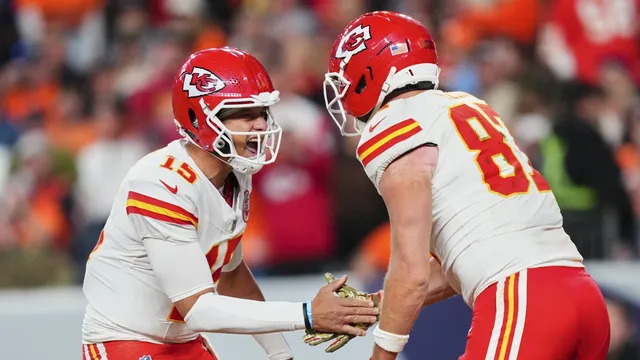
In the United States, a sneaker company known as 1587 Sneakers has initiated a lawsuit against NFL stars Patrick Mahomes and Travis Kelce along with their business partners regarding the name of their newly opened steakhouse, 1587 Prime. The restaurant, which opened in September 2023 in Kansas City, is named as a tribute to the combined jersey numbers of Mahomes and Kelce. Interestingly, the shoe company claims that it began selling shoes prior to the restaurant's opening, specifically dating back to April 2023, but did not officially apply for the trademark associated with '1587' until October 2025. This application followed the bar and restaurant's trademark application, which was filed by Mahomes and Kelce in December 2023. The lawsuit raises questions regarding the ownership and rights to the trademark, revealing that both entities have applied for protections in different sectors, with 1587 Prime focused on the food and beverage industry while 1587 Sneakers is targeting the clothing market. Complicating matters further, 1587 Prime is also involved in selling clothing, which has led to confusion among consumers who mistakenly believe there is a link between the restaurant and the sneaker brand. 1587 Sneakers asserts that numerous customers have contacted them under the impression that they are affiliated with the steakhouse, which they argue has resulted in significant harm to their business. Co-founder Adam King has expressed respect for Mahomes and Kelce's achievements but emphasizes that their brand has built its identity over years through careful branding and storytelling. The legal dispute has unfolded amid increasing attention and publicity surrounding both brands, with the sneaker company seemingly attempting to leverage the situation to gain more awareness. In their statement, 1587 Sneakers has communicated a desire for mutual respect and is hopeful that the matter can be resolved amicably without further escalation. The lawsuit has added a level of complexity to the operations of both the restaurant and the sneaker company, as it seeks not only the cessation of the use of the '1587' name in conjunction with the restaurant but also unspecified damages resulting from the confusion. As this case progresses, it raises important discussions regarding trademark rights and the impact of brand names on significantly distinct industries. The outcome will ultimately determine whether both businesses can coexist under similar names or if one brand must alter its identity to eliminate confusion in the marketplace, potentially setting precedents for future trademark disputes in similar circumstances.

Context

Trademark disputes in the restaurant industry can significantly impact business operations and branding strategies. These disputes typically arise when one restaurant believes that another's use of a similar name, logo, or slogan may cause confusion among consumers. The restaurant industry, being highly competitive and driven by brand identity, often finds itself at the center of these conflicts. The resolution of such disputes is crucial for maintaining brand integrity and consumer trust, and the outcomes can set precedents for future cases. Restaurants need to be proactive in protecting their trademarks, as failure to act can result in loss of exclusive rights to their brand elements. The importance of trademarks in the restaurant industry cannot be overstated—they serve as a distinctive identifier for consumers. A strong trademark can build brand loyalty and contribute significantly to a restaurant's marketing strategy. However, when two entities use similar trademarks, it can dilute the brand's identity. The legal landscape governing trademarks includes federal, state, and international laws that provide frameworks for resolving disputes. Agencies like the United States Patent and Trademark Office (USPTO) are instrumental in overseeing trademark registrations and enforcing rights. Businesses must navigate these regulations carefully to avoid infringements that can lead to costly legal battles. Many trademark disputes in the restaurant sector end up in litigation or settlement negotiations. Some disputes are resolved through mutual agreements, where involved parties come to terms that allow coexistence or delineation of geographical markets. In some cases, restaurants may opt to redesign logos or rebrand entirely to avoid further complications. Legal fees and potential changes in branding can take a significant toll on a restaurant’s finances and operational focus. Therefore, it is crucial for owners and operators to work closely with legal counsel experienced in intellectual property law before launching new brands or products. The increasing popularity of food delivery services and social media also complicates the trademark landscape. Online visibility means that potential consumers can encounter numerous brands in a short span, increasing the likelihood of confusion. Additionally, the global reach of online restaurants means that trademark protections must be robust enough to withstand international scrutiny. To successfully navigate trademark disputes in the restaurant industry, owners must be vigilant and proactive in their trademark usage, conduct regular checks for potential infringements, and understand the significance of maintaining a unique brand identity in a competitive marketplace.

2026 All rights reserved
