

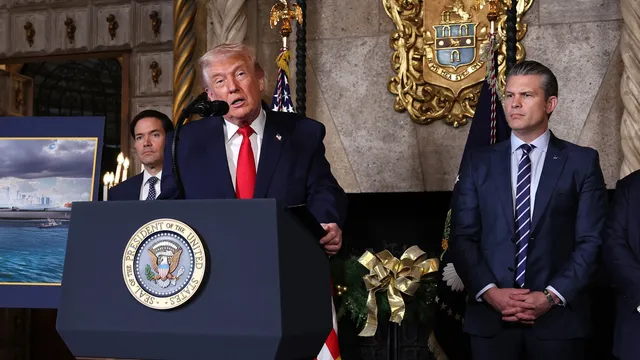
Trump merges personal brand with national institutions
Trump merges personal brand with national institutions
- Donald Trump has attached his name to various national institutions and programs in the U.S. as part of a branding initiative during his second presidential term.
- This branding effort has received backlash, particularly regarding the renaming of significant cultural venues, which some critics label as an undermining of historical importance.
- Overall, Trump's actions reflect a shift in how presidential legacies might be viewed and preserve, raising concerns about the impact of personal branding on public institutions.
Story
In 2025, following his return to office, Donald Trump has undertaken a significant effort to place his name on various national institutions and government programs in the United States. This initiative surfaced as a notable feature of his second term, marking a departure from conventional presidential practices. Trump’s actions have included labeling Washington buildings and launching initiatives such as 'Trump-class' Navy warships and government programs associated with his name. These moves have sparked debates about the implications of merging personal branding with public institutions and the potential for his legacy in American governance. The decision to rename prominent structures, including parts of the Kennedy Center, has faced backlash from various groups, fearing that the personalization of national institutions undermines their historical significance and the collective memory associated with such places. Critics argue that these changes represent a superficial approach to legacy-building that does not have the stamina to withstand the tests of time. Notably, the public response has displayed a mix of intrigue and resistance, underscoring the contentious nature of Trump's personal branding efforts linked to taxpayer-funded venues and programs. Moreover, Trump’s adjustments highlight a broader trend in his administration, where he has leaned towards expanding presidential power and reshaping parts of the federal bureaucracy. Scholars, particularly historians, have weighed in on the implications of these actions, noting that while past presidents have recognized their policy contributions, none have opted to so directly affix their names to government projects as Trump has done. This shift raises questions about the future of civic institutions and the roles they play beyond individual political figures. As this situation unfolds, it remains to be seen how these branding efforts will factor into Trump's long-term historical legacy. Many anticipate that this branding will provoke ongoing debates about how political figures are remembered and how their actions shape national identity. It will also be crucial to assess the administration’s approach to accountability and transparency as it navigates these exceptional public relations strategies within government operations.
Context
The impact of personal branding by politicians has emerged as a crucial factor in contemporary political landscapes. Personal branding allows politicians to create a distinct identity that resonates with voters, fostering a sense of trust and relatability. In an era where traditional media is losing its grip, social media platforms have become essential tools for politicians to engage with the electorate directly. This shift empowers politicians to communicate their values, policies, and personality in a manner that traditional campaign methods cannot achieve. By presenting themselves authentically and appealingly, politicians can establish a personal connection with constituents, thus enhancing their public image and influence. One of the greatest advantages of personal branding is its ability to humanize politicians. When politicians curate their image through personal stories, relatable experiences, and sincerity, they can bridge the gap between the political elite and the general public. This emotional connection can significantly impact voter behavior, as individuals are more likely to support candidates they feel they know and trust. Furthermore, personal branding allows politicians to differentiate themselves from their opponents in an increasingly crowded field. By cultivating unique attributes and ideologies, they can stand out and attract specific demographics, facilitating targeted campaign strategies that bolster support. However, the personal branding of politicians is not without risks. The demand for constant authenticity can lead to potential scrutiny and backlash on social media, where missteps can quickly escalate into significant controversies. Additionally, a politician’s failure to align their personal brand with their actions can result in a loss of credibility and public trust. For instance, a politician may build a brand around progressive values, but any perceived actions that contradict these values can lead to backlash and diminish their brand equity. Thus, navigating the delicate balance between personal branding and authentic representation is essential for long-term success in politics. In summary, the impact of personal branding on politicians is multifaceted, providing both opportunities and challenges. A well-executed personal brand can enhance public perception, engender trust, and create a lasting connection with voters. Yet, the landscape is fraught with risks that necessitate careful management and consistency. As future elections unfold, the significance of personal branding will likely grow, shaping voter perceptions and influencing electoral outcomes.


