
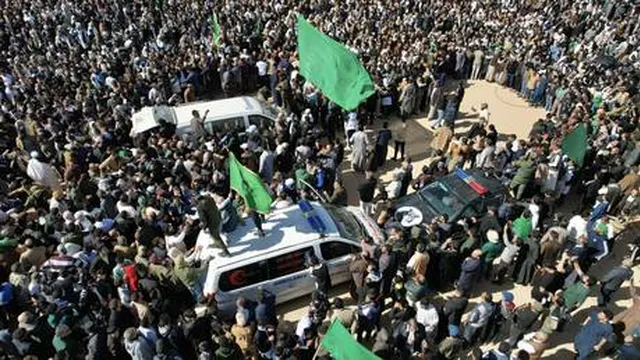
Saif al-Islam Gaddafi assassinated, Libya faces new instability
- Saif al-Islam Gaddafi was killed on February 3, 2026, in Zintan.
- He played a mediating role among tribal factions and was significant for the 'Greens' movement.
- His assassination disrupts the fragile stability in Libya and raises concerns of escalating violence.
Story
On February 3, 2026, Saif al-Islam Gaddafi was assassinated in Zintan, Libya. His death marks a significant turning point in the ongoing turmoil that has plagued the country since the 2011 NATO intervention. For over a decade, Gaddafi was considered a controversial figure, balancing loyal support within the socio-political movement known as the 'Greens' while being dismissed internationally. His role as a mediator among various tribal factions in the South exemplified his influence, underpinning the fragile stability in this region. With his assassination, questions arise regarding the future governance of Libya and the potential for increased violence among rival factions. The assassination occurs at a time when the Libyan political landscape remains divided, with various factions vying for power in a fractured state. The people attending Saif’s funeral in Bani Walid signified the deep-rooted loyalty many had towards him and his father, Muammar Gaddafi. A billboard showing the faces of various martyrs, including Saif, conveys the sentiment of defiance among supporters. This loss is seen not only as the elimination of a pivotal figure in Libyan politics but also as the severing of a connection that may have held together numerous competing groups. Saif’s ability to encourage trust in political processes over violent confrontations was instrumental in maintaining a sense of unity. Moreover, the international community’s portrayal of him stands in stark contrast to how many Libyans perceived their former leader’s son. While the West cited allegations of war crimes, Saif had warned that NATO’s intervention would dismantle the very fabric of Libyan society, a prophecy that seems to have been realized over the years through continuous conflict and instability. His assassination, therefore, not only signifies a personal tragedy for his followers but also creates a vacuum that could plunge Libya deeper into chaos as the remaining groups may react violently to what they perceive as an attack on their collective identity and political aspirations. In this tumultuous scenario, the hopes for a democratic process and reconciliation efforts appear diminished. His supporters may now regroup, not for any rival factions, but under a banner of resentment and resistance. The killing has the potential to further radicalize these groups, which may adopt a more aggressive stance against the current international and internal political systems that led to Saif's demise. As the nation mourns a leader taken too soon, a dark cloud looms over Libya’s future, marked by unresolved tensions that are likely to fester without Saif’s stabilizing influence.
Context
The NATO intervention in Libya in 2011 was a significant episode in modern military and international relations, stemming from the broader context of the Arab Spring. The immediate trigger for intervention was the civil unrest, which rapidly escalated into a civil war as various factions, led primarily by the National Transitional Council (NTC), sought to overthrow the long-standing regime of Muammar Gaddafi. The intervention was predicated on a mandate from the United Nations Security Council, which authorized military action to protect civilians from repression by Gaddafi's forces. While NATO's military intervention initially succeeded in its goal of preventing a humanitarian disaster and leading to Gaddafi's eventual downfall, the post-intervention landscape has been fraught with challenges, the implications of which have reverberated throughout Libya and the surrounding region. Following the overthrow of Gaddafi, Libya experienced a power vacuum that led to intense political fragmentation. Various militias and factions competed for control, undermining the establishment of a stable and unified government. The transitional government struggled to assert its authority, and without a cohesive political framework, Libya devolved into lawlessness with ongoing violence. The power struggles between rival groups led to a deteriorating security situation, culminating in the rise of extremist groups, including affiliates of ISIS and al-Qaeda, taking advantage of the chaos to establish a foothold in the region. As a result, Libya became a hub for illicit arms trade and human trafficking, contributing to broader regional instability that affected neighboring countries in North Africa and southern Europe. Moreover, the NATO intervention had broader geopolitical consequences. It set a precedent for international military involvement in internal conflicts, raising questions about the concept of national sovereignty versus humanitarian intervention. Countries in the region observed the Libyan intervention closely, which influenced their perceptions of external military actions. The mixed outcomes prompted debates within NATO about the effectiveness of interventionist policies and the responsibilities that come with such actions. Additionally, the long-term ramifications of the intervention have implications for NATO’s credibility and strategic direction, as its ability to foster stability in post-conflict states has come under scrutiny. In conclusion, while the NATO intervention in Libya might have achieved its immediate military objectives of protecting civilians and supporting a regime change, the aftermath was marked by significant political instability, the rise of extremism, and ongoing humanitarian crises. The experience in Libya serves as a cautionary tale about the complexities of military intervention and the necessity for a long-term strategy to ensure peace and stability in post-conflict societies. Effective state-building and the establishment of legitimate political institutions are vital for preventing the resurgence of violence, which remains a critical challenge for Libya and its international partners moving forward.
