

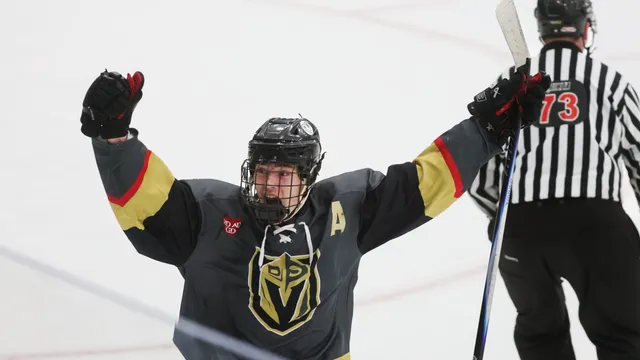
Colin Dorgan scores winning goal after family tragedy in Rhode Island shooting
Colin Dorgan scores winning goal after family tragedy in Rhode Island shooting
- Colin Dorgan was playing hockey when his family members were killed in a targeted shooting.
- Following the tragedy, the Blackstone Valley hockey team focused on supporting each other through bonding activities.
- Colin scored the game-winning goal in double overtime, leading his team to the championship game.
Story
In a tragic incident on February 16, 2026, at the Dennis M. Lynch Arena in Pawtucket, Rhode Island, Colin Dorgan suffered the loss of three family members during a targeted shooting that took place while he was on the ice. The shooter, identified as Robert Dorgan, was Colin's father. He fatally shot Rhonda Dorgan, Colin's mother, and his brother, Aidan Dorgan, while his grandfather, Gerald Dorgan, succumbed to his injuries later. The attack deeply affected the community and led to the postponement of all Rhode Island high school sports for a week following the shooting, causing emotional turmoil among the players, families, and the community at large. After the tragedy, the Blackstone Valley Co-op hockey team, which Colin plays for, aimed to support each other and heal together. They took part in daily group sessions for 14 days, fostering a sense of family and unity to cope with the pain they were experiencing. The team wore memorial patches on their jerseys to honor the victims, showcasing hearts stitched with the initials of Colin’s lost family members, demonstrating their respect and solidarity during this difficult time. They returned to practice and games, driven by the desire to play for those they lost and to keep their spirits alive. On March 7, 2026, Colin scored two crucial goals in a playoff game leading up to the semifinals. His determination and resilience culminated in an extraordinary moment on March 11, 2026, when he scored a game-winning goal in double overtime against Portsmouth, advancing the team to the championship game. In a post-game interview, Colin expressed the emotional weight of scoring, saying, 'It was the greatest moment of my life,' highlighting how this moment represented not just a victory in the game, but a step towards healing for him and his team. Coach Chris Librizzi spoke of the importance of team unity throughout these tough times, emphasizing the bonding and support that developed among the players. The championship game is set to take place on March 18, 2026, in Providence, where Colin and his team will compete not just to win a title, but also to honor the memory of his family in every moment they play on the ice.
Context
The impact of shooting incidents on Rhode Island high school sports is a critical area of concern that warrants comprehensive exploration. Following events characterized by violence, such as school shootings, there is a notable decrease in student participation in extracurricular activities, including sports. This change is influenced by a heightened sense of fear and anxiety, coupled with increased security measures that can alter the dynamic of student interaction. Parental concerns about safety can lead to reluctance in allowing children to engage in sports, which typically fosters teamwork, discipline, and school spirit. This disruption not only affects athletes but also the broader community, which often rallies around school events. Moreover, these incidents can lead to significant emotional trauma among students and staff, affecting overall morale and performance in athletic programs. Coaches note the shifts in players’ mental health, with some experiencing increased stress and decreased motivation. This creates an environment where the focus on performance can be overshadowed by the need for mental health support. Schools in Rhode Island may be prompted to implement mental health programs alongside traditional athletic training, addressing the emotional needs resulting from trauma. In addition, the community response following a shooting can shape the future of sports programs. Fundraising efforts may increase to support heightened security measures or to provide psychological support resources for students and families. Meanwhile, community engagement through sporting events can provide a positive outlet for healing and solidarity, reflecting the resilience of the student body and community. Strengthening the relationship between local organizations and schools can foster a support network that is vital in overcoming the challenges posed by such traumatic events. Finally, the long-term effects on high school sports can manifest through declining enrollment in sports teams, leading to a potential weakening of the school spirit and identity. Schools may see a shift in resource allocation towards safety over athletics, which could diminish the role of sports in youth development in Rhode Island. Moving forward, it is imperative to prioritize safety while maintaining the integrity and accessibility of high school sports, ensuring that students have the opportunity to engage in healthy, team-oriented activities that promote both physical and mental well-being.


