

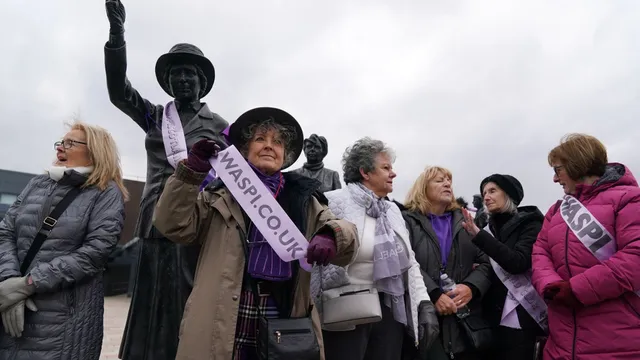
Government refuses compensation to Waspi women again
Government refuses compensation to Waspi women again
- Women born in the 1950s have been denied compensation for the second time regarding state pension age changes.
- The government reviewed its previous stance, acknowledging that affected women did not receive timely notice about age changes.
- This decision has drawn condemnation from MPs and campaigners, who argue that it demonstrates a lack of accountability.
Story
In recent developments regarding the state pension age in the United Kingdom, the government has once again rejected compensation claims from the women known as Waspi, who were significantly affected by changes to their retirement age. The government’s decision comes after a review by work and pensions secretary Pat McFadden, who stated that although it was acknowledged that women born in the 1950s did not receive individual notifications about the changes, this alone was not sufficient grounds for compensation. Furthermore, McFadden indicated that evidence suggested that most affected women were generally aware of the changes taking place, thus experiencing no direct financial loss due to the delay in communication. The decision to deny compensation has ignited outrage among campaigners and MPs alike, who argue that the vast number of impacted women deserve redress for the lack of adequate communication regarding pension age adjustments. The Labour Party, particularly vocal about this issue, has deemed the government's stance as a betrayal of trust, considering many of its members previously supported Waspi women’s claims during their time in government. This conclusion has resulted in backlash from various quarters, including various politicians who have described the latest decisions as disappointing and disrespectful to the countless women affected. As a result, Women Against State Pension Inequality (Waspi) continues to explore legal counsel and keep all options open regarding further actions. The guidelines for compensation have already been reviewed multiple times, with previous recommendations by the Parliamentary and Health Service Ombudsman that payments between £1,000 and £2,950 could be appropriate. This complexity has increased frustration among the campaigners who feel that their plight has not been adequately addressed. All of these discussions have taken place against the backdrop of a significant political shift, as Waspi women feel let down by officials who once stood by their side promising support and understanding. The sentiments expressed in the Commons during recent debates indicate strong support for the Waspi women, as leaders across various parties call for the injustices to be righted. Yet, the government's refusal to act continues to disenfranchise a generation of women who find their financial security compromised because of administrative shortcomings.
Context
The state pension age in the UK has undergone significant changes in recent years due to demographic shifts and economic considerations. Initially set at 65 for men and 60 for women, the state pension age has been gradually increased to 66 for both sexes, with plans for further increases to address the challenges posed by an aging population. The rationale behind these adjustments lies in the rising life expectancy, which has led to a growing number of pensioners relative to the working-age population. As people live longer, the burden on the pension system increases, necessitating a reevaluation of when individuals can start receiving their state pension benefits. This trend aligns with government policies designed to ensure the sustainability of the pension system for future generations, balancing the financial viability of the state pension with the welfare of its recipients. Legislation has been implemented to systematically raise the state pension age over the years. The Pensions Act 2014 outlined a roadmap for increasing the pension age to 67 by 2028 and subsequently to 68 by 2039. These changes were designed to ensure that the state pension is affordable and manageable as the proportion of older individuals in the population continues to grow. The transitions have sparked significant debate among various stakeholders, including politicians, social advocates, and the public, each raising valid concerns regarding fairness, equity, and the potential impact on individuals nearing retirement. Proponents of raising the pension age argue that it reflects changes in workforce participation and health, asserting that many individuals are able and willing to work longer. However, those against the changes emphasize the challenges faced by specific demographics, particularly those in labor-intensive jobs or with health issues that may inhibit their ability to work into their late sixties or seventies. The disparities in life expectancy between different socio-economic groups further complicate the conversation, raising questions about whether it is equitable to impose the same retirement age on all individuals irrespective of their circumstances. As the state pension age continues to evolve, it is crucial to monitor these inequalities closely and consider additional reforms or support systems that may be necessary to accommodate those who are most affected by these changes. The future of state pension age policy in the UK remains uncertain, with potential adjustments being influenced by fiscal pressures, societal trends, and political pressures. As we approach 2026 and beyond, stakeholders will need to engage in more comprehensive reviews and discussions to adapt to the ongoing changes in society. Continuous assessment of the ramifications of state pension age adjustments will be vital to ensure that the system remains robust and provides adequate support for all retirees. The balancing act of maintaining a sustainable pension system while addressing the diverse needs of the population is a complex challenge that requires thoughtful consideration and strategic planning.


