

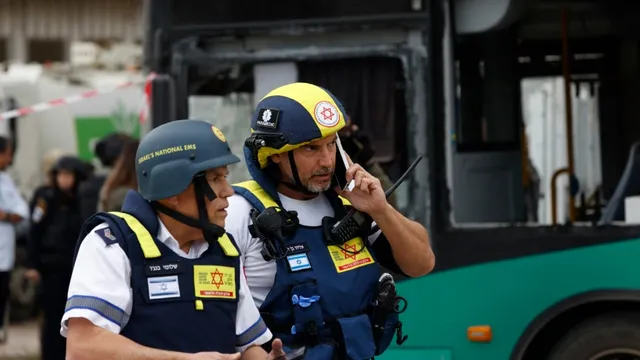
Israel escalates war against Hezbollah in Lebanon
Israel escalates war against Hezbollah in Lebanon
- Israel has intensified its military operations in Lebanon against Hezbollah, following another round of rocket fire from the group.
- The conflict has resulted in over a thousand deaths in Lebanon, alongside significant civilian displacement and infrastructure damage.
- This escalation reflects a broader strategy to secure northern Israel and aims to potentially reshape Middle Eastern alliances.
Story
In Lebanon, Israel has ramped up its military offensive against Hezbollah, a group backed by Iran, following a series of attacks that have heightened tensions in the region. The conflict intensified on March 2, when Hezbollah launched rockets into Israeli territory, triggering a significant Israeli response. Over a thousand fatalities have been reported in Lebanon due to the ongoing airstrikes and military actions, with many civilians displaced, raising alarms about a potential humanitarian crisis. Lebanese President Joseph Aoun condemned these Israeli strikes, labeling them as a precursor to a larger ground invasion and emphasizing the consequences for civilians. The airstrikes are part of Israel's broader strategy aimed at crippling Hezbollah while shielding its northern communities from rocket fire. The destruction of key infrastructure, including bridges and homes, has been a focal point in Israel's military tactics, with officials asserting that these measures are necessary for national security. The conflicts have drawn international scrutiny, partly due to the extensive displacement of people in Lebanon and the pressing need for humanitarian support. Critics argue that such assaults on civilian infrastructure contravene international law, and the UN human rights chief has condemned the actions taken against civilian targets during the military operations. Amidst these developments, Israeli officials have expressed the ambition that a decisive victory over Hezbollah could lead to transformative shifts in regional dynamics. Diplomatic engagements aimed at fostering partnerships among Middle Eastern nations have emerged as potential outcomes of this conflict. Israeli diplomats, citing historical relations with neighboring countries, advocate for collaboration and the establishment of peace through frameworks like the Abraham Accords. They foresee a scenario where former adversaries may become allies, driven by mutual interests in stability and prosperity. As the war endures, significant implications are anticipated for Israel's longstanding adversaries, especially Iran. Israeli military officials have indicated the complex interplay between military might and perceptions of victory in this protracted conflict. They stressed that while Iran may view survival as a form of victory, the overall impact of Israel's sustained operations could ultimately reshape the regional security landscape, prompting a reevaluation of long-held animosities and alignments. The military confrontation with Hezbollah is thus not merely a tactical engagement; it represents a pivotal moment that could redefine alliances across the Middle East.
Context
Hezbollah's impact on Lebanon's political landscape has been significant, shaping the country's governance, security, and social dynamics for decades. Established during the Lebanese Civil War in the early 1980s, Hezbollah has evolved into a powerful political and militant group that wields considerable influence in Lebanon. The organization, initially formed to resist Israeli occupation, has expanded its role to become a key player in Lebanese politics. As of 2023, Hezbollah controls a substantial bloc in the Lebanese parliament and is influential in various ministries, allowing it to impact decision-making processes and national policies significantly. This political engagement has often been viewed as a double-edged sword; while it has provided some stability and representation for its constituents, it has also exacerbated sectarian tensions within the diverse Lebanese society and hindered effective governance due to political stalemates and divisions. The role of Hezbollah in the security apparatus of Lebanon cannot be understated. The group operates with considerable military capabilities, which it positions as a defense against external threats, particularly from Israel. However, this military prowess has also led to controversy and internal conflict, as various political factions and communities in Lebanon view Hezbollah's armed presence as a challenge to the state’s sovereignty. The Lebanese Armed Forces (LAF), which is recognized internationally as the legitimate military of Lebanon, is often perceived as being overshadowed by Hezbollah’s military influence. This situation complicates Lebanon's efforts to establish a cohesive national security strategy, as different factions struggle to navigate the balance of power and their relations with Hezbollah. Moreover, Hezbollah's involvement in regional conflicts has further impacted its political position and influence in Lebanon. Its fighting alongside the Syrian government in the Syrian Civil War, for instance, has drawn criticism both domestically and abroad. While it enhances Hezbollah's image as a defender of Shiite interests, it has also raised concerns among other sectarian groups in Lebanon, who fear the implications of Hezbollah’s increasing entrenchment in regional politics. These developments have culminated in heightened sectarian divisions, creating a complex web of alliances and rivalries that complicate Lebanon's path toward political unity and national reconciliation. In conclusion, Hezbollah’s multifaceted role in Lebanon encapsulates the complexities of the country’s political landscape. Its significant political power, combined with a formidable military presence and involvement in regional conflicts, poses challenges for national governance and intra-community relations. As Lebanon continues to grapple with economic challenges, political stagnation, and external pressures, the influence of Hezbollah remains a critical factor shaping the nation’s future. Moving forward, stakeholders within Lebanon must navigate the delicate balance of power that Hezbollah represents, focusing on necessary reforms and fostering dialogue between sectarian groups to ensure a more stable and unified national identity.


