
sport
update
informative

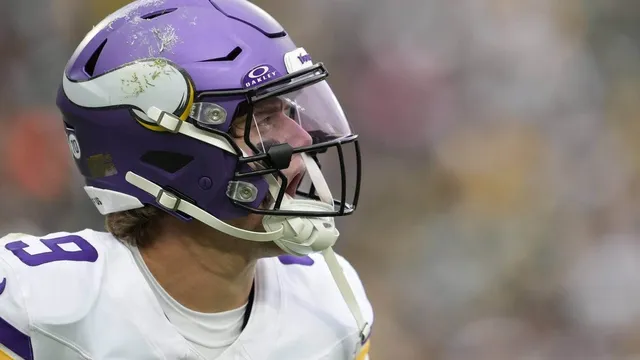
Vikings quarterback J.J. McCarthy enters concussion protocol after loss

Nov 24, 2025, 1:00 AM70
(Update: Nov 27, 2025, 2:11 PM)
Irish architect

Vikings quarterback J.J. McCarthy enters concussion protocol after loss

  • J.J. McCarthy is in concussion protocol after reporting symptoms following a game against the Packers.
  • Rookie Max Brosmer is expected to start if McCarthy cannot play in Week 13 against the Seahawks.
  • The Vikings face significant challenges this season with a record of 4-7 and a three-game losing streak.
Share your opinion
7

Story

In Minnesota, the Vikings face uncertainty at quarterback following a significant injury to J.J. McCarthy. The decision to place McCarthy in concussion protocol came after he reported experiencing symptoms during the flight back from Green Bay after a loss to the Packers on November 24, 2025. The team's head coach, Kevin O'Connell, confirmed the news to reporters, emphasizing that medical evaluations led them to this course of action. If McCarthy cannot participate in the upcoming game against the Seattle Seahawks, the team will likely start undrafted rookie Max Brosmer. Max Brosmer, who has not yet started an NFL game, has been impressive in practice and is expected to take first-team reps while McCarthy works through protocol. McCarthy's performance has already raised concerns this season, and this injury only compounds the challenges the Vikings are facing. They are currently on a three-game losing streak and have a record of 4-7 for the season, putting their playoff hopes in jeopardy. McCarthy's struggles in previous games, which include a significant number of interceptions and low passing efficiency, have led to questions about his role as the franchise quarterback. The Vikings have been criticized for their management of the quarterback position this season, particularly after McCarthy's uneven performances since returning from a high-ankle sprain that sidelined him for five games earlier in the year. He was initially drafted 10th overall in 2024, but this season’s difficulties have raised doubts about his effectiveness and readiness to lead the team. With a QBR of just 24.8 through his six starts, he struggles with consistency and has faced increasing pressure, leading to questions about his future with the organization. As the Vikings approach their match against the Seahawks, the team's focus will be on both the health of McCarthy and the readiness of Brosmer. The upcoming games against the Seahawks, Washington Commanders, and Dallas Cowboys will heavily impact their chances of playoff contention. With McCarthy in limbo, the team is at a critical juncture, requiring strong performances from whoever steps under center. Fans and analysts alike will be watching closely to see how the Vikings adapt to this latest hurdle in their challenging season.

Context

The NFL concussion protocol procedures have become a pivotal aspect of player safety in professional football. This protocol was developed to address the rising concerns regarding head injuries and their long-term implications for athletes. It is a comprehensive framework designed to identify, evaluate, and manage players who may have sustained a concussion during games or practices. The implementation of these procedures began to take serious shape following various high-profile cases that highlighted the dangers of concussions, leading to increased scrutiny and regulatory changes both within the NFL and the broader sports community. This commitment to player safety aims to provide a structured approach to head injuries, ensuring that athletes receive immediate medical attention and that their return to play is carefully monitored and evaluated to mitigate the risk of further injury. At the core of the NFL's concussion protocol is a series of evaluations that are conducted by trained medical professionals. When a player exhibits signs of a concussion, such as dizziness or impaired coordination, they are immediately removed from the game for assessment. This initial evaluation is critical as it determines whether further medical testing is required. If a concussion is suspected, the player undergoes a thorough clinical assessment and is subjected to neurological testing. A crucial aspect of the procedure is the involvement of an independent neurologist who has the final say on whether the player can safely return to the game. This not only adds a layer of objectivity to the process but also reinforces the NFL's commitment to prioritizing player health over the demands of competition. Furthermore, the protocol outlines specific steps that a player must follow before being cleared to return to practice or games. These steps include a gradual return-to-play process that is tailored to the individual athlete's recovery. The NFL has established a series of benchmarks that players must achieve, such as cognitive and physical tests, to demonstrate their readiness to return. This incremental approach to recovery is crucial in preventing the potentially devastating effects of returning to play too soon, which can lead to heightened risks of cumulative brain trauma. As part of the ongoing efforts to improve the concussion protocol, the NFL continues to adapt and refine its procedures based on emerging research and feedback from medical professionals. In the broader context, the implications of these concussion protocol procedures extend beyond the immediate safety of current players. They have sparked broader discussions within the sports community about the long-term health effects of head injuries, not just in football, but across various contact sports. The NFL's initiatives in this area have encouraged other leagues to adopt similar protocols, fostering a culture of player safety at all levels of competition. Additionally, increased public awareness surrounding concussions has led to greater advocacy for mental health resources and long-term care options for former players who may suffer from post-concussion syndrome or chronic traumatic encephalopathy (CTE). Overall, the NFL's concussion protocol reflects a significant shift towards prioritizing athlete health and well-being, potentially serving as a model for other sports organizations striving to address similar challenges.

2026 All rights reserved
