

Fifth death confirmed after shootout involving Florida speedboat
Fifth death confirmed after shootout involving Florida speedboat
- A fifth individual, Roberto Álvarez Ávila, has died following injuries from a shootout that occurred on February 25.
- The Cuban Interior Ministry reported that the shootout involved a Florida-registered speedboat carrying ten armed individuals.
- This incident has heightened discussions regarding U.S.-Cuba relations and Cuba's commitment to national sovereignty.
Story
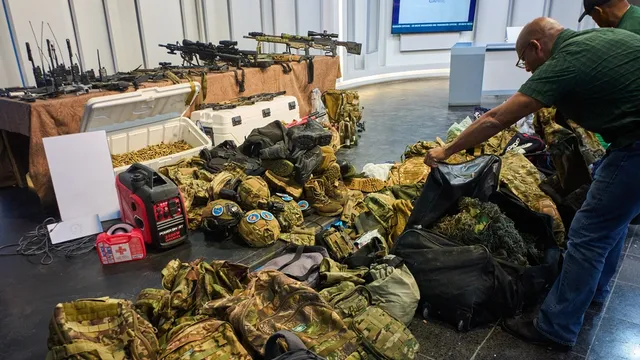
On March 4, 2026, Roberto Álvarez Ávila succumbed to injuries from a violent confrontation that occurred in February. This incident involved a Florida-registered speedboat and culminated in a deadly shootout off the coast of Cuba. The Cuban Interior Ministry reported that prior to Álvarez Ávila’s death, the coast guard had already confirmed four fatalities during the exchange of fire on February 25. This event was triggered when a boat, identified as violating Cuban waters, engaged the country's Border Guard Troops. The speedboat was reportedly carrying ten individuals, all armed, some of whom were Cuban nationals residing in the United States, allegedly on a mission to infiltrate Cuba to incite terrorism. Authorities claimed that the skirmish resulted in injuries to the commander of the Cuban vessel, paving the way for further investigations into the implications of this armed endeavor. Additionally, the Cuban government has recently leveled terrorism charges against six individuals allegedly associated with the speedboat. Following the shootout, Cuba's security forces reported the recovery of weapons, including high-powered firearms and significant amounts of ammunition, found on board the boat. As discussions linger about U.S.-Cuba relations, President Donald Trump has made remarks concerning a possible ‘friendly takeover of Cuba,’ amidst ongoing communication between the two nations aimed at addressing economic challenges faced by Cuba. The incident marks a significant point in the broader context of U.S.-Cuba relations, reflecting the tensions and challenges that have persisted for decades. Cuba's assertiveness in protecting its territorial waters signals a commitment to national sovereignty, especially in light of perceived threats from abroad. This situation continues to unfold, with increased scrutiny on the actions of individuals attempting to cross into Cuban territory and the responses from both governments in light of the escalating violence associated with such encounters.
Context
Cuba and the United States have had a complex and often tumultuous relationship since the late 19th century. The U.S. played a significant role in Cuba's transition from Spanish colonial rule to independence, with the 1898 Spanish-American War marking the beginning of direct U.S. involvement in Cuban affairs. Following independence, the U.S. maintained economic interests in Cuba through the Platt Amendment, which allowed for intervention in Cuban internal affairs and established a naval base at Guantanamo Bay. This laid the foundation for a century of political and economic influence by the U.S. over Cuba, often leading to tensions and critiques of American imperialism in the region. The relationship changed dramatically after the Cuban Revolution in 1959, when Fidel Castro's government nationalized American-owned businesses and instituted socialist reforms. In response to these actions, the U.S. imposed economic sanctions and severed diplomatic ties, culminating in the infamous failed Bay of Pigs invasion in 1961 and the Cuban Missile Crisis in 1962, which brought the superpowers to the brink of nuclear war. The Cold War further entrenched hostilities as Cuba aligned more closely with the Soviet Union, leading to decades of isolation and antagonism, with the embargo imposed in 1960 becoming a symbol of the rift between the two nations. Despite these challenges, the late 20th and early 21st centuries saw some thawing in relations, particularly during the Obama administration. In 2014, President Obama announced a historic shift in U.S. policy towards Cuba, which included restoring diplomatic relations, easing travel and trade restrictions, and promoting people-to-people exchanges. This change sparked hope for a new era in Cuba-U.S. relations, allowing for increased dialogue and cooperation on issues such as public health, environmental protection, and counter-narcotics efforts. However, this opening faced significant opposition, and subsequent administrations, particularly under President Trump, took steps to roll back these reforms, reinstating stricter sanctions and further isolating Cuba. As of 2026, the future of Cuba-U.S. relations remains uncertain. The Biden administration has signaled a willingness to engage with Cuba, but it faces political challenges domestically and internationally, especially with the ongoing human rights concerns and economic struggles within Cuba. The impact of the COVID-19 pandemic has exacerbated these issues, leading to public discontent and protests within Cuba. While there are opportunities for renewed dialogue, particularly in the face of shared challenges like climate change and migration, the deep-rooted historical tensions and geopolitical considerations continue to shape the relationship. The evolution of Cuba-U.S. relations will depend on the willingness of both nations to navigate their complex histories and strive towards cooperation.


