

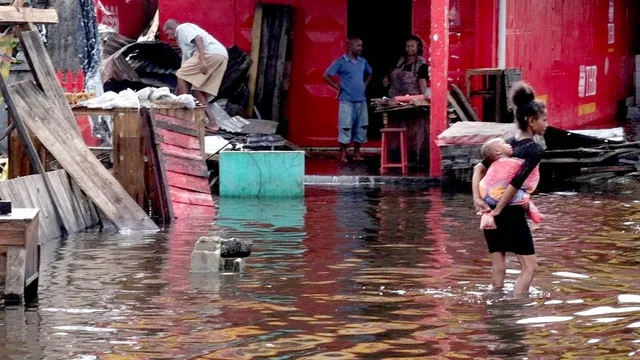
Devastating cyclone claims lives and leaves thousands displaced in Madagascar
Devastating cyclone claims lives and leaves thousands displaced in Madagascar
- Tropical Cyclone Gezani struck Madagascar in February 2026, with winds reaching gusts of 167 mph.
- At least 31 people have died, and over 6,870 have been displaced, with significant damage to infrastructure.
- The cyclone highlights the ongoing vulnerability of Madagascar to devastating weather events and the urgent need for disaster readiness.
Story
In February 2026, Madagascar was struck by Tropical Cyclone Gezani, which left behind a trail of destruction across the island nation. The cyclone reached peak wind gusts of 167 mph, resulting in severe damage to infrastructure and widespread disruption to lives and livelihoods. The country's disaster management office reported more than 6,870 people displaced, with over 250,000 classified as disaster victims. Toamasina, Madagascar's second-largest city, was among the worst affected, suffering significant infrastructural damage and a tragic loss of life. The devastation in Toamasina included the collapse of homes, uprooting of trees, and destruction of power lines. Eyewitness accounts described the intense and violent winds, with residents expressing shock at the sheer force of the storm. The local government confirmed that 29 individuals lost their lives in the city alone. Furthermore, the cyclone has impacted the region's communication and services, with power outages reported since the storm hit. Prior to Cyclone Gezani, the country was already reeling from another cyclone, Tropical Cyclone Fytia, which also caused numerous casualties and displaced thousands more. The successive events underscore the vulnerability of Madagascar's infrastructure and its residents to extreme weather patterns. As the cyclone weakened to a tropical storm while moving inland, forecasters warned that it may strengthen again upon reaching the Mozambique Channel, raising concerns about further destruction as it could potentially impact the southwest coast of the island in the following week. The ongoing cyclone season in Madagascar, which spans from November to March, has produced over a dozen tropical storms or cyclones since the past few years. This highlights a critical need for strategic disaster management and preparedness plans to mitigate the catastrophic effects of such natural disasters in the future. The government and local communities must address the vulnerability of affected areas and take necessary actions to protect lives, rebuild infrastructure, and enhance resilience against future cyclones.
Context
Cyclones have been a significant and recurring natural phenomenon in Madagascar, impacting the island's ecology, economy, and population. The geographic location of Madagascar in the Indian Ocean places it in the path of various tropical cyclones that originate in the warm waters of this ocean. Historically, the country has experienced several devastating cyclones, resulting in severe damage to infrastructure and loss of life, particularly in coastal areas. The peak season for cyclones in Madagascar typically spans from November to April, during which time the island is particularly vulnerable to intense storms. These storms are characterized by high winds, heavy rainfall, and flooding, often leading to widespread displacement of communities and agricultural losses, which are critical for the local economy and food security. The impact of cyclones on Madagascar has varied throughout history, with notable events leaving a lasting mark on the socio-economic landscape of the country. One of the most devastating cyclones recorded was Cyclone Gafilo in 2004, which caused extensive damage, particularly in the north of the island. The cyclone resulted in significant casualties and destruction of infrastructure, exemplifying how natural disasters can exacerbate existing vulnerabilities within communities. Recent studies and reports have outlined the increasing frequency and intensity of cyclones, attributed in part to climate change, necessitating a re-evaluation of disaster preparedness and response strategies on the island. As Madagascar continues to grapple with the consequences of cyclones, efforts have been made to enhance resilience and mitigate risks associated with these natural disasters. Organizations and government agencies have worked towards establishing early warning systems, improving infrastructure, and increasing community awareness regarding disaster preparedness. Additionally, reforestation and sustainable land management practices have been promoted to reduce the vulnerability of ecosystems and communities to cyclone-related impacts. However, the challenges remain significant, particularly with an increasing population putting additional pressure on limited resources and response capabilities. In conclusion, the history of cyclones in Madagascar is marked by both devastation and resilience. Understanding the impact of past cyclones provides valuable insights into the present and future challenges faced by the island. Continued commitment to improved disaster risk management, climate adaptation strategies, and community engagement will be crucial in reducing the impacts of cyclones in Madagascar moving forward.


