

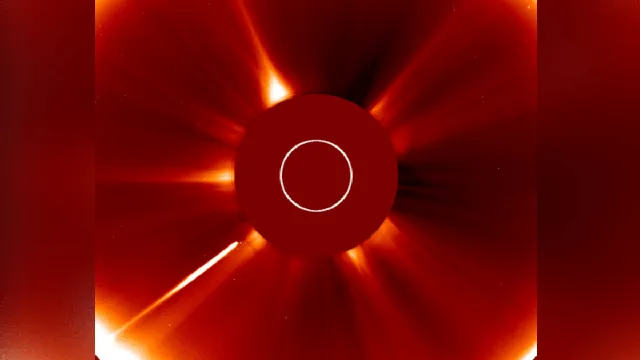
Comet MAPS explodes near the sun, leaving a trail of debris
Comet MAPS explodes near the sun, leaving a trail of debris
- A large comet, C/2026 A1, known as Comet MAPS, came within 99,000 miles of the sun on April 4, 2026.
- Images captured by the Solar and Heliospheric Observatory revealed that the comet exploded due to thermal pressure, resulting in a shower of debris.
- The destruction of Comet MAPS highlights the dangers faced by comets that travel too close to the sun.
Story
On April 4, 2026, a significant astronomical event occurred as the comet MAPS, officially designated C/2026 A1, approached the sun. Discovered in January of the same year, the comet was being monitored by the Solar and Heliospheric Observatory (SOHO), an international project involving NASA and the European Space Agency (ESA). Observations indicated that it would pass within 99,000 miles of the sun's surface, a close proximity that increased its risk of destruction. During its approach, SOHO captured stunning images showing the comet entering the sun's atmosphere intact; however, upon emerging, only debris was visible, indicating an explosion. The sudden brightening seen in the footage likely resulted from thermal stress causing the comet's nucleus to disintegrate before the dust cloud emerged. This event is a reminder of the volatile nature of comets, especially those traveling so close to the sun. Experts previously estimated that MAPS might be large enough to become visible in daylight, but subsequent observations clarified that it was smaller than initially thought and posed a greater danger in its trajectory toward the sun. The explosion of MAPS has raised questions about further celestial observations and the visibility of other comets, such as Comet PanSTARRS (C/2025 R3), which is expected to approach Earth later in April. While PanSTARRS is anticipated to be at its brightest when it reaches its closest point to Earth, it remains uncertain whether this comet will be visible to the naked eye or only through binoculars. As comet activity remains of keen interest to astronomers and the general public alike, these events emphasize the dynamics of comets in our solar system and their interactions with solar bodies.


