
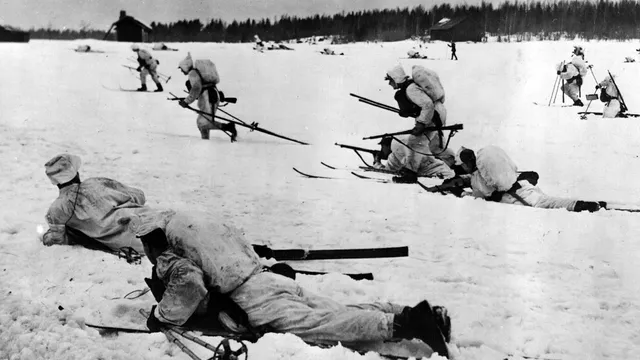
Finland's courage inspires new novel on the forgotten winter war
- The Winter War occurred between 1939 and 1940, where Finland successfully defended against a massive Soviet invasion.
- Olivier Norek's novel, The Winter Warriors, dramatizes the experiences of Finnish soldiers during the war, highlighting their heroism.
- The story serves as a reminder of Russia's continuing threats and the importance of national resilience.
Story
In Finland, the Winter War took place between 1939 and 1940, during which Finnish forces mounted a determined defense against a significantly larger Soviet army. The conflict pitted approximately 900,000 Finnish soldiers against over a million Red Army troops, amidst brutal conditions where temperatures plummeted to -40 degrees Celsius. The Finnish population's resistance created a powerful narrative of national pride and defiance, similar to legendary tales in literature. This history has become particularly relevant in light of contemporary security concerns about Russian aggression toward its neighbors, with parallels drawn to the current crisis in Ukraine. The Winter Warriors, a novel by Olivier Norek, vividly recounts this critical episode through the experiences of Finnish soldiers, including the famed sniper Simo Häyhä, who was nicknamed 'The White Death' for his exceptional marksmanship. Norek's narrative highlights the brutality of war yet emphasizes the heroic resilience of individuals defending their homeland, evoking essential themes of courage and national identity in the face of overwhelming adversity.
Context
The Winter War, fought between Finland and the Soviet Union from November 30, 1939, to March 13, 1940, was a significant conflict that showcased the resilience of Finnish forces against a much larger adversary. The war ignited in the context of World War II after the Soviet Union sought to expand its territory and secure its northwestern borders by demanding land concessions from Finland. When negotiations failed, the Soviet Union launched a massive invasion, anticipating a swift victory. Instead, the Finnish military, utilizing their knowledge of the terrain and innovative tactics, mounted a fierce defense that would surprise the world and highlight the determination of the Finnish people to resist Soviet domination. Finland's military strategy relied heavily on mobility and the effective use of its resources. The Finnish troops employed guerrilla tactics, using skis to maneuver quickly through the dense forests and across frozen landscapes, which provided them an advantage over the more cumbersome Soviet forces. The skillful use of small units to engage in hit-and-run tactics, combined with knowledge of the local terrain, allowed the Finns to inflict significant casualties on the Soviets, despite being outnumbered in terms of troops and equipment. This made the Winter War a classic study in asymmetrical warfare, where smaller or less equipped forces can defeat larger adversaries through superior tactics and morale. The conflict drew international attention and resulted in the involvement of various nations. Many in the West admired Finland's stand against the Soviet Union and provided support in the form of volunteers, military equipment, and supplies. This engagement, however, was somewhat limited due to the broader context of World War II, where nations were initially hesitant to provoke the Soviet Union, fearing repercussions. Despite the fierce resistance, Finland was ultimately forced to negotiate a peace agreement after suffering significant losses and facing overwhelming numbers. The Moscow Peace Treaty, signed in March 1940, resulted in Finland ceding considerable territory to the Soviet Union, albeit it allowed Finland to maintain its independence and sovereignty. The legacy of the Winter War is profound, shaping Finnish national identity and military policy in the years that followed. The conflict demonstrated the importance of determination and tactics in warfare, influencing military strategies worldwide. The spirit of resistance became a cornerstone of Finnish society, and the war is commemorated annually in Finland. Additionally, the lessons of the Winter War have continued to serve as a reference point for military strategists and historians, illustrating the complexity of war where larger numbers do not always guarantee victory. The Winter War remains a vital chapter in the history of not just Finland but also the broader narrative of 20th-century conflicts, highlighting courage in the face of overwhelming odds.
